














The prison officials who make the moves but never make the movies
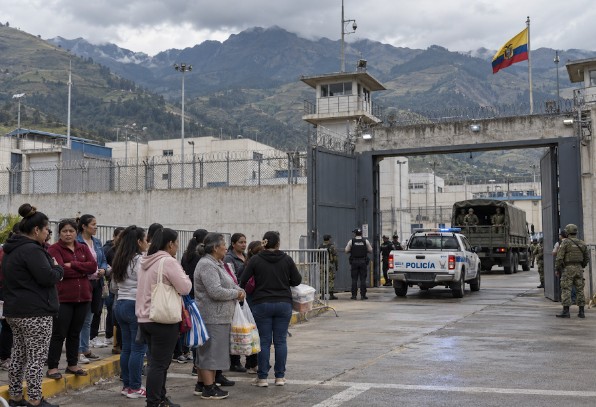
Four prisoners died in a riot at Cotopaxi prison on October 22, according to Ecuavisa. Three were reportedly shot and a fourth appeared to have been strangled. The trouble began in areas designated for recently classified minimum and medium security persons deprived of liberty.
Just three days earlier, all the inmates in that prison had been reclassified according to their level of dangerousness.
That sequence of events raises obvious questions. It does not establish that reclassification caused the killings, but it invites a more basic question: what does classification actually mean inside a prison?
We can’t answer that question without also introducing an official whom you will never have seen in The Shawshank Redemption, despite doing one of the most important jobs in any prison: the classification officer.
 Hollywood provides us brutal wardens, sadistic guards and elderly prisoners who can obtain anything from cigarettes to tunneling equipment. Somebody studying a file and requesting a case conference seldom gets a speaking part.
Lines like: “Before assigning your accommodation, we need to review your institutional history” would probably slow down the action, but nevertheless, the work is very important.
Ecuador’s prison service, SNAI, recently announced a classification programme covering an initial 9,214 prisoners, including inmates at Turi in Cuenca. The four categories are minimum, medium, maximum and special maximum security. One stated aim is to break the chains of command through which criminal organisations operate from prison.
The announcement describes something that should be ordinary, continuing prison administration. Every prisoner needs an assessment, and assessments need to be reviewed by someone who knows what they are doing.
In American prisons, classification examines the security a prisoner requires, the risks he presents, the risks he faces and the arrangements most likely to help him serve his sentence safely and constructively and perhaps, most importantly of all, who he can share a cell with.
The current offence for which the inmate is doing time is a starting point, not a complete biography.
Two prisoners convicted of similar crimes may behave very differently in custody. One follows instructions, works and avoids trouble. Another recruits followers, intimidates weaker inmates and organises an unofficial system of taxation.
An inmate serving a long sentence may be quiet and manageable. Someone with a shorter sentence may be persistently violent. A man who appears physically unthreatening may possess money, connections and the ability to have somebody else do the threatening.
Classification tries to identify these differences before an unsuitable placement produces a predictable disaster.
In Florida, which is the place I know most about, classification officers manage inmates’ cases from admission through release. Federal prisons distribute related responsibilities among people with job titles like case managers, correctional counsellors and unit managers. Exact powers differ between systems, and some recommendations may require approval from a committee or senior official, especially when high-profile prisoners known to the mass media are concerned.
These staff examine records, interview prisoners and coordinate with other departments. They review custody needs, work assignments, programmes, cellmates, transfers and preparation for release.
Much of this work is paperwork, or today, more likely computer work. But the paperwork represents important decisions about people who must live together behind locked doors.
An empty bunk is not necessarily a suitable bunk.
Known enemies should not be casually placed together. A prisoner vulnerable to intimidation needs protection. Relevant medical and psychological advice must reach the people making housing decisions. Gang affiliations require attention, including relationships that prisoners would prefer the administration did not discover.
Nor is classification simply a competition to identify the worst man in the building. It should also identify who can safely have more responsibility, who needs education or treatment, and who is making progress.
The assessment must change when the evidence changes. Otherwise, classification becomes an old opinion preserved in a filing cabinet.
Is classification officer a good job?
For somebody who likes investigation, interviewing, careful judgement, practical problem-solving, and a regular paycheck with benefits, it can be. It offers an opportunity to make imprisonment safer and help prisoners prepare for life outside.
Florida currently advertises a starting salary of roughly $49,400 a year for the role. It is a professional career, although hardly a route to fabulous wealth. Candidates just need a bachelor’s degree in any subject.
Whether it is satisfying depends considerably on the institution. A sensible assessment is more useful when there are suitable beds, programmes and staff available to act on it.
The work also requires patience with competing accounts of events, confidence in refusing inappropriate requests and a willingness to document unpopular decisions, stick with them, and justify them at hearings. The applicant who imagines a peaceful office job with occasional interesting interviews should remember where the office is located. A classification officer works inside a prison, and decisions about accommodation, transfers and opportunities can matter intensely to the people affected.
There is also an essential distinction between assessing an appropriate placement and making sure the necessary action actually happens when it matters.
Jeffrey Epstein’s death in federal custody provides a particularly serious example.
After Epstein came off suicide watch and psychological observation, psychology staff directed that he should have an appropriate cellmate. His cellmate was transferred to another institution on Friday morning, August 9, 2019. No replacement was assigned. Epstein was found dead the following morning, hanged.
The inspector general’s investigation established that housing-unit officers lacked authority to replace his cellmate themselves. They would not have had access to the data in files used by classification officers and Epstein’s previous cellmate had been personally approved by the warden and senior Bureau of Prisons officials.
The prison’s captain later told investigators that, had he been informed, he would have ensured that Epstein received another cellmate or was monitored until one could be assigned. However, the captain had himself had actually received an email containing advance notice of the transfer and had not noticed the implication. Several supervisors said they thought the departing prisoner had merely gone to court for the day and would be back before bedtime.
The investigation identified “failures of communication and supervision“, and the absence of a contingency plan. It also found that required rounds and head counts had not been carried out.
Suggestions that an unavailable weekend classification officer explains the missing cellmate are not established by that report, but what is established is that a recognised housing requirement went unmet because the people and procedures needed to implement it failed to connect. (In my own experience in Florida, classification officers did not work on weekends, but the situation regarding emergency assignation of cellmates might have been different at the federal facility in New York.)
But that lesson applies beyond one notorious prisoner who attracted global attention. In Ecuador, identifying a gang leader is useful only if the prison can restrict his ability to command. Identifying a vulnerable inmate helps only if staff can provide safer accommodation.
A maximum-security label accomplishes little if a prisoner retains a secret cell phone, access to weapons and cooperative intermediaries. Equally, minimum security does not mean that nobody in the pavilion can be murdered, although it may reduce the probability.
The Cotopaxi deaths demand investigation. They do not, by themselves, prove that starting a system of classification is a mistake. They do show why assigning categories cannot be the end of the exercise.
Prisoners may resist changes that disrupt established arrangements. Poorly planned moves can also create new dangers. Staff need reliable information, suitable accommodation and the ability to supervise the resulting population.
Classification is supposed to help the authorities to decide who goes where, under what conditions and for what reasons. Its success depends on the state being able to enforce those decisions fairly and consistently.
The classification officer may never become a Hollywood favourite. But in a functioning prison, somebody needs to know considerably more about the inmates than their names, numbers, and whether there happens to be a spare bunk in cell block B.
Note: In Ecuador a prisoner is usually called a person deprived of liberty, but for the sake of brevity I have used the term ‘inmate‘, which is the norm in Florida.