















The refugee convention, Florida and Ecuador and the myth of ‘full up’
If you’ve ever wondered why most rich countries seem to accept migrants as if their hands were tied, the answer lies in a yellowing piece of paper from 1951.
That was the year the United Nations adopted the Refugee Convention, later expanded by the 1967 Protocol, which turned a post–World War II effort to protect Jewish survivors, dispossessed victims of communism, and other displaced Europeans into a permanent global rulebook. The language was so broad, protecting anyone with a “well-founded fear” of persecution, that it became elastic enough to cover a lot of modern migration.
Add in courts interpreting it generously, and suddenly governments can’t just say “no thank you” when boats show up at the shore claiming asylum. They signed the treaty and that is that.

Credit: New York Times
Now, here’s the curious part: almost nobody dares talk about changing it. Why? Because the Convention has become a sacred cow of international law.
Politicians know that if they even whisper about pulling out, they’ll be accused of shredding human rights, breaking taboos, and turning their countries into pariahs. It’s easier to grumble about “broken borders” than to admit that their predecessors locked them into a system designed for a very different world. The irony is ubiquitous: everyone complains about the rules, but nobody wants to be the one caught trying to rewrite them.
The definitions of “persecution” have stretched like elastic, too. In some cases the claims are serious and well-documented like religious minorities, political dissidents, women at risk of domestic violence.
But courts in the United States and Europe have also heard thousands of cases involving supposed threats to gays or transgender people where the evidence was more… creative than convincing.
Once upon a time, young men in the West proved their independence by hitchhiking across Europe with a backpack and a bad guitar; today their counterparts in poorer countries take the refugee route north, dodging border guards instead of rainstorms, as if a brush with danger in a rubber boat in choppy seas were the new passport to adulthood.
And here’s where the paradox shows up. On one hand, tens of thousands of Ecuadorians head north, filing asylum claims in the United States that cite crime, gangs, or persecution while thousands of Americans on pensions exchange Florida or Fort Worth for the riparian dogwalks of Cuenca, the friendly neighbors, and the cheaper cost of living.
Same country, two stories: a danger zone if you’re trying to win a coveted residency slot in a court in Miami, a peaceful haven if you’re a gringo on Social Security. It’s a contradiction so obvious that no one in either camp really wants to talk about it.
But are rich countries really “full up”? Take a look at the United States. Yes, New York and San Francisco apartments are incredibly expensive and London (in the UK) tube trains feel like sardine cans, but “overcrowding” is a very elastic word.
Florida is now the third most populous state, yet fly over it and you’ll see more swamp, pine scrub, fields, and forests than cities and suburbs. Large parts of the Panhandle, the Everglades, and the huge peninsular tract between I-95 and I-75 are almost empty. In fact, with the exception of Orlando and Tallahassee, almost the whole population is clinging to the coasts.
What limits growth isn’t the number of square miles but infrastructure: roads, hospitals, schools, water systems. Building those is expensive and messy, so politicians pretend there’s no room. In truth, there’s plenty of space. It’s just easier to blame migrants than to admit we don’t want to pay for more pipes, power lines, affordable housing, train tracks or trams.
And food? That’s the part nobody mentions. The United States produces enough grain and meat to feed itself twice over. In fact, the bigger problem is too many calories with corn syrup in sodas, cheeseburgers stacked high, wasted food piled in skips behind every supermarket. The idea that America can’t feed a few million more people doesn’t hold water.
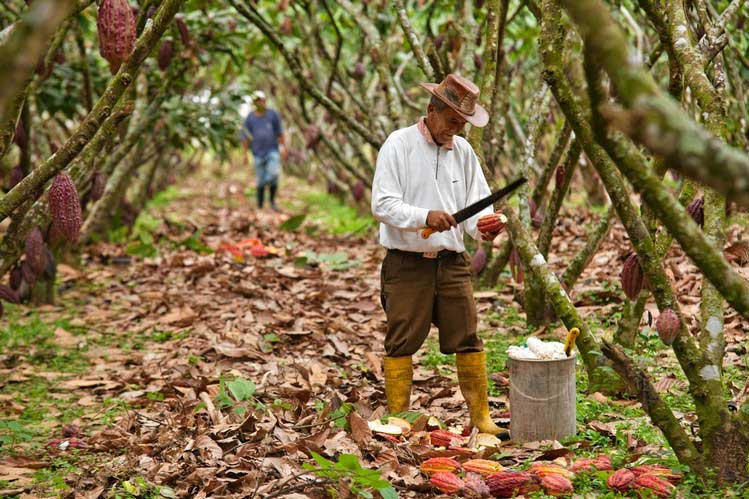
Ecuador, for its part, is no slouch either when it comes to food. This country with 4 growing seasons exports bananas, shrimp, cocoa, and coffee by the container-load. The mercados in Cuenca groan with potatoes, plantains, onions, and mangoes. If Ecuador can’t host hundreds of thousands of Colombians and Venezuelans, it isn’t because the soil stopped yielding, but because jobs and public budgets are tight.
And Ecuador’s legal framework is unusually generous. It signed on to both the 1951 Convention and the 1967 Protocol, then went even further. The 2008 Constitution enshrined the right to asylum and refuge in black-and-white, making it one of the most open systems in the world.
For years, Ecuador hosted the largest refugee population in Latin America — first Colombians fleeing armed conflict, and more recently Venezuelans fleeing poverty and unemployment. No one in Quito ever claimed the country was “full,” though you might hear mutters in the mercados when jobs get scarce. The law is the law, and Ecuadorans mostly seem to get on with living alongside the newcomers and are more concerned about mining pollution than immigration.
So the next time you hear someone shouting that “we’re full,” remember: treaties are hard to revoke, constitutions can be generous, the food supply is more than enough, and Florida, while it doesn’t quite have as many alligators as people, still has plenty of swamps.