










The woman who knew too much
If you grew up in the US with a television in the house during the 1950s or early 60s, you likely knew Dorothy Kilgallen as the elegant, sharp-witted woman on the panel of What’s My Line? She was the one who could guess a guest’s occupation, whether they were a toothpick manufacturer or a deep-sea diver, with an almost supernatural precision. She looked like the quintessential New York socialite: pearls, evening gowns, and a gaze that suggested she knew exactly what you were hiding behind that mask.
But behind the glamorous TV persona was arguably the most powerful female journalist in America. Dorothy was a “news-hen” who could out-hustle any man in the room, and she proved it early.
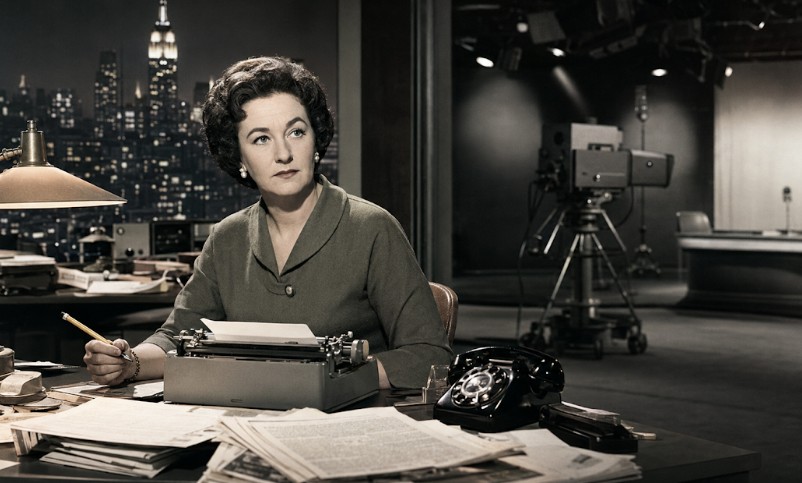 In 1936, at just 23 years old and only two years into her career as a crime reporter, she talked her editors at the New York Evening Journal into entering her in a race around the world against two seasoned male reporters from rival papers.
The rules required “established means” of transportation available to any paying passenger, so Dorothy crossed the Atlantic and the Pacific by dirigible and airplane, boarding the Hindenburg at the last possible second and later becoming one of the first passengers to fly the Pacific on Pan American’s China Clipper.
She circled the globe in 24 days, finishing second only to a competitor who had bent the rules by chartering private flights, and in doing so became the first woman to fly around the world. Eleanor Roosevelt sent her a congratulatory letter, and Dorothy turned the trip into a bestselling memoir, Girl Around the World. It was a fitting debut for a woman who spent the rest of her career refusing to stay in the seat she’d been assigned.
She didn’t just attend the coronation of Queen Elizabeth II either; she flew there on a record-breaking flight and beat every other reporter to the punch.
And she didn’t just report on society gossip. She was a hard-boiled crime reporter who wasn’t afraid to get her hands dirty.
Take the Sam Sheppard case in 1954. Sheppard was the Ohio doctor accused of bludgeoning his pregnant wife to death. The media had already convicted him in the court of public opinion, but Dorothy sat through the trial and called it exactly what it was: a “mockery of justice.” She was convinced of his innocence, and her relentless reporting helped pave the way for his eventual exoneration years later. If you’ve ever watched The Fugitive, with Richard Kimble running from the one-armed man, you’re watching a piece of fiction that grew directly out of the soil Dorothy Kilgallen helped to plow.
But it was her investigation into the assassination of John F. Kennedy that truly defined her final years, and, some say, sealed her fate.
Dorothy was the only reporter to secure a private interview with Jack Ruby during his trial, a privilege the judge granted her and no other journalist. She dismissed the Warren Commission’s conclusion that Lee Harvey Oswald had acted alone as “laughable,” and she told her own lawyer she was going to “break the real story and have the biggest scoop of the century.”
Then, on November 8, 1965, she was found dead in her Manhattan townhouse.
The official cause was a lethal combination of alcohol and barbiturates. At the time, barbiturates with names like Seconal, Nembutal, and Tuinal were the universal “mothers’ little helpers.” They were the sleeping pills of choice for a high-stress generation, handed out like candy by doctors who didn’t yet fully grasp their cumulative power and how dangerous they could be when mixed with alcohol.
You don’t hear much about barbiturates today, but back then they were a shadow hanging over many households. My own mother’s best friend died from them, a tragedy that landed my mother on the front page of the newspapers as she gave evidence about a local doctor, a love affair between married partners, and the prescriptions that had gone wrong. To an eight-year-old boy, it was a world of adults and medicine and weird behavior that made no sense, but the danger was real.
Marilyn Monroe had gone the same way just three years before Dorothy. It was a common enough tragedy in those days, an “accidental overdose” that became a convenient label for a dozen different endings.
In Dorothy’s case, the circumstances were odd. She was found sitting up on a bed she rarely slept in, wearing a robe she didn’t usually wear, and her makeup was still perfectly in place. Most importantly, her thick folder of notes on the JFK assassination was nowhere to be found. It had simply vanished. More than fifty years later, in 2017, the Manhattan District Attorney’s office reopened the case for an eight-month review and concluded there was no evidence to support a finding of homicide, leaving the official verdict of accidental overdose intact even as the doubts around it persisted.
We’ll likely never know if Dorothy Kilgallen was a victim of the pills she took to sleep plus a drink too many, or if she knew too much for her own good. But looking back at those old clips of What’s My Line?, you see more than just a clever panelist. You see a woman who, at 23, had already raced around the world and beaten most of the men who tried it. She was playing a much larger game all along, and she may have finally encountered a mystery that she couldn’t solve before the lights went out.