















Want to become a real Cuencano? The city is offering classes to show you how
Cuenca offers free orientation classes for foreign residents. Tom thinks he already knows the city. Then he discovers how much he still has to learn.
 “Elaine, apparently Cuenca is offering classes on how to become a Cuencano.”
Tom looked up from his phone with the satisfied expression of someone who had just discovered an opportunity to demonstrate his expertise.
“Are you signing up?” Elaine asked.
“I’ve lived here for years. I thought I might qualify to teach.”
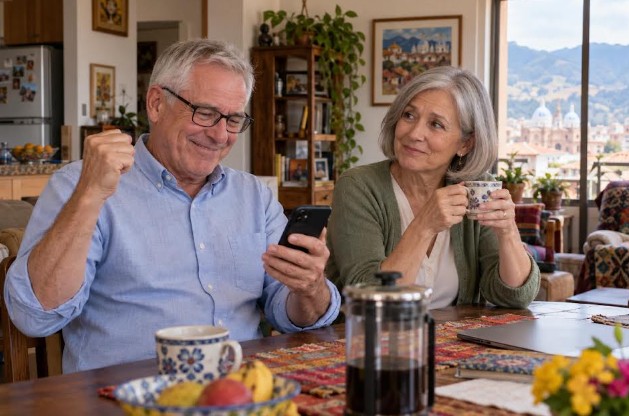
Tom discovers that Cuenca offers a program to help foreign residents understand their adopted city. AI-generated illustration.
Elaine lowered her coffee cup.
“Tom, yesterday you asked me which garbage goes in which container.”
“That was a technical question.”
“And you still don’t know where to pay that municipal bill.”
Tom looked back at his phone.
“Perhaps I’ll attend the advanced course.”
What Is Cuenca Teaching Its Foreign Residents?
Cuenca’s municipality has announced another edition of its free orientation program, How to Become a Cuencano, scheduled for November 9 through 12.
The program helps foreign residents understand the city they have chosen as their home.
Working with Amauta Spanish School and other institutions, the municipality has developed sessions covering Spanish, immigration procedures, healthcare, transportation, public services, security, waste management, taxes, and utilities.
Cultural activities and a tour of the Historic Center are also part of the experience.
The previous edition took place October 19 through 22.
Tom began scrolling through the subjects.
“Spanish. I know some Spanish.”
Elaine smiled.
“You know how to order lunch.”
“And coffee.”
“And ask for the bill.”
“Those are three essential survival skills.”
“Keep reading.”
Tom continued.
“Transportation. I know the tram. I know the buses. I know which taxi drivers take the long way around.”
“Municipal services?”
He hesitated.
“Let’s not get distracted by administrative details.”
But those details were precisely what the program was designed to explain.
It was not a citizenship course or an examination for Ecuadorian nationality. It was an opportunity for foreign residents to understand how their adopted city actually works.
When Does Knowing a City Become Understanding It?
Tom knew Cuenca rather well, at least by his own standards.
He could navigate El Centro without consulting his phone. He recognized the people at several neighborhood cafés. He knew which restaurants served generous portions and which charged more for an atmosphere he considered unnecessary.
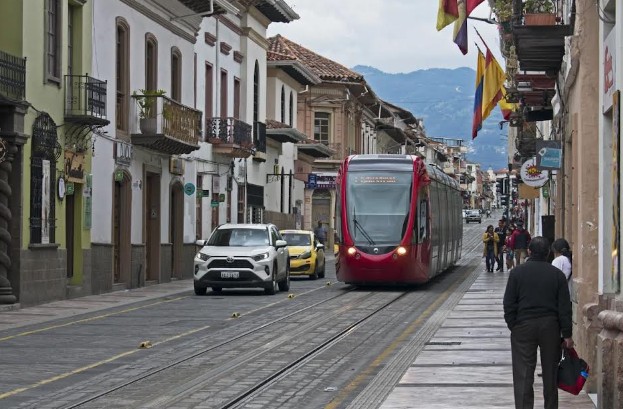
A tram travels along Calle Gran Colombia in Cuenca’s Historic Center, where public transport shares the streetscape with everyday city life. Photo: Ymblanter / Wikimedia Commons, CC BY-SA 4.0; cropped and resized.
He also knew where to buy excellent bread.
In fact, he considered that last accomplishment particularly important.
“Carlos knows me,” he told Elaine.
“Carlos knows what bread you buy.”
“That’s how relationships begin.”
“Does he know anything else about you?”
Tom thought for a moment.
“He knows I like bread.”
Elaine returned to her coffee.
There was nothing wrong with Tom’s knowledge. Familiar places and predictable routines are part of what makes a foreign city comfortable.
But knowing where to find things is different from knowing how the city functions.
And both are different from knowing the people who make it function.
Tom had spent years learning the first. He was beginning to suspect the other two might require more attention.
What Can Paola Teach That a Classroom Cannot?
Later that morning, Tom stopped at Paola’s produce stall.
Paola had become one of his favorite people at the market. She was friendly, direct, and remarkably unimpressed by his attempts to negotiate the price of tomatoes.
“Buenos días, Tom. The usual?”
“Actually, I have an important question.”
Paola raised an eyebrow.
“Are my tomatoes too expensive again?”
“No. The city is offering classes on how to become a Cuencano.”
“That’s good.”
“I was wondering whether I need them. I’ve lived here for years.”
Paola began arranging some avocados.
“Then perhaps you already know everything.”
Tom recognized the danger in that sentence.
“Well, not everything.”
“Do you know where the vegetables you buy come from?”
“Ecuador.”
Paola laughed.
“That’s a very large farm.”
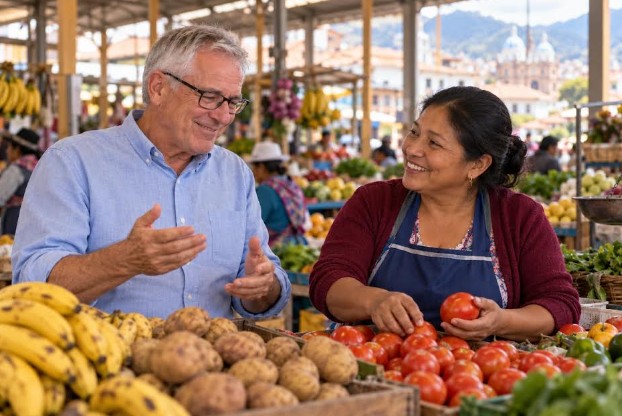
A conversation at a neighborhood market can reveal aspects of Cuenca that newcomers may overlook. AI-generated illustration.
She explained that different products arrived through different growers and suppliers, and that availability and prices could change with weather, transportation, and holidays.
Tom knew when tomatoes were expensive. He had rarely considered what happened before they reached Paola’s stall.
“And what happens here when there is a holiday?” she asked.
“People celebrate.”
“Yes. But how does that affect the market?”
Tom looked around.
He had never thought to ask.
He knew the prices of Paola’s vegetables better than he knew anything about the people who brought them to the market.
For someone who considered himself an experienced resident, this was an uncomfortable discovery.
Fortunately, Paola had no intention of making him uncomfortable.
She handed him his tomatoes.
“Ask me next time. I will tell you.”
Why Is Cuenca More Than Its Celebrations?
November 3 marks the 206th anniversary of Cuenca’s independence in 1820.
The city’s commemorative activities bring music, cultural events, civic gatherings, and visitors into streets that already carry centuries of history.
Tom enjoyed these celebrations.
He liked the crowds, the food, the music, and the opportunity to tell visiting friends that they had arrived during an especially interesting week.
But Paola had reminded him of something easy to overlook.
The city did not exist simply to provide an interesting experience for the people who moved there.
It was home to families, students, workers, shopkeepers, and generations of people whose daily lives continued long after the festivals ended.
For foreign residents, enjoying the celebrations was relatively easy.
Understanding the ordinary lives behind them required more curiosity.
And, sometimes, better Spanish.
What Responsibilities Come With Living Here?
That afternoon, Tom returned to the municipal program announcement.
This time he paid more attention to the less glamorous subjects.
Waste management. Transportation rules. Utilities. Taxes. Public services.
None sounded particularly exciting.
There was no class titled Where to Find Cuenca’s Best Almuerzo.
Tom considered that a serious omission.
Still, he remembered the recent discussions about street waste baskets and household garbage.
A public bin might seem like a simple convenience until residents use it for something it was never intended to handle.
The same problem appeared in other forms.
A newcomer might misunderstand a municipal procedure, struggle to locate reliable information, or assume that a service should operate exactly as it did back home.
Sometimes the system itself was confusing. Instructions could be difficult to find, especially for someone still learning Spanish.
Those were genuine obstacles, and public institutions had a responsibility to make information accessible.
Yet there was another possibility.
Sometimes Tom was not confused because the system made no sense.
He was confused because it worked differently from the system he already knew.
That distinction was worth understanding.
He looked at Elaine.
“I think I may need the garbage class.”
“I’ve been saying that for years.”
“I’m beginning to think knowing how to handle the garbage is more useful than memorizing every church in El Centro.”
“Progress,” Elaine said.
Can Four Days of Classes Really Teach Someone to Belong?
Four days cannot turn someone into a Cuencano in any complete cultural or personal sense.
A municipal orientation program can explain procedures, introduce institutions, answer questions, and help newcomers avoid mistakes.
It can also make the city less intimidating.
But a class cannot manufacture friendship.
A guided tour cannot replace years of conversations.
And learning the correct way to use a public service does not automatically create a sense of belonging.
Those things develop through experience.
They also require something from the receiving community.
New residents need understandable information, opportunities to participate, and people willing to answer questions without treating every misunderstanding as a failure.
Cuenca’s orientation program is one way to help create that connection.
It offers a beginning, not a graduation.
Tom began to appreciate the distinction.
For years, he had measured his familiarity with Cuenca by how easily he could move through it.
Now he was wondering how much of the city he had actually stopped to understand.
For a broader reflection on building belonging after a move abroad, read [When Does a Place Start to Feel Like Home?] on Next Cradle.
Is There Really a Final Examination?
The next morning, Tom returned to Paola’s stall.
“Have you decided about those classes?” she asked.
“I’m considering them.”
“After all these years?”
“Apparently, I’ve been studying for the wrong examination.”
Paola laughed.
“What examination?”
“Finding the best restaurants.”
“You passed that one.”
“Excellent. Do I get a certificate?”
“No.”
Tom looked disappointed.
“Then I’ll have to come back tomorrow.”
Paola smiled.
“That’s usually how it works.”
Tom picked up his vegetables and headed home.
He still had not registered for the course. He still had questions about municipal bills, waste collection, and where some of his food came from.
But he had begun asking those questions of people who could answer them.
Perhaps that was the real lesson behind How to Become a Cuencano.
There was no final examination.
And there was always a reason to come back tomorrow.
________________
Sources: Program details, dates and contact information are drawn from the Municipality of Cuenca’s October 20, 2026 announcement. Information about Cuenca’s independence celebrations comes from the municipality’s commemorative calendar announcement.
Follow Tom’s journey in our Instagram carousel, and tell us what helped Cuenca feel like home.
How to Become a Cuencano: Next Session
Dates: November 9-12, 2026
Organizer: Municipality of Cuenca, with collaborating institutions
Cost: Free
Topics: Spanish, immigration, healthcare, public services, transportation, security, waste management, taxes, utilities, and local culture.
Information: 096 230 8352
Official announcement: https://www.cuenca.gob.ec/content/nueva-edicion-del-programa-how-become-cuencano-el-programa-para-residentes-extranjeros
Author’s note: Tom, Elaine, and Paola are recurring fictionalized characters used to explore recognizable experiences of life in Cuenca. Their conversations are illustrative, not reported interviews.


Hogar Esperanza News
Fund Grace News

Fabianos Pizzeria News

Manabi property

The Cuenca Dispatch

Week of October 25
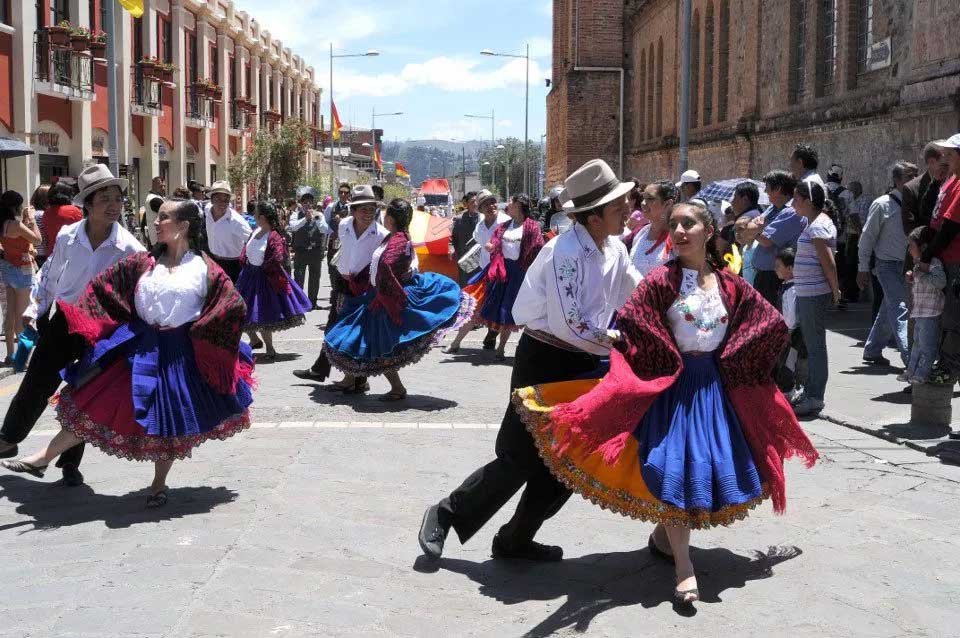
Ecuador heads into a four-day November holiday built around Cuenca’s Independence Day.
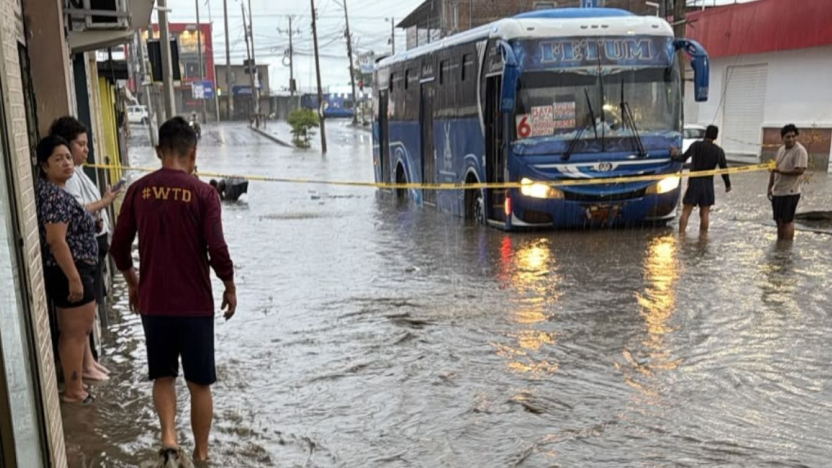
El Niño’s early rains have already affected more than 30,000 people across Ecuador.
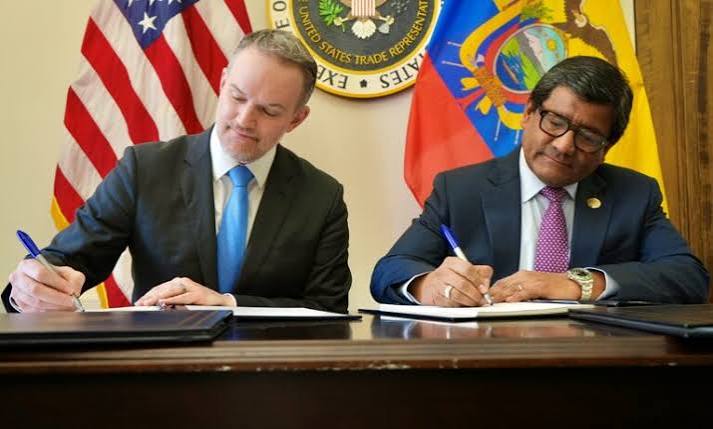
Exporters press Constitutional Court to move three major trade agreements forward