
















When relationships become difficult to untangle
If you spend enough time observing relationships abroad, you may begin to notice something that is not always visible at first.
Some relationships are easy to enter.
They feel natural. They develop without much friction. They fit the moment people are in.
However, over time, a different question can begin to surface.
Not how the relationship started.
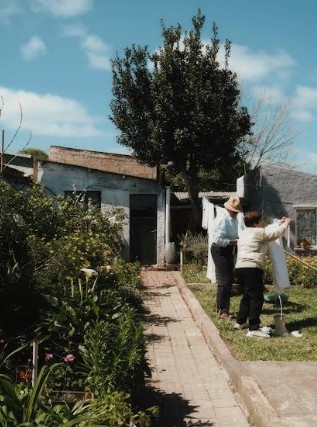 But how easily it can be stepped away from.
Why this is not something people think about early on
In the beginning, most relationships focus on connection.
People meet. They spend time together. They respond to what feels right in the moment.
Because of that, there is little reason to think about what might happen later.
The relationship feels simple.
At least at first.
When everyday life begins to overlap
As time passes, the relationship often becomes part of daily life.
Routines form. Time is shared. Living arrangements may begin to shift.
What started as something informal can begin to take on more structure.
Not through a single decision.
But through small steps that build on each other.
When practical ties begin to form
At a certain point, practical elements often become part of the relationship.
Shared expenses. Housing arrangements. Support, in one form or another.
In some cases, one person may rely more heavily on the other. In others, responsibilities begin to blend.
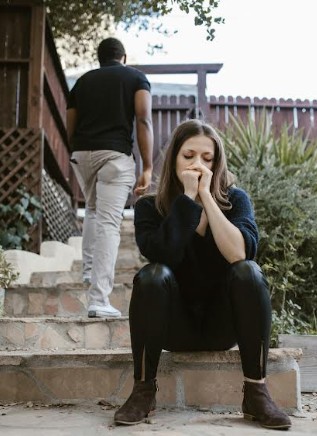 These shifts are not always discussed clearly.
Still, they create connections that go beyond the original relationship.
What different relationship patterns tend to offer
If you spend enough time around these situations, certain patterns may begin to stand out.
Not in a rigid way, but often enough to recognize.
Some relationships seem built around companionship.
They offer connection, shared time, and a sense of presence. In many cases, they feel balanced. However, if expectations are not clear, they can drift without direction.
Others appear to center more on stability.
One person may bring financial security or structure, while the other brings time, energy, or support. These arrangements can work well when understood. Still, they can become strained if the balance shifts.
In some situations, there is a clear difference in lifestyle or stage of life.
That difference can create energy and interest at the beginning. Over time, however, it can also lead to different expectations about the future.
There are also relationships that form quickly within the local environment.
Shared language, familiarity with daily life, or access to community can make things feel easier. At the same time, those same factors can create dependencies that are not always obvious at the start.
None of these patterns are unusual.
And none of them are inherently right or wrong.
But each tends to carry its own set of advantages, along with its own points of tension.
Why stepping away can become more complicated
From the outside, it can seem like leaving a relationship should be straightforward.
 However, once practical ties exist, it is rarely that simple.
Shared space may need to be separated. Financial arrangements may need to be resolved. Daily routines may need to be rebuilt.
In some situations, social circles are also intertwined.
All of this adds weight to a decision that might otherwise feel clear.
When the environment adds another layer
Living abroad can make these situations more complex.
Legal frameworks are not always familiar. Informal arrangements may carry unexpected implications. Access to support systems may be limited.
Because of this, decisions that might feel manageable in a familiar setting can feel less clear in a new one.
That does not make them impossible.
But it can make them harder to navigate.
When clarity starts to matter more
At some point, many people begin to look at their situation more directly.
Not just at the relationship itself, but at everything connected to it.
What is shared. What depends on it. What would need to change if it ended.
These questions are not always easy.
However, they tend to become more important over time.
A quieter way of understanding it
It is easy to assume that people knowingly enter complex situations.
In reality, most relationships evolve gradually.
People adjust. They respond. They build something that works for them in the moment.
The complexity comes later.
Not because it was planned.
But because it was never fully considered.
Where this tends to lead
For many people, this becomes another point of reflection.
Not just about the relationship.
But about the role it plays in the life they are building.
Some choose to stay and work through the complexity.
Others begin to separate what has become intertwined.
There is no single outcome.
But there is usually a moment where the situation is seen more clearly than before.
What comes into focus next
And once that clarity begins to form, another question often follows.
Not just whether a relationship works.
But whether it can continue in a way that feels balanced, stable, and intentional over time.
That is not always easy to answer.
But it is often where the next phase begins.
If you want to look more closely at how these situations develop over time, and why they can become harder to step away from, you can explore the companion piece here.