











Why were Ecuador’s electricity master plans left half-finished? Outfitting the Chola Cuencana; Santa Isabel fined for unpermitted construction; Mayor on trial
Bored? –
(De El Mercurio del domingo, 18/10) Carmen Cuji, Reinventado el bordado tradicional de la Chola Cuencana (Carmen Cuji: Reinventing the traditional embroidery of the Chola Cuencana) – Carmen Cuji is the owner of the Cholas brand, started in 2012, with its own identity known for its designs and embroidery on clothing and complementary items. To make her products, she works with craftswomen, many of them seniors. Many of them stopped working during the pandemic, so she started offering courses in embroidery directed towards new generations. She is a member of the Cooperativa de Producción Artesanal Ayni, in the Casa de la Cultura where the classes are held on Saturdays. People of any age can learn to embroider and put their own touches on their clothing. Those interested in the workshops can call 098 150 6929. For more information about Chola brand products, visit its social network pages.

Most of the proposals of two “Master Electrical Plans” designed to make Ecuador energy independent have not been completed.
(De El Mercurio del domingo, 18/10) Mantenimiento en medio de crítico nivel de Mazar (Maintenance amid critical levels at Mazar) – A total of 47 distribution networks and seven electric transmission lines were inspected Saturday through preventative maintenance, causing electrical cut-offs to different sectors in 15 provinces, including Azuay, between 3 and 6 am. The Ministerio de Ambiente reported that inspection and maintenance of substations, trimming vegetation near electrical lines, replacing and improving equipment, relocating lines, and putting a mobile substation into service were also done. Centro Sur confirmed emergency maintenance work in its distribution and transmission systems in 3 cantons in Morona Santiago. It published a maintenance schedule and the times for the 3 hours of cuts in each sector which continued until today. <A while ago there was a political cartoon which had Noboa saying that we weren’t going to have electrical blackouts and they were going to be renamed maintenance.>
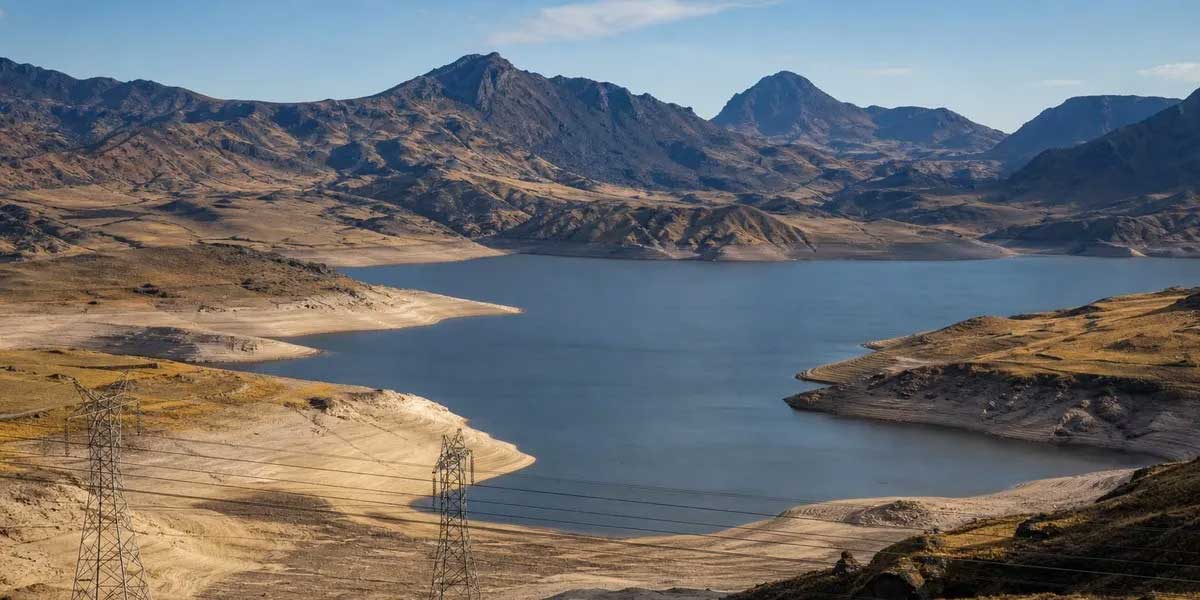
(De El Mercurio del lunes, 19/10) A medias quedó el Plan Maestro de Electricidad (The Electricity Master Plan was left half-finished) – The Electricity Master Plan 2016-2025 was a government proposal to establish the construction of electrical generation projects to guarantee that demand would be met, and even included talk that the country could export energy. The projects that should have been completed in 2025 were advancing well in all areas — generation, transmission and distribution — up until 2018. After that, the government changed its focus to changing laws so that the private sector could assume the responsibility for developing the projects. This was not a success. <All the money for the projects wound up in tax havens?> So today, because of El Niño, the estimate is that the country lacks up to 1,300 megawatts and is imposing blackouts on industry.
The Master Plan called for 7 mega-hydroelectric projects to be developed over 10 years with a capacity of 5,891 MW. That would have been about 5 times the deficit projected for the coming months. The projects that were completed were the Coca Codo Sinclair (1,500 MW), Sopladora (487 MW), Minas-San Francisco (275 MW), Toachi Pilatón (254 MW) and Delsitanisagua (180 MW). Two uncompleted projects were the most ambitious and would have solved the current problems. Those were the Santiago (2,400 MW) and Cardenillo (595 MW) hydroelectric plants.
In 2023, the Government issued a new plan, Electricity Master Plan 2023-2032, which established that the country had the potential to generate 24,896 MW through hydroelectric plants; 1,671 MW with 884 MW short term through wind power; 1,000 MW through fotovoltaics; 1.000 MW through biomass (burning waste products <lots of corn stalks and other agricultural waste>); and 200 MW through geothermal.
The country has thermal power generation capacity of 8,247 MW, but due to the age and neglect of the equipment, it only generates 650 MW. The new Plan was to generate 6,304 MW of energy with the above sources. However, only one of the 2023-2032 Master Plan projects received interest from the private sectord. Construction of Villonaco III (110 MW) started el julio pasado. <Maybe there aren’t enough kickbacks to interest private investors. Progen was interested and Ecuador bought a pig in a poke. But the pig was dead.>
According to studies, the country needs to invest at least $1 billion each year, but since 2018 practically nothing has been invested in the sector. For Vinicio Freire, an energy expert, the country doesn’t attract private investment because the legal framework doesn’t grant adequate incentives. <How about the illegal framework?> There is an excess of paperwork to get operating permits, particularly for environmental and operating licenses. Carlos Andrade, an electrical analyst, said that another issue that scares away investors is that the electric rates set by the government do not cover all of the costs and allow a profit.
(De El Mercurio del lunes, 19/10) Juicio contra alcalde de Pujilí por peculado (Trial against mayor of Pujilí on embezzlement charges) – José Arroyo, mayor of Pulilí, in Cotopaxi Province, will face the start of a trial for embezzlement from the women’s jail, ‘La Roca’ since Arroyo self identifies as a woman. <His photo doesn’t show any signs of a transition since he still looks like a man, so maybe this self-identification is so he can get a private cell,.> The Prosecutor investigated irregularities in 4 city contracts totalling $340,664.
(De El Mercurio del lunes, 19/10) Multa por construir en zona protegida (Fine for building in a protected area) – The Superintendencia de Ordenamiento Territorial, Uso y Gestión del Suelo (SOT – Superintendency of Land Use Planning, and Land Use and Management) fined the Municipio de Santa Isabel $16,452 for not complying with its legal obligation to control and sanction construction located inside the protective zone of 15 m. from the El Limón creek. After a technical inspection showed the existence of infrastructure inside the protection zone and an enclosure on the edge of the creek bed, the SOT determined that Santa Isabel had not started the appropriate administrative procedures, nor had it adopted sufficient measures to control and correct the construction.
Besides the economic sanctions, SOT ordered the Municipality to verify the legal and administrative situation of the buildings inside the protection zone, and to take action and controls needed to guarantee the protection of this zone. <In the US, this could be red tagging the construction prior to an order to tear it all down and restore the site.>
________________
Information in this column, including dates, times and locations, is courtesy of the El Mercurio newspaper. Comments between the carrots, or guillemets (< … >), are the personal opinions of the author and not part of the news translation.