
















World’s largest snake, weighing more than half a ton, discovered in the Ecuadorian Amazon
By Times staff
In the vast and biodiverse rainforests of the Amazon, nature continues to reveal its remarkable secrets. In 2024, scientists announced the discovery of a new species of anaconda that has stunned the world — a colossal snake weighing up to 500 kilograms (about 1,100 pounds) and stretching an astonishing 7.5 meters (approximately 24.6 feet). Found in Ecuador’s Baihuaeri Waorani Territory, this Northern Green Anaconda species not only surpasses the previously known green anaconda in size and weight but also enriches our understanding of Amazonian biodiversity and ecological complexity.
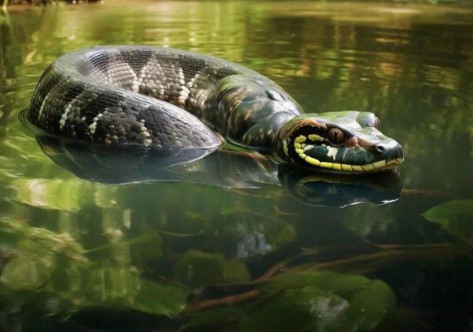
The stories of giant anacondas described by the Waorani has been verified by researchers.
This discovery holds immense significance for the scientific community, indigenous peoples, and conservationists alike. It validates long-held indigenous knowledge, highlights urgent conservation needs, and offers fascinating insights into evolutionary biology.
The newly identified Northern Green Anaconda species is a true giant of the snake world. Measuring up to 7.5 meters long and weighing an incredible 500 kilograms, this serpent surpasses the southern green anaconda, once considered the largest snake species on Earth. Its massive size earned it the status of the heaviest and longest snake ever recorded, a feat confirmed through scientific measurement and DNA analysis conducted in 2024.
This new species’ immense power and size underline the ecological importance of anacondas as apex predators within their rainforest habitat, playing a vital role in maintaining the balance of the ecosystem.
DNA research conducted on the new species reveals it diverged from its closest relative, the southern green anaconda, roughly 10 million years ago. Genetically, it shows a 5.5% difference, a significant gap that confirms it as a distinct species rather than a mere regional variant.
This evolutionary split emphasizes the complex biogeographical history of the Amazon rainforest and underscores how isolated populations adapt and evolve independently over millions of years. Understanding these evolutionary pathways helps scientists grasp how environmental changes and geographical barriers shape species diversity.
Long before scientists confirmed this new species, the Waorani indigenous tribe of Ecuador had spoken of enormous snakes measuring up to 7.5 meters. Their oral history and deep connection with the rainforest ecosystem provided crucial clues that guided researchers to the snake’s habitat.
The Waorani’s traditional ecological knowledge, rooted in generations of observation, has been validated by science. This collaboration between indigenous communities and researchers exemplified the value of combining ancestral wisdom and contemporary methods to discover and protect biodiversity.
_________________
Credit: Times of India



Hogar Esperanza News

The Cuenca Dispatch

Week of September 20

Ecuador turns to industrial power cuts to protect Mazar and keep homes from going dark.
Ecuador raises its 2026 growth forecast, but El Niño could spoil the outlook next year.

Cuenca retirees challenge medical and therapy changes at IESS senior center.
Fund Grace News

Fabianos Pizzeria News