















Yanuncay flood victims begin recovery; Taxi drivers warned against strike; Sale of cuys and rabbits banned in markets; Dance gala at Casa de la Cultura
Bored? –
(De El Mercurio del lunes, 20/4) Gala artística reúne lo mejor de la danza de tres provincias (Artistic gala brings the best of dance from three provinces) – The 7th national dance circuit will be in Cuenca este sábado, el 25/4 a las 19:00 in the Teatro Casa de la Cultura (calle Luis Cordero y Pres. Córdova). 4 dance groups and a musical group will be in the gala organized by the Cuenca based ‘Ballet Folklórico Llactapi Jatarishu.’ The other performers will be the musical group ‘Takirii’, and dance groups Grupo Folcórico Tungurahua, the Ballet Folklórico ‘NinaWillka’, and the ‘Escuela de Danza Jatun Llakta’. Tickets are available at the ‘Palier Café Libro’ on the bottom floor of the Casa de la Cultura. Cost: $5.00.
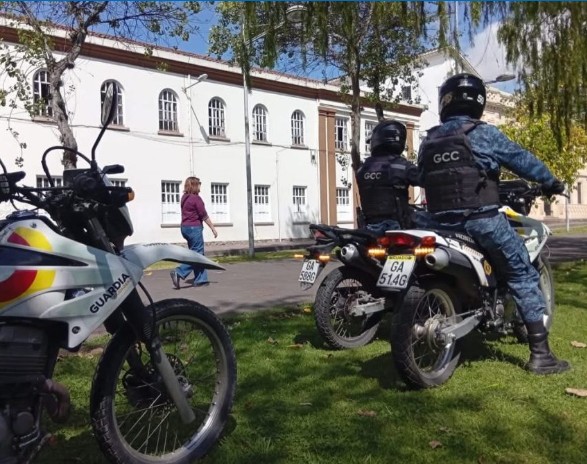
City Councilman Jenny Bermeo is preparing a proposal for an ordinance to prevent the consumption of illegal drugs in public spaces. Cuenca’s Citizen Guard will be on the look-out. (El Mercurio)
(De El Mercurio del martes, 21/4) Publican colección digital sobre patrimonio cultural (Digital collection on cultural heritage released) – The Universidad del Azuay (UDA) and its Publishing House released the digital Cultural Heritage and Intangible Collection of Ecuador composed of 5 works: Cuencanan essence, 100 years of love and life, Good pay, From the Manabí kitchen, and Secrets of the cupboard. These rescue the memory, identity and flavors of the country from history, literature, and gastronomy. The collection, which has been developed over 25 years, is available for free at UDA Book. <Cookbooks?>
Curious? –
(De El Mercurio del lunes, 20/4) Afectados se levantan tras un mes de desbordamiento (Those affected are getting back on their feet after a month after flooding) – The flooding of the río Yanuncay on el 12/3 caused serious devastation in different sectors. A resident in the Barabón zone lost her house and is afraid she will not be able to get help since the deed to the house is in her parents’ names. Her main concern is that the river be dredged with stronger rock embankments along the banks. A neighbor invested $12,000 to build a bridge which collapsed during the overflow. A resident of the La Inmaculada sector of Barabón said the Prefecture offered to repair collapsed structures, especially the wooden bridge that connects the San José de Barabón sectors with San Juan in Baños. He said that what’s left of the bridge is dangerous and gets slippery when wet. <The photos show a narrow bridge with no guardrails. But at least the driving surface is logs or planks running longitudinally so if your tires slip, they’ll slip into the grooves between the logs, which will help keep your car from sliding sideways into the river.>
The Provincial Government, City of Cuenca, and the San Joaquín Parrish Juntal have executed repairs in affected zones. The Prefecture prioritized the vía San Joaquín-Soldados-Chaucha which was affected at 4 points. Provincial infrastructure secretary, Andrea Brito, explained a stretch of road was lost at km. 2 and was rebuilt in coordination with ETAPA <which would have cut the water treatment plant off. I think that would make it a high priority repair.> There was damage at kms. 5 & 19. A bypass was built at km. 19, and at km. 20, shoring was installed to stabilize that zone. The Prefecture and Parish Junta contributed 950 cu. m. of material to build riprap walls. There were also repairs near the Bayán and Pucán bridges. The City is also working in affected urban areas. José Patiño, director of City Public Works said that they are building rock walls as in the Quinta Lucrecia sector, Tres Puentes, and next in the Pasos School sector. The affected linear parks are also being repaired. The San Juaquín Parish Junta said that it will ask the Empresa Municipal de Aseo (EMAC EP – the garbage company which also is in charge of park maintenance) for tree trunks taken from the riverbanks to turn them into lumber to be used to rebuild damaged community bridges.
(De El Mercurio del martes, 21/4) Advierten a taxistas que paralización sería ilegal (Taxi drivers warned that a strike would be illegal) – The announcements of possible strikes by the taxi union in light of increases in gasoline prices triggered a response from the City. The Coordinator of Mobility, Alfredo Aguilar, said that suspension of public and commercial transportation service is prohibited by law. He explained that it is not possible to review or increase taxi fares while the Executive Decree 306 is in effect. The decree establishes an economic compensation from the federal government for transportistas. This applies to all the cantons in the country and limits municipal authority in this area. Aguilar also said that paying the compensation is not the responsibility of the city but the Ministerio. Patricio Padilla, president of the Frente Unido de Taxistas del Azuay said that the economic situation has deteriorated and the compensation doesn’t cover the impact of the price increase. Of the 3,613 registered taxistas, about 35% have not received this money.
(De El Mercurio del miércoles, 22/4) Prohibición temporal para venta de cuyes y conejos (Temporary ban on the sale of guinea pigs and rabbits) – The Municipal Department of Mercados will inspect wholesale markets to prevent sales, showings and concentrations of cuyes and rabbits to comply with a provision issued by the Agencia de Regulación y Control Fito y Zoosanitario (Phytosanitary and Zoosanitary Regulation and Control Agency – Agrocalidad). The city announced immediate compliance with the measure and city personnel will conduct operations at sales locations to verify compliance. The restriction is temporary and preventive. The decision was announced last 17/4 after Agricalidad detected an event related to rabbit deaths which are currently being analyzed in epidemiological and diagnostic studies. The agency explained that the measure responds to a preventive criteria since there are farms where guinea pigs and rabbits share space, staff, and facilities which could facilitate transmission of possible pathogens.
On Thursday, the Department of Mercados clarified that the sales ban affects only the sale of cuys and rabbits in the mercados. The sale of cooked cuys and rabbits in restaurants is not affected.
(De El Mercurio del miércoles, 22/4) SRI: el pago del ISD hasta e 28/4 (SRI: Payment of the ISD due by April 28) – The payment of the Impuesto a la Salida de Divisas (ISD – Foreign Exchange Exit Tax) should be made between the 10 & 28/4, based on the 9th digit of your cédula or RUC. If you made purchases overseas, with credit or debit cards or on international digital platforms <like Amazon or Temu?> in excess of $5,188.26 in 2025 you need to declare. The amount you need to pay depends on the consumption. The exempt amount is deducted; the resulting excess is subject to a 5% ISD rate.
The ISD also taxes the transfer of cash abroad during trips, as well as transfers or international money transfers. The regulations state that in some cases, financial entities will withhold the tax. However, if the full tax is not withheld, the taxpayer should declare and pay the tax within the specified time frame. You can pay at www.sri.gob.ec at the SRI en Línea option where you need to pick the ISD form (código 4584) according to the 9th digit of your cédula or RUC. <I guess the moral of the story is don’t bring cash out of the country, and when you need money get it from your US account. Hit the ATM as soon as you land at your destination.>
(De El Mercurio del miércoles, 22/4) Norma para sancionar el consumo de drogas (Regulations for sanctioning drug use) – Councilmember Jenny Bermeo is preparing a proposal for an ordinance to prevent consumption of substances in public spaces. Now, after 3 months of analysis, the council is looking for a regulation that can actually be enforced in this city. According to the Policía Nacional, marijuana is the drug most consumed. For the Bermeo, addictions are a public health problem which should be treated by the Ministerio de Salud Pública (MSP), but the City of Cuenca can also contribute. One of the options is to reform the ordinance governing the use of public spaces regarding alcohol use. The ordinance also has an informational aspect with the need to find out what is happening in Cuenca in order to make decisions based on actual data.
There is worry about reports of sales and use of drugs outside of schools. <I hope not pre-K schools.> The planned sanctions would be economic and vary from 10-15% of the Salario Básico Unificado (SBU) which translates to $46-$69. The Policía Nacional has asked for this legal framework for a while in order to act efficiently. The objective is to clean parks and plazas of the consumption of these substances. However, an obstacle has been the ambiguity of the “drug chart.” There is confusion if the list is in effect, or if it was repealed by the National Government, and this has delayed the application of a local ordinance. <So the moral of the story seems to be smoke on private property. I imagine consumption of edibles would be hard to enforce. How could a cop tell the difference between a regular and a happy brownie without sampling it?>