













YouTube man lives in Ecuador on $167 a month
There is a man on YouTube who says he is living in Ecuador on a budget of about $167 a month. His name is Steve W., a sort-of retired Canadian who moves around the country volunteering and doing odd jobs in various places, living a kind of free-range lifestyle with no fixed abode, no long-term lease, and no intention of settling down just yet. He even wrote about his travels for Cuenca High Life, including a gentle story about a campesina woman who simply handed him a bunch of bananas in exchange for nothing more than a smile and a cloth bag.
It is a charming story about the best of Ecuador, and I do not say that cynically.
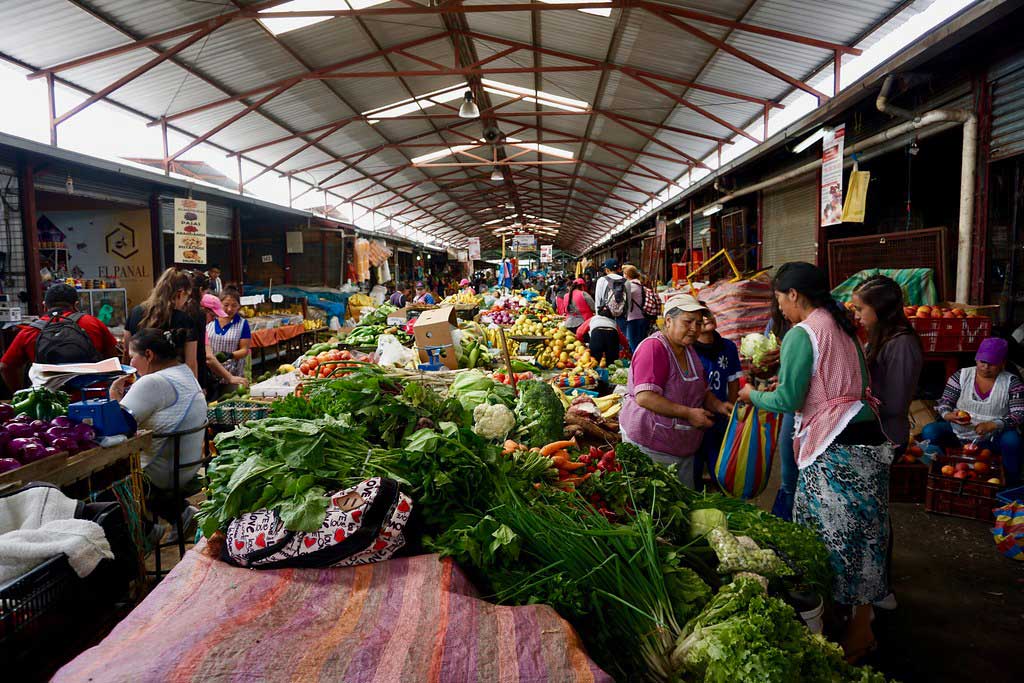
 Kindness here is real, and if you have lived in Ecuador for any length of time you will know what I mean: somebody helps you carry your shopping up the hill; somebody checks in on you when you cough at the bus stop or an elderly chola enquires whether you have eaten you almuerzo today; somebody offers you fruit from their own garden without weighing it or ringing it up. The people of Ecuador have carried this country on their shoulders for generations and, remarkably, still seem to have time to feed strangers.
So far, so heart-warming.
But then there is the other side of the story, the practical side, the visa side, and the part where the money either flows through the tills of the economy or quietly bypasses them.
To make that $167 monthly budget work, Steve says he volunteers for about eighty or ninety percent of the time, receiving room and board in return for “helping out”: painting a wall, teaching a little English, harvesting crops, mucking about on a finca, painting a gate, or doing odd jobs in hostels, instead of paying rent or appearing on a payroll. No wages, no IVA, and no tax office waiting for its piece of the pie. If you have seen the kind of online “work exchange” platforms travellers use, you will recognise the model.
In many countries this type of arrangement is now explicitly regulated or restricted unless the volunteering is through a registered charity or under a specific volunteer visa. Australia and New Zealand have both tightened rules around unpaid work in exchange for accommodation, while the UK and much of Europe treat such arrangements as “work” for immigration purposes if they replace or resemble a paid role. The reasoning is simple, even if occasionally heavy-handed: governments don’t really want to prevent young folks from traveling on the cheap, but they do want to prevent labour exploitation, human trafficking, and the erosion of local job markets by free foreign labour that never sees a payslip.
A recent case illustrates how wrong this can go. Rebecca “Becky” Burke, a 28-year-old British graphic artist, travelled around North America using a work-exchange platform to find stays where she did chores in exchange for lodging. When her US tourist visa was about to expire, she attempted to cross from the United States into Canada, but Canadian authorities concluded that what she was planning to do amounted to work without the proper visa and refused her entry into Canada She was sent back to the U.S., where immigration officials then decided she had overrun her visa and placed her in ICE detention in Tacoma, Washington for 19 days, shackled during transport, before eventually returning her to the UK (where she was perfectly willing to go all along). Burke has since warned other travellers not to assume that “volunteering” automatically means “legal under a tourist visa.” Her story is perhaps unusual, but it is real and was widely reported.
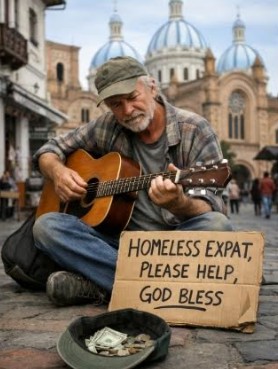
Which leads to the uncomfortable question that lingers beneath the banana story: when a foreign traveller “volunteers” in return for food and lodging, who is truly benefiting? Is it the local economy, where people need paid work and formal employment histories, or the traveller, who now lives very cheaply in a country not designed to subsidise their lifestyle, or the business owner, who acquires a free pair of hands that will never trouble the accountant?
Now, I like people, and I especially like the people of Ecuador, who have shown me more patience and kindness than I probably deserve, and I admire anyone who manages to live simply without turning life into an endless shopping expedition. There is nothing wrong with helping out around a place where you are staying or pitching in when the roof leaks; that is how rural life works and always has.
What troubles me more is when “volunteering” becomes the business model, when foreign travellers effectively become unpaid staff, when the local teenager does not get hired because a backpacker will do it for a plate of rice and a hammock, and when one morning immigration officers somewhere in Quito or Guayaquil decide it is time to make an example of someone.
Ecuador is not a fantasy world constructed for YouTube; it is a real country where people pay IVA, send remittances to family, and stand patiently in lines that test the endurance of the human spirit, because they want to keep working legally.
So, what visas actually allow you to work in Ecuador?
Unlike many countries, Ecuador does not prohibit retirees or residents from working. The key rule is simple: you must hold a legal residency status that allows you to stay indefinitely or long-term. Once you have this, you may generally work, whether employed or self-employed, as long as you also comply with labour and tax regulations.
This includes:
• Permanent Residency Visa
• Temporary Residency Visa (all categories)
• Retirement (Pensioner) Visa — yes, retirees are allowed to work if they choose
• Professional Visa
• Investor Visa
• Dependent Visa
There is also a Volunteer Visa, intended for people working with recognised charities or NGOs. This is the correct route for unpaid service work connected to a formal organisation.
What does not allow you to work is a Tourist Visa or tourist entry stamp. If you are here on that basis, you are meant to be visiting like a visitor. If you are “volunteering” in a way that looks like a job, even without wages, you are entering a grey area and may very well be on the wrong side of the rules.
And now back to the bananas
Despite all of this, there is still that banana lady.
Her kindness is real, her gesture is noble and her life is probably not easy. She gave because generosity is woven into her understanding of how one should move through the world, not because she was trying to brand herself as “content.” That moment should be remembered as a glimpse of human decency, not as a lifestyle hack.
And I should add that Steve W. says he holds an Investor Visa that allows him to work legally in Ecuador and that he has approximately $47,000 on deposit with the Central Bank of Ecuador, so he has made a substantial financial commitment to the country and receives monthly Ecuadorian income as well. In other words, whatever one may think of the model, he is not working illegally.
A short note, because it matters: I am not a lawyer and this is not legal advice. Visa rules change, and what is true today may not be true tomorrow. If you plan to travel, work, or volunteer abroad, speak with the relevant embassy or a qualified legal adviser, not with a guy in Cuenca who spends too much time talking about bananas.
Perhaps the lesson is this: take the banana, say thank you, and appreciate the generosity, but do not build your entire existence around the need to live on free bananas. If you truly love Ecuador, contribute to it, support real jobs, pay the plumber, lend the landlord your Xiaomi screwdriver, buy from the market, and, if you volunteer, do so with organisations whose purpose is service rather than profit.
Kindness is beautiful, but it should never take the place of a paycheck.
And if you ever do manage to live here on $167 a month, please keep that information away from my landlord, otherwise he will be raising my rent.