
















Why some relationships abroad quietly become real
After spending enough time around relationships abroad, you may begin to notice something else.
Not just how relationships form.
Not just what people exchange within them.
But why some connections gradually become more genuine over time.
This is not always obvious in the beginning.
 In fact, many lasting relationships abroad start in ways that seem uncertain from the outside.
However, as time passes, something begins to separate the relationships that fade from the ones that quietly deepen.
Why first impressions are often incomplete
From the outside, it is easy to make assumptions about relationships.
Age differences stand out. Lifestyle differences stand out. Financial differences often stand out as well.
Because of that, people tend to create explanations quickly.
However, relationships rarely stay frozen in the form they begin with.
What starts one way can gradually become something else entirely.
That shift is not always dramatic.
But over time, it becomes easier to recognize.
When familiarity begins to replace novelty
In the beginning, many relationships are shaped by novelty.
 Everything feels new. The attention feels energizing. The differences between two people may even feel exciting.
However, novelty does not last forever.
Eventually, daily life begins to take over.
Routines form. Habits become visible. Expectations become clearer.
This is often where the relationship either starts to weaken or begins to settle into something more stable.
What stronger relationships tend to develop
If you look closely, the relationships that last usually begin to develop certain qualities over time.
There is less performance.
Less trying to maintain an image.
People begin to see each other more clearly.
That does not remove the differences between them.
However, it often changes how those differences are handled.
When balance becomes more natural
Earlier in a relationship, balance may require constant adjustment.
Over time, some couples begin to settle into a rhythm that feels more natural.
Responsibilities become clearer. Expectations become more realistic. Communication becomes less reactive.
In these situations, the relationship no longer depends entirely on what each person initially brought into it.
Something else begins to form.
Trust.
Why some relationships deepen quietly
The strongest relationships abroad often do not look dramatic from the outside.
In many cases, they become quieter over time.
Less driven by excitement.
More shaped by consistency.
People begin to rely on each other in ordinary ways. Daily life becomes easier together instead of more complicated.
That is usually a stronger indicator of long-term stability than intensity alone.
When people begin building something real
At a certain point, some relationships stop revolving around the original attraction or circumstances that brought two people together.
Instead, they begin building something shared.
Not perfect.
Not free from difficulty.
But more grounded in reality than in projection.
This is often where the relationship becomes more intentional.
A quieter way of understanding it
It is easy to focus on the relationships that appear unstable or transactional from the outside.
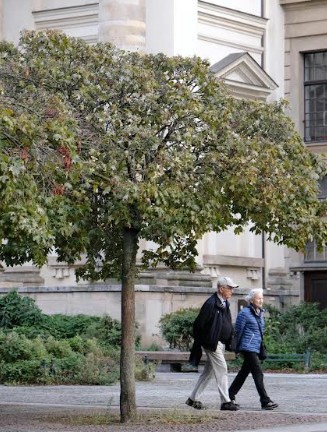 However, those are not the only relationships that exist abroad.
Some gradually become sincere in ways that are difficult to recognize early on.
Not because the relationship started perfectly.
But because two people slowly adapted to each other over time.
Where this tends to lead
What many expats eventually discover is that the deeper questions surfacing after living abroad for a while are often not only about location.
They are also about change itself.
For many expats over 60, life today feels less fixed and predictable than it once did. The world has become faster, more digital, more fragmented, and more emotionally demanding in ways many people are still trying to fully process.
Living abroad often brings those shifts into sharper focus because expats are already navigating adaptation on a daily basis. New routines, changing friendships, financial adjustments, cultural differences, technology, healthcare systems, and evolving definitions of stability all become part of everyday life.
Perhaps that is one reason so many conversations among expats today seem to quietly circle back toward the same deeper themes: community, flexibility, purpose, connection, and what it now means to build a meaningful life in a rapidly changing world.
We explored this broader shift further in our companion article on Next Cradle examining how people over 60 are quietly redesigning life during a time of rapid social and technological change.
Maybe that is ultimately what many people begin searching for after the first excitement of relocation fades.
Not simply a new country.
But a different way of living inside a changing world.



Hogar Esperanza News

The Cuenca Dispatch

Week of September 20

Ecuador turns to industrial power cuts to protect Mazar and keep homes from going dark.

Ecuador raises its 2026 growth forecast, but El Niño could spoil the outlook next year.

Cuenca retirees challenge medical and therapy changes at IESS senior center.
Fabianos Pizzeria News

Fund Grace News
