















A century of homelessness
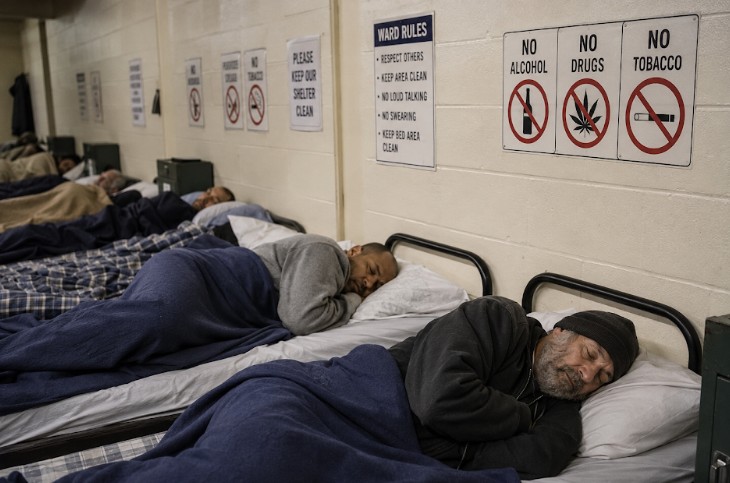
The half-dozen summers I spent operating farm machinery in Kent, I slept on a camp bed on a concrete floor in a hut with no windows worth mentioning. After work we foraged for firewood and cooked beans and sausages over an open hearth, showered with a hosepipe and a communal bar of soap in the farmyard, and thought nothing of it. I was a college student and by the time I went home I had more money in my pocket than when I’d left. It never once occurred to any of us that we were homeless. We were young, healthy, temporarily living rough by choice, and enjoying ourselves.
I mention this because it took me years, and a career in social services, civil services, and institutions spanning three countries and five decades, to appreciate how easily that distinction gets lost. Sleeping outdoors on the ground and being homeless are not the same experience, even though from a distance they can look identical.
 I was reminded of this again last week, walking along the Rio Tomebamba below Calle Larga. Cuenca’s riverbanks have their own population of people who sleep outdoors, and anyone who has lived here more than a few months learns to tell them apart without quite meaning to. Some are Ecuadorian men in their fifties and sixties, worn down by alcohol or estrangement from family. Others are Venezuelan or Colombian families in transit, camped for a night or two with everything they own, waiting for a bus south or the right moment to cross another border. The city’s Proyecto Vida program, run jointly with the Casa del Migrante, treats these as related but distinct problems: mendicidad and long-term homelessness on one hand, human mobility on the other. It is a sensible distinction, and one that took Cuenca’s social services years to formalize properly.
On the very day I began writing this, four thousand miles away, Andy Burnham was walking into Downing Street as Britain’s new prime minister. His very first pledge–seemingly an odd one for a Prime Minister–was a promise to end rough sleeping–an admirable ambition, the kind that attracts almost universal applause and almost immediate disagreement about how on earth to achieve it. One side of the argument insists the problem is a shortage of affordable housing while the other insists it is a problem of individuals making bad decisions, usually involving addiction, mental illness, and other pathologies.
George Orwell would probably have disappointed both camps. Nearly a century ago, Orwell immersed himself in the world of London’s tramps and casual wards while researching Down and Out in Paris and London. Reading it today is a strange experience, because so many of his observations still hold true. He found men who had simply run out of luck, others who could not find steady work, a good number of alcoholics and drifters, some people with handicaps, and several who seemed almost to have organized their entire lives around moving from one lodging house to the next–these people were known as tramps. Orwell resisted turning any of them into a tidy political theory, which is more than can be said for most of the people who write about homelessness now.
Burnham’s chosen approach is Housing First: give people a stable home before demanding that they first conquer addiction or manage a psychiatric illness, and treat the rest as work that follows rather than precedes. It seems to have produced genuinely encouraging results in Greater Manchester, the largest postindustrial city in the north of England, particularly among people who had spent years cycling between hostels, hospital wards, and the sidewalks outside them so I don’t doubt it works, but I wonder if it is the whole answer.
Over more than forty years in the world of work, I met enough people without homes to know the label conceals as much as it explains. Some had lost work after developing schizophrenia. Some had drunk their way through every relationship that once housed them. Some left prison with nowhere to go. Some simply found the ordinary business of maintaining a home more than they could manage, without any dramatic cause at all. A front door and a set of keys will genuinely transform some of these lives. For others, valuable as they are, keys alone will not touch the underlying illness.
There is a further complication that rarely survives contact with a political speech: not everyone offered shelter accepts it. Some fear theft or violence in hostels. Some cannot bear to give up a pet dog or parrot. Some cannot tolerate rules on no-drinking. A small number, as Orwell noticed nearly a hundred years ago, appear to value the freedom of the street over the restrictions of any roof at all. These people are not typical, but they do exist, in London as much as along the Tomebamba.
Perhaps that is the real lesson, in Manchester, in Westminster, and here in Cuenca: not that homelessness can be solved by the right policy, but that it stops being solvable the moment anyone insists it has a single cause.
Cuenca’s own program only began working once it stopped treating a migrant family and a man with forty years of drinking behind him as the same problem wearing different clothes. Burnham deserves credit for recognizing that a home can be the beginning of recovery rather than its reward. Whether his ambition succeeds will depend less on housing policy than on Britain’s willingness to admit that the man propped up by the railings outside the Houses of Parliament and the one under the railroad bridge a mile away may have nothing in common beyond the ground they sleep on.
George Orwell understood that in the 1930s. Nearly a century later, on two continents, we are still relearning it.



Hogar Esperanza News

Fund Grace News

Fabianos Pizzeria News

The Cuenca Dispatch

Week of August 16

Azuay stays under state of exception as authorities track criminal groups expanding around Cuenca.

Older adults and people with disabilities can now request vehicle tax break online.
That unresolved bank complaint has another place to go and the service is free.
Property Kuralt

Property Amazon
