














At 17, Cuenca fashion designer Amaru Zapata ‘redefines the edge’ with his love of denim
By Stephen Vargha
“I’m nervous,” said Amaru Zapata. “I’ve never done anything like this before.”
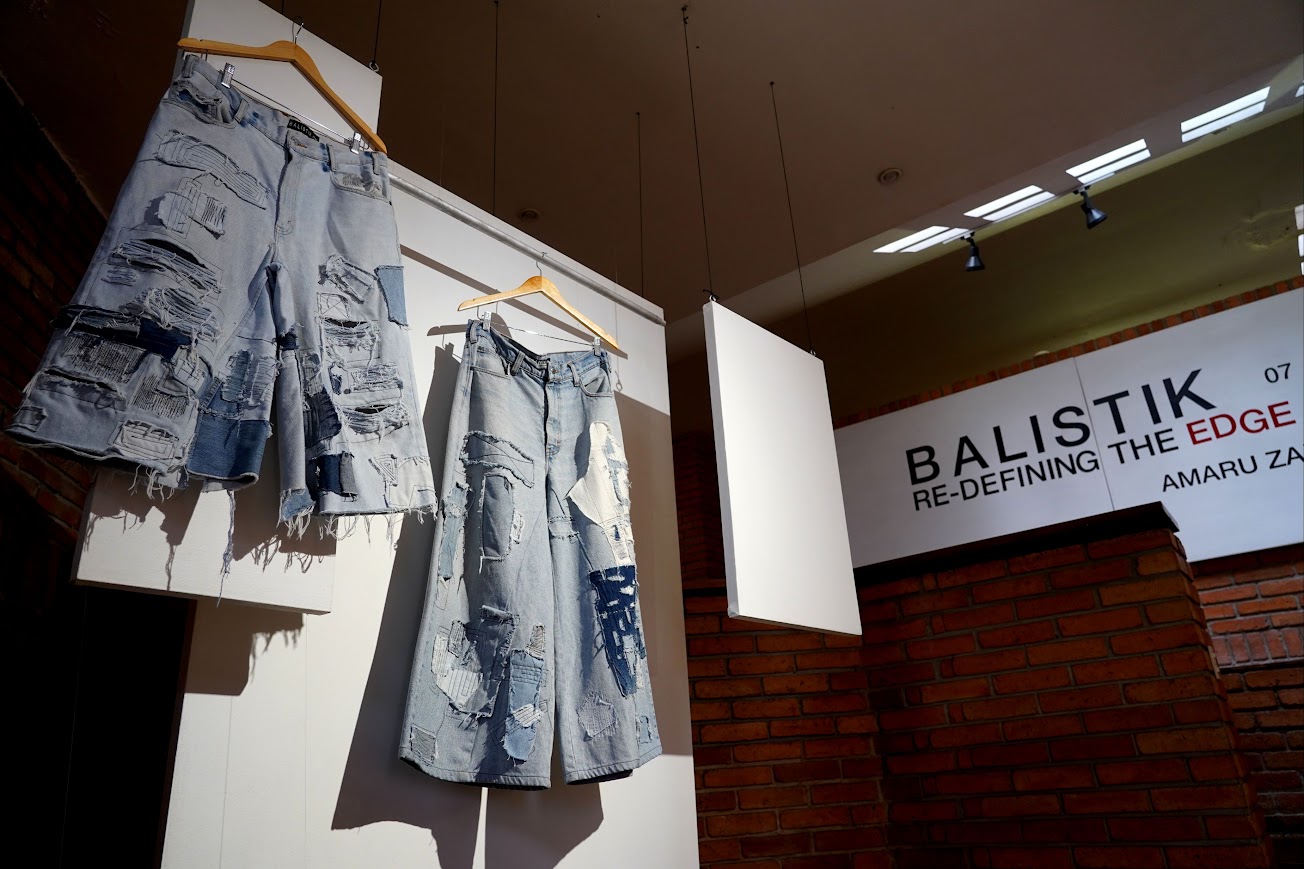
Each piece is “carefully” handmade.
Not many have. Roughly 40,000, of which the U.S. has approximately half, have experienced what Zapata was about to do on April 26.
It was his first solo show: “Re-Defining the Edge.” The show at Casa Aurora was to show the general public what he had created and to be among friends.
The Cuencano is a fashion designer. And a very young one at that.
Zapata is only 17 years old, a senior in high school.
That is a bit unusual as the average fashion designer’s age is 36 years old. And being a male, Zapata is definitely in the minority as over four out of five fashion designers are women.
His career began less than two years ago at a weeklong getaway at the University of Azuay (UDA), where his father works.
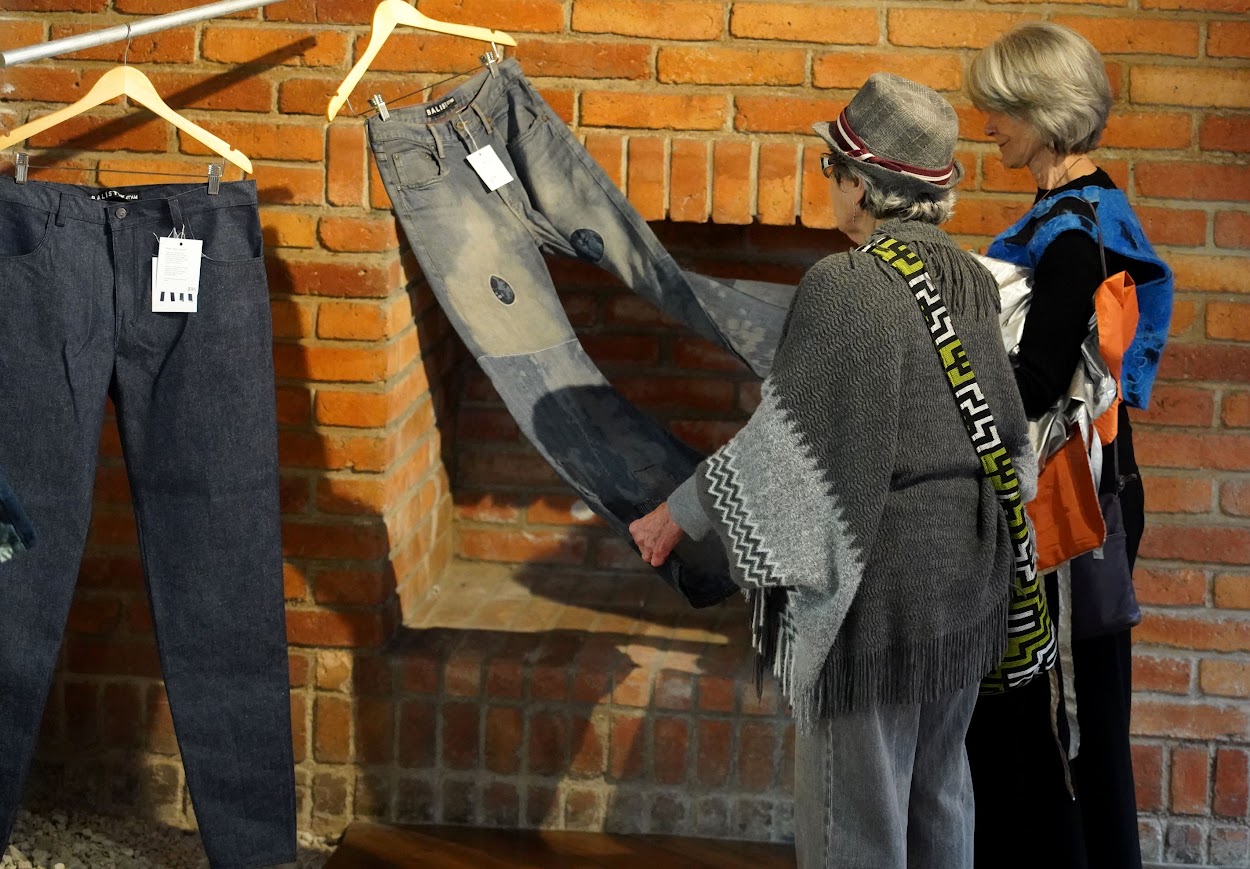
Many of Amaru Zapata’s customers are expats, though he has customers of all ages.
“When I was 15 years old, I decided I wanted to make clothes, not to sell, but just to create,” said Zapata. “One week at summer camp, I asked if I could go to the textile machines in the studio at the university. No one blinked an eye and said I could.”
A university student was in the UDA TexLab, an academic and research laboratory for textile, leather, and footwear manufacturing, when he went in. She helped Zapata get started.
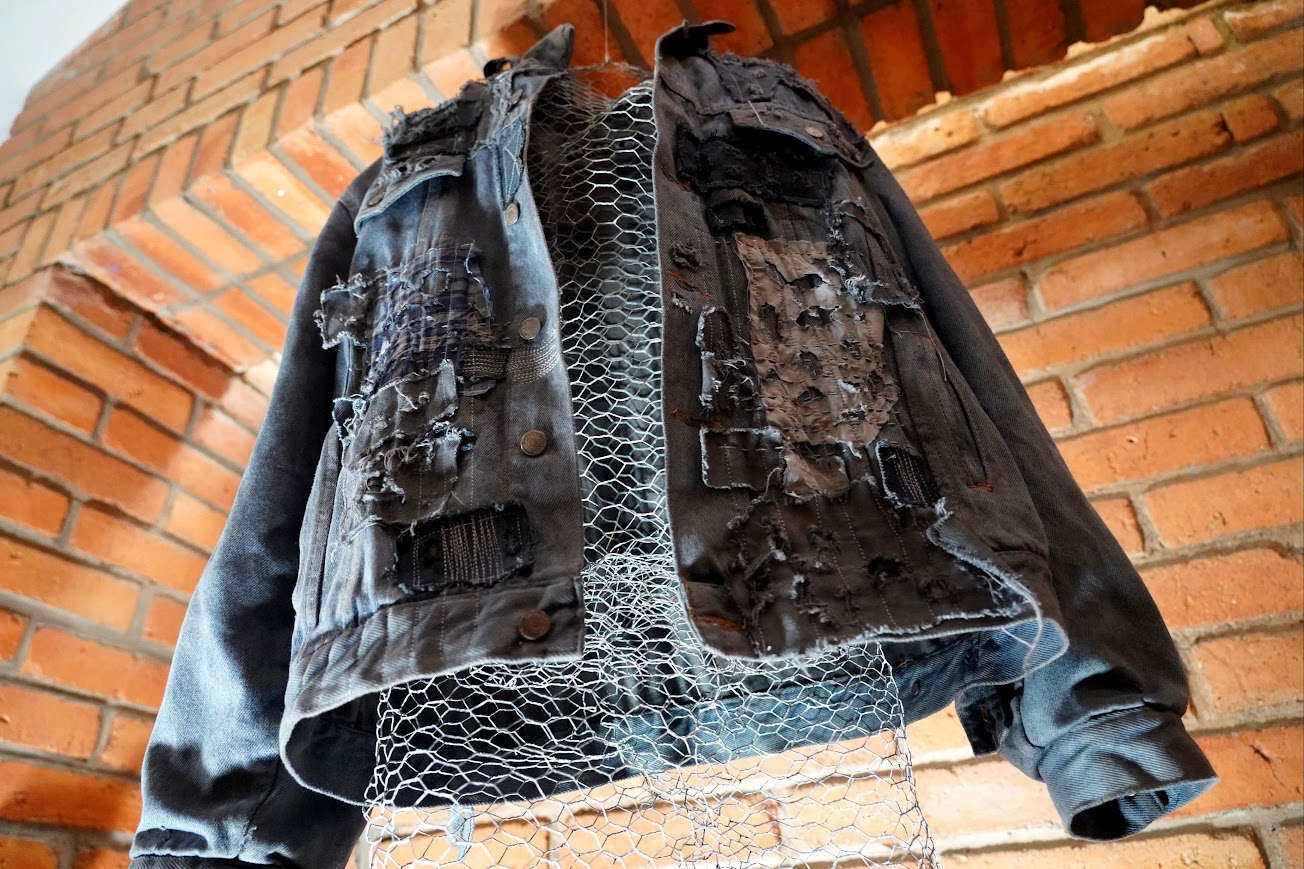
“Decomposed Jacket” is one of Amaru Zapata’s creations.
“She showed me what to do with the machines,” said Zapata. “Unfortunately, she never came back after that. I really wanted to have her at my show to show my appreciation.”
By himself in the empty studio, it took little time for Zapata to master the textile machines. By summer’s end, he felt confident enough to begin his creative dreams and designs with textiles.
Zapata chose one of the most versatile, durable, and highly sought-after fabrics on the market: Denim.
It has a long history. The ubiquitous textile goes back to the 15th century, when the Genoese Navy started outfitting its sailors with it.
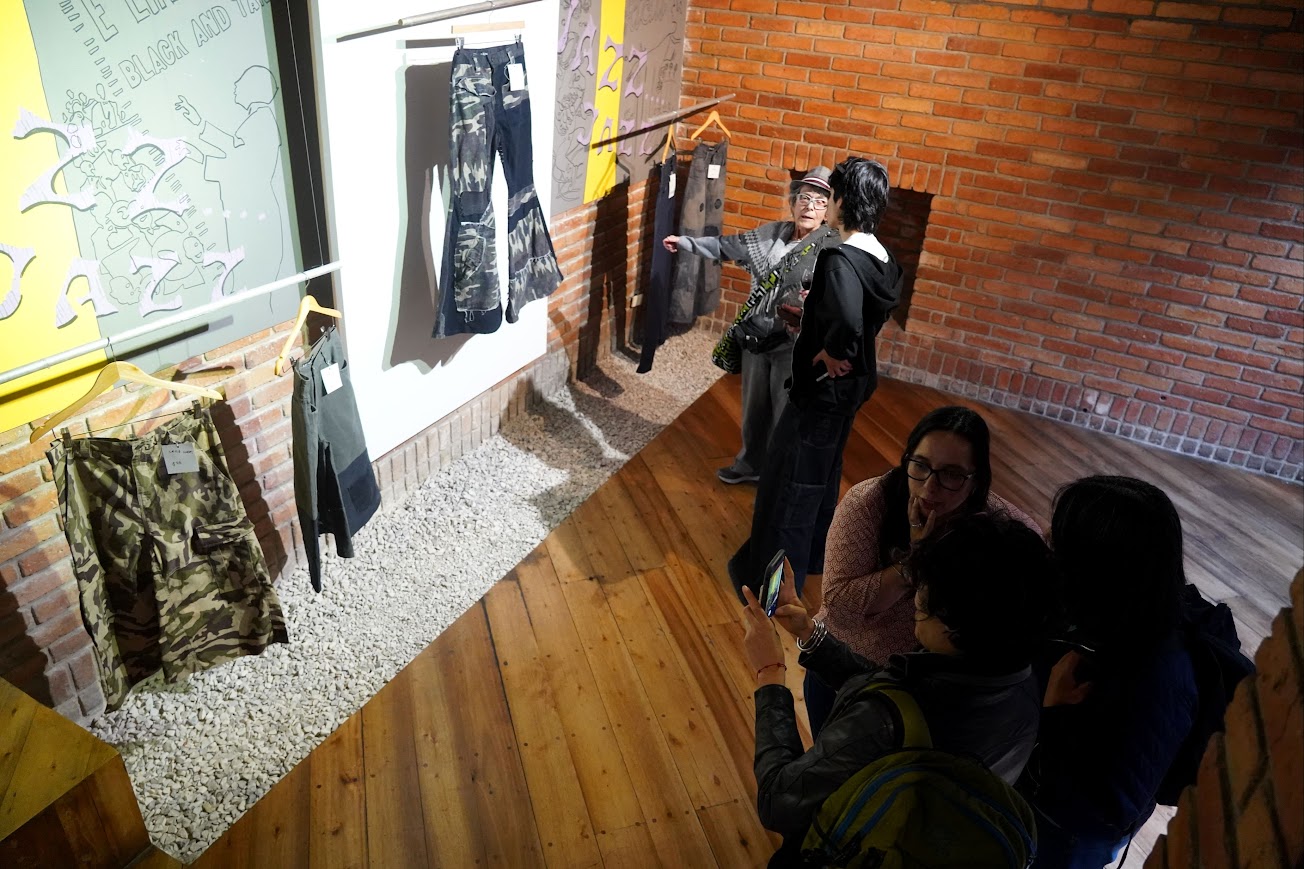
Amaru Zapata’s first solo show, “Re-Defining the Edge,” brought dozens of appreciative fans.
The cotton fabric was used for sails for ships out of the bustling port city of Genoa since the 16th century. The Italians discovered how strong and weather resistant the material was.
The name denim comes from “de Nîmes” (of Nîmes).
A similar fabric in southern France was made using a twill weave, a textile weaving technique characterized by its diagonal, ribbed pattern. The weavers used indigo to dye the warp threads blue, but left the weft threads their natural white color. It gave the fabric a unique blue color on one side, with white on the other.
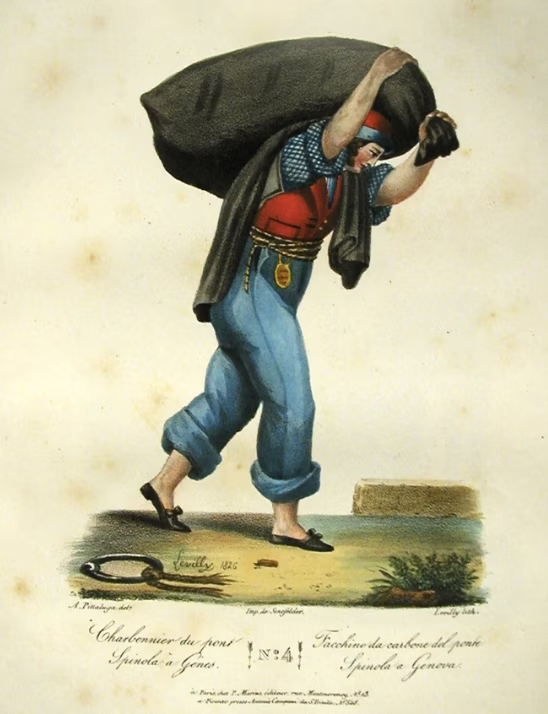
“Coal Porter of the Spinola Bridge in Genoa” by Alessio Pittaluga. The 1826 watercolor depicts people of northwestern Italy dressed in traditional garments (jeans) of the time.
The sturdy and rugged fabric was exported from Nîmes with the name “Bleu de Gênes” (Blue of Genoa). Hence the name blue jeans.
The fabric from Nîmes quickly gained popularity, especially in England. In the 18th century, denim crossed the Atlantic and found its way to the New World.
“Jeans can tell a story. They are interesting. I find meaning in jeans,” said Zapata. “I find beauty in faded pants, threads, and splatters.”
After finding his calling, Zapata met Su Terry, an internationally acclaimed saxophonist and clarinetist. Terry grew up with Dave Brubeck’s sons in Connecticut but now makes Ecuador her home.
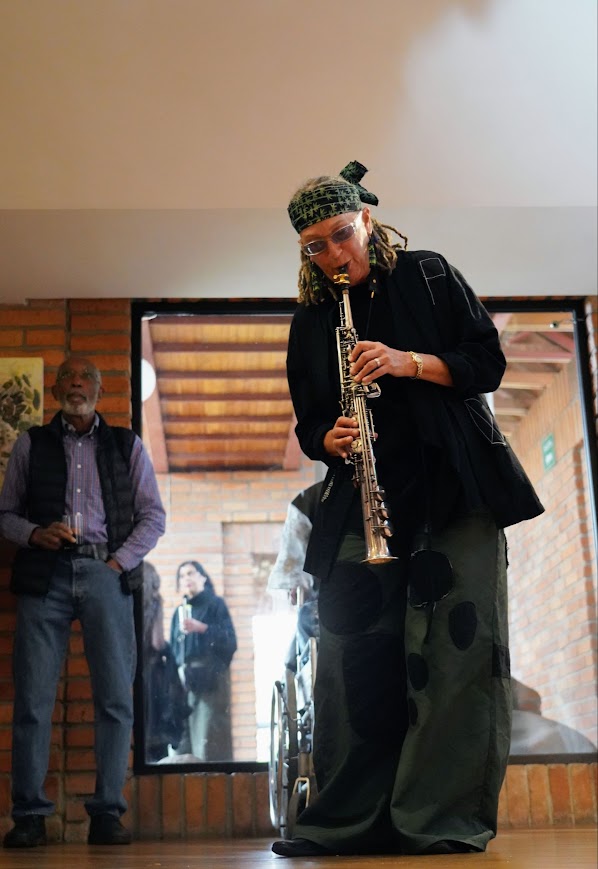
Saxophonist Su Terry performed at the show with a jacket and pants created by Amaru Zapata.
“When I met Amaru two years ago, I introduced him to a couple of designers who live in Cuenca,” said Terry. “He started with no money and no machines.”
His love of denim had him selling his upcycled jeans under his own label, Balistik 07AM.
“Some people interpret the name as a time,” said Zapata. “07 is the year I was born. AM are the first two letters of my name. And Balistik just sounds good.”
With the earnings from his first sales, Zapata was able to buy a domestic sewing machine and two professional sewing machines in just over a year.
Self-taught, Zapata is looking outside of Ecuador to continue his education.
“I love it here. I really like it here, but the city is really conservative, especially for fashion,” said Zapata. “I am looking at Europe for a scholarship, especially in Milan and Paris. The United States now is complicated.”
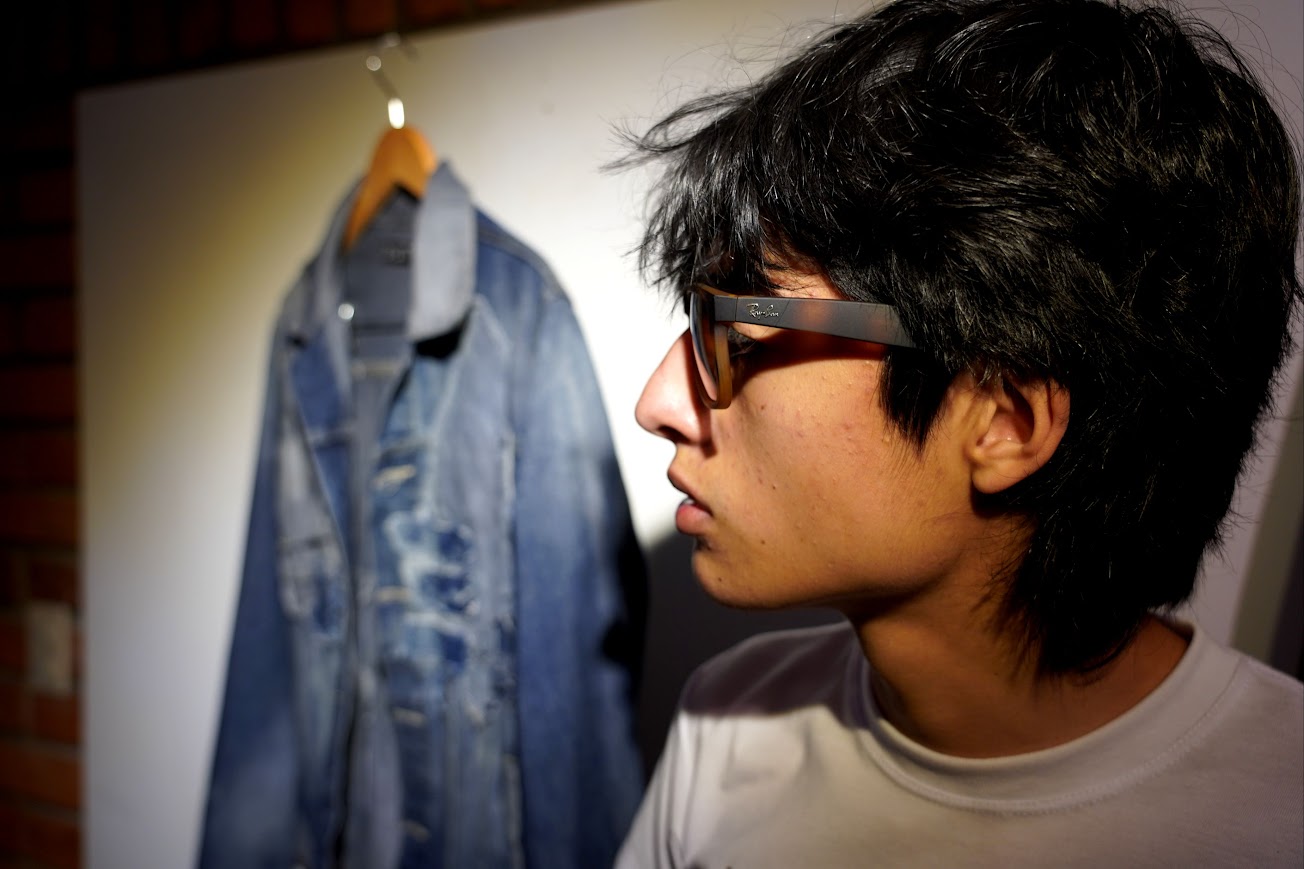
Amaru Zapata: “Bringing together clothing and fashion as a form of art, challenging stereotypes, stepping out of your comfort zone, and confronting your innermost being.”
Zapata has looked at UDA but feels there should be more encouragement for creativity. He feels their program is too regimented.
Like many artists, Zapata is his worst own critic.
“I feel like I am really hard on myself. But that has made me better,” said Zapata. “I step back and look at what I have done and end up liking it.”
“He has a lot of talent and Amaru is very motivated,” said Terry. “While many his age wish to do this and that, Amaru is pursuing his dreams.”
Terry thinks so highly of Amaru’s work that she gave him her black jacket to do “something with it.” Terry was thrilled with what he did with it as well as the green pants he made for her that she wore both for his opening, where she performed for the patrons.
“I made a special outfit for Su Terry, including pants with patches,” said Zapata.
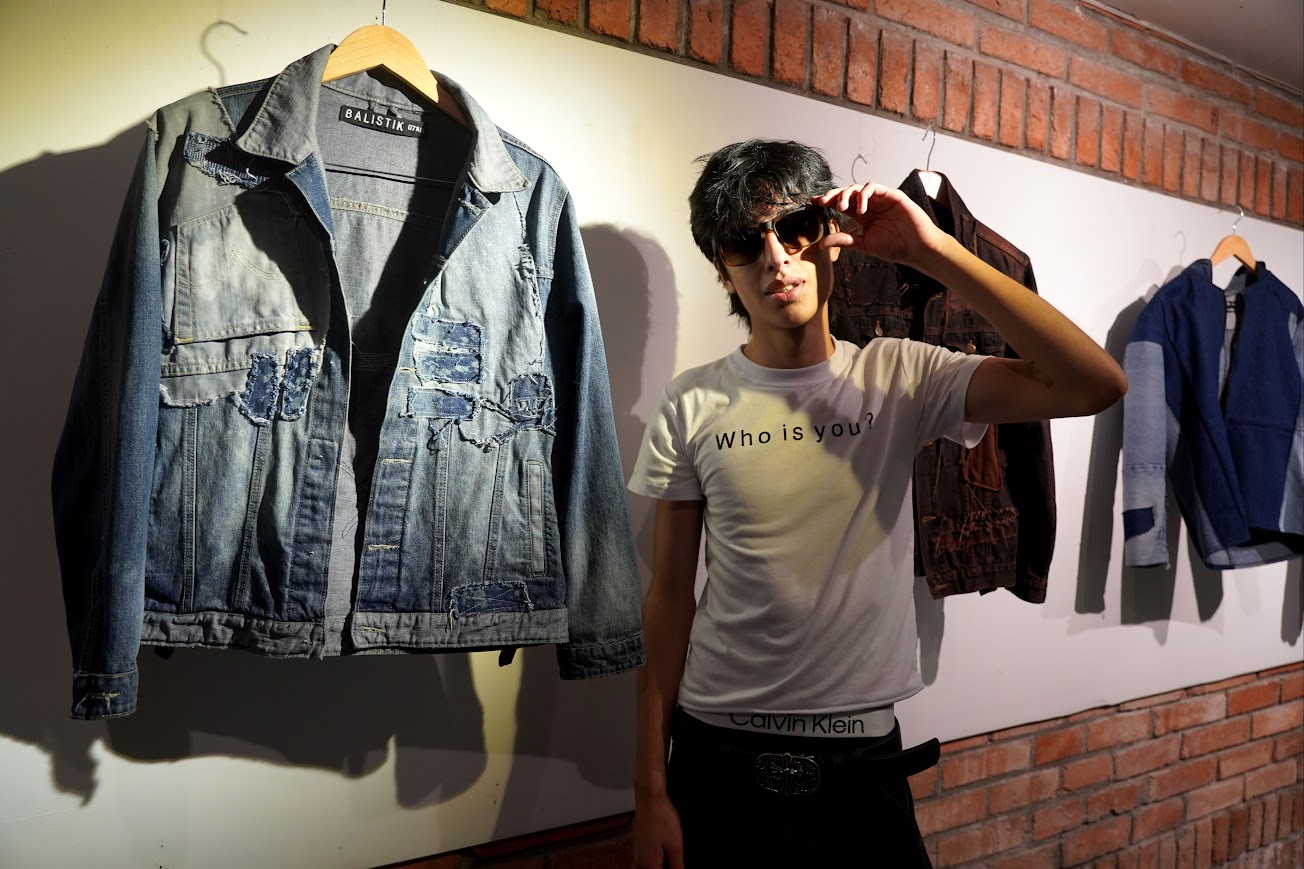
“Fashion is a way of expressing who you are. It’s about breaking away from the ordinary and venturing into the unknown.” ~Amaru Zapata
One of the patrons at the opening was Lynn Mizono. She was one of the two designers who Terry introduced Zapata to.
“I have had the pleasure of knowing and watching Amaru’s progress over the last year and a half and I have never witnessed anything like it in my almost 60 years of designing clothing! He has already taught himself how to sew like a professional as well as design,” said Mizono. “The fashion business has always been a complex area in which to enter as a young designer. One advantage of Amaru in entering this arena is his innate business and marketing sense. He is his audience. He is his customer.”
Zapata has turned to Instagram. Over two million businesses worldwide connect with people on Instagram, according to its parent company, Meta. And he has a website for his creations.
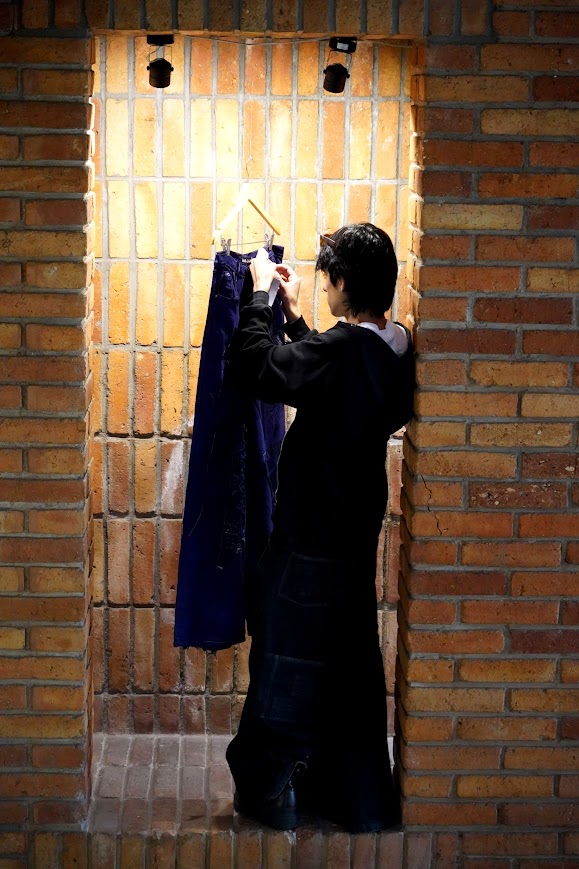
Amaru Zapata does some final touches to his first solo show.
It introduced Amaru to an international audience. A recent video of his work on Instagram had over 10 million views.
That has opened up markets outside of Ecuador for Zapata as he recently sold a pair of patchwork sweatpants to a customer in Ashdod, Israel. Zapata has sold several clothing items to customers in New York City.
“Ecuador has been very linear. Men wear this. Women wear that. And children have something else,” said Zapata. “People should stop worrying about stereotypes about what to wear.”
Greatly influenced by the styles of the 1960s and 1970s, Zapata’s clothes are a twist of what was popular. He mainly creates unisex pants, but with a nod to what was worn by hippies, bohemians and non-conformists.
“I love bell bottoms,” said Zapata. “Fashions from that time period were more authentic and more appealing.”
He so strongly believes that. Zapata wore black bell bottoms to his opening. The bottom leg openings had to be nearly 26 inches.
Prices for his unique pants are in line what one pays in the United States. In 2024, average prices U.S. consumers paid for a pair of mass-produced denim jeans was $61, according to Cotton Incorporated.
Unique pieces by Zapata are $60 to $150. What he wore to the opening will set one back $150. His jackets cost a little less. For Ecuadorians, that may be too high of a price.
“I give a price break for Ecuadorians who can’t afford it,” said Zapata.
Mass produced ripped jeans have been around for quite a while in a variety of iterations. They have been overly ripped and casual as fashion expert and stylist Naina Singla described them to InStyle magazine. Zapata finds those jeans over the top.
“The jeans that have lots of holes and are very distressed are exaggerated,” said Zapata. “I like patches for a distressed look.”
“It is rare to find such a gifted talent as Amaru,” Mizono said.
She added that Zapata has an excellent eye for detail and an amazing amount of patience. Mizono notes that one pair of Zapata’s jeans that used Boro, a Japanese process of using patchwork and multiple layers, and Sashiko, a Japanese decorative stitching technique, took him over 42 hours to sew.
“This young man will undoubtedly be a leading force in Ecuadorian design, fashion, and creativity. I believe he is destined to become one of the first well-known cutting edge Ecuadorian designers,” said Mizono. “He has talent, personality, and an inherent instinct well beyond 17 years.”
_________________
Balistik 07AM, https://balistikstudio.com/, Instagram: https://www.instagram.com/balistikstudio/
Photos by Stephen Vargha
Stephen Vargha’s second edition of his book about Cuenca, “Una Nueva Vida – A New Life” is available at Amazon in digital and hardback formats. His award-winning blog, “Becoming Cuenca,” supplements his book with the latest information and hundreds of professional photos by him.