
















Colombia reduces power transfers ahead of El Niño as the Mazar reservoir level drops
Colombia is reducing the amount of electricity it sells to Ecuador as part of preparations for El Niño. On Sunday and Monday, power transfers from Colombia were reduced by more than 50%, catching officials at the Ecuador Electric Corporation (CELEC) by surprise.
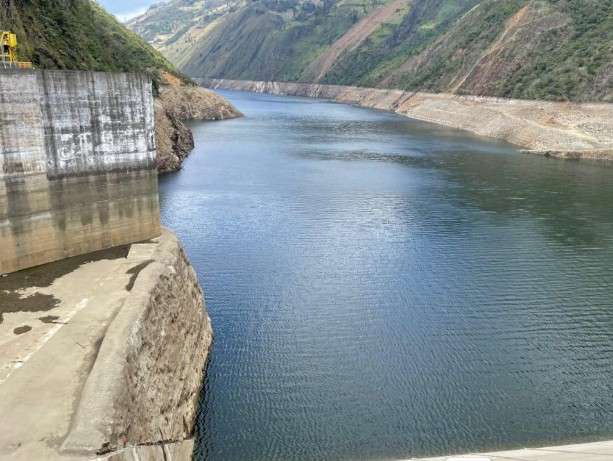
The water level at the Mazar reservoir in eastern Azuay Province has dropped eight meters in three weeks.
In a statement on his X account Monday, Colombian President Abelardo de la Espriella announced the “Energy Now Plan” which encourages energy conservation. “We are anticipating the El Niño crisis and are saving today to protect Colombia’s energy resources for tomorrow.”
The plan provides utility discounts for customers who reduce electric consumption by 10% and surcharges for those who don’t.
Espriella said the new measures are intended to maintain water levels at Colombian hydroelectric facilities as El Niño drought conditions intensify. “Because of the strength of this weather system, we expect the drought to continue into early 2027,” he said.
He did not mention Ecuador specifically in his statement but said “Colombia’s welfare will come first regarding electricity needs.”
Officials at CELEC, who received details of Colombia’s plan Monday, said the reduction of electricity transfers will require increased generation at several hydroelectric plants, including the Mazar complex. They explained that power transfers from Colombia will continue for the foreseeable future but at sharply reduce levels.
Since the transfers resumed in early August, as much as 400 megawatts have been purchased by Ecuador from private Colombian companies. “They will continue to sell electricity, but this is subject to availability and the impact of El Niño,” energy consultant and former CELEC director Darío Dávalos said. “The new rules restrict the sale of hydroelectric power so Ecuador will be purchasing thermally generated electricity at a much higher price and the cost of diesel fuel is rising.”
Engineers at the Mazar complex reported Sunday that the reservoir level has dropped eight meters since the second week of August due to limited rainfall. The level currently stands at 2,144 meters above sea level, 46 meters above the minimum operational level.
“Ecuador faces a very difficult scenario in its electricity outlook,” Dávalos says. “We are already several weeks into the seasonal dry period and, if El Niño projections are correct, we will experience an extended drought into next year.”
The situation is complicated by the failure to add new generation capacity to the country’s power grid, Dávalos says. “After the 2024 blackouts, the government presented plans to increase the electric supply by 20%, or 1,300 megawatts, within two years, but this has not happened. Because of contractual failures, the Progen generator scandal and repairs to existing thermal plants, we have seen a net gain of only 200 megawatts.”
He added: “The country is in a very vulnerable position.”



Hogar Esperanza News

Fund Grace News

Property Manabi

The Cuenca Dispatch

Week of September 06

U.S. sinkings of Ecuadorian fishing vessels trigger court scrutiny after 28 crew members are released.

Cuenca targets a November launch for its first new international link to Chiclayo.

Exports hit a quarterly record, but Ecuador’s import bill is rising even faster.
Nice apartment banner

Fabianos Pizzeria News