
















Design problems, corruption at Coca Coda Sinclair hydro could prolong Ecuador’s energy crisis
By Liam Higgins
Although the government is crediting higher flow levels on the Rio Coca for boosting power generation at the Coca Coda Sinclair hydroelectric plant and allowing a reduction of blackouts, experts claim this is only part of the story.
“It is true the plant needs consistent water flow to produce electricity, but higher flow does not necessarily mean more production,” says Ricardo Buitrón, former chief of the country’s Electrification Institute (INECEL). “On Saturday, the plant shut down completely for several hours because there was too much water.”
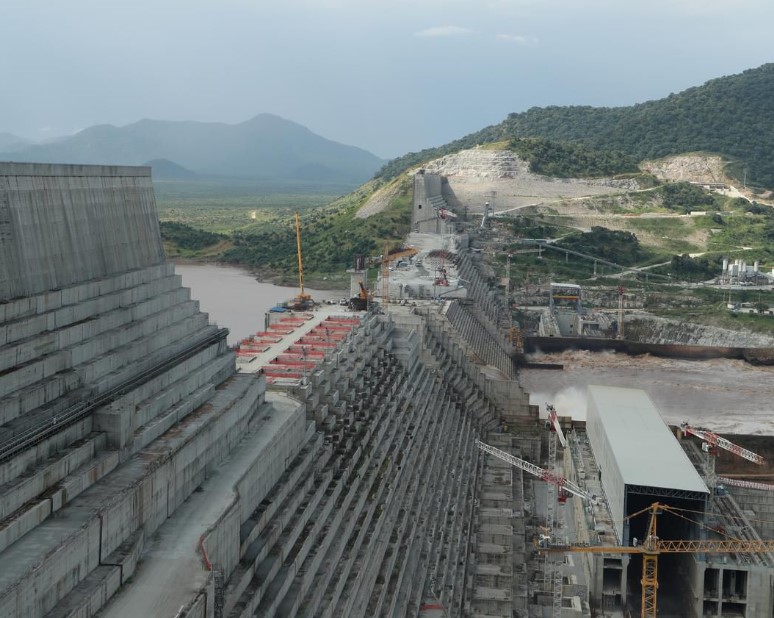
The Coca Coda Sinclair hydroelectric project during construction in 2014.
Buitrón says the government is “misrepresenting” the situation by claiming the shutdown was the result of reduced flow of the Rio Coca. “They need to tell the truth about the Coca Coda and explain that technical problems at the plant make it difficult to rely on.”
In statements on Saturday and Sunday, Deputy Energy Minister Fabián Calero said that increasing rainfall was allowing Coca Coda Sinclair to increase power production, allowing blackouts to be reduced from 14 hours to six beginning Tuesday. He acknowledged a five-hour plant shutdown Saturday but said it was the result of low river flow.
Calero said that higher production at Coca Coda Sinclair would give the Mazar reservoir in Azuay and Cañar Provinces and the three generation plants it serves “time to recover.” He also suggested that blackouts periods will remain low through November and could be eliminated entirely in December. “Improvements at Coca Coda Sinclair due to increasing rainfall will make this possible,” he said.
The problem with Calero’s outlook, says Buitrón, is that Coca Coda Sinclair is forced to shut down frequently when Rio Coca experiences high flow rates. “The turbulence sends rocks and logs and sand into the intake chambers and generation must stop to protect the turbines,” Buitrón says. “The screens and filters must be cleaned before generation can resume and this is the result of design mistakes. It means the plant goes in and out of service.”
According to Buitrón, Coca Coda Sinclair has produced as much as 1,100 megawatts over the last 10 days but nothing at all at other times. “The average is about 400 megawatts, which is probably not enough to reduce blackouts over the longer period while we wait for Paute-Mazar to recover.”
Coca Coda Sinclair, constructed between 2010 and 2016 at a cost of $2.6 billion, was designed to produce as much as 1,500 megawatts but has rarely reached that level, according to records. The plant is located in Nabo Province, east of Quito.
Buitrón and other energy experts agree that the problems at Coca Coda Sinclair began long before the plant went into operation. “Despite its large scale and expense, the project was a rush job and proper studies and analysis were not conducted. The geology of the Rio Coca area was not suitable for the flow-through technology of the plant and, when this was discovered, it was too late to make changes.”
Had adequate studies been performed, hydroelectric engineer Gabriel Secaira believes Coca Coda Sinclair would have been designed with a reservoir. “The flow-of-the-river concept works in some areas, including Europe, due to terrain and soil conditions, but it’s not suitable for mountainous regions like ours,” he says. “Unfortunately, because of gradient issues, we cannot go back and fix the problem. That is why the facility has a limited lifespan and will need to be abandoned completely within a few years.”
Electrical engineer and former assistant director at INECEL, believes Coca Coda Sinclair will go out of service within 10 years. “Many people are to blame for the problems in the design and construction of the facility, and it’s difficult to put the blame on anyone in particular,” he says. “The Chinese contractor bears much of the responsibility, but government engineers also made mistakes.”
He adds: “Corruption also played a major role in the fiasco and it’s not clear when Sinohydro began paying bribes to the government officials in charge of the project. It probably began in the planning stages, which puts us in the position we are today.”