












Esperanza Thrift Shop is tailored to the community
By Garry Vatcher
Thrift Shops. We love them and we hate them.
Growing up in my small Newfoundland town, I didn’t have much exposure to thrift shops. In bigger towns, they were seen as places for those with limited resources — not somewhere people would shop if they could afford better.
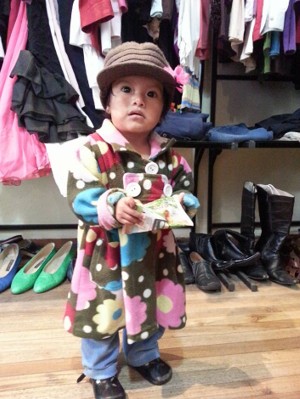 Personally, I never cared for thrift shops. Severo, my Ecuadorian partner, on the other hand, was their number one fan. Our Saturday ritual when we lived in Toronto included shopping at the upscale St. Lawrence Market, followed by me standing outside Goodwill while Severo rummaged through bins and racks inside like he was on a treasure hunt.
Eventually he would come out beaming with his arms full of what looked like a clown’s wardrobe: colors that didn’t match and patterns that gave me a headache. In contrast, I was loyal to Tip Top Tailors, where traditional wear came in predictable colors and styles.
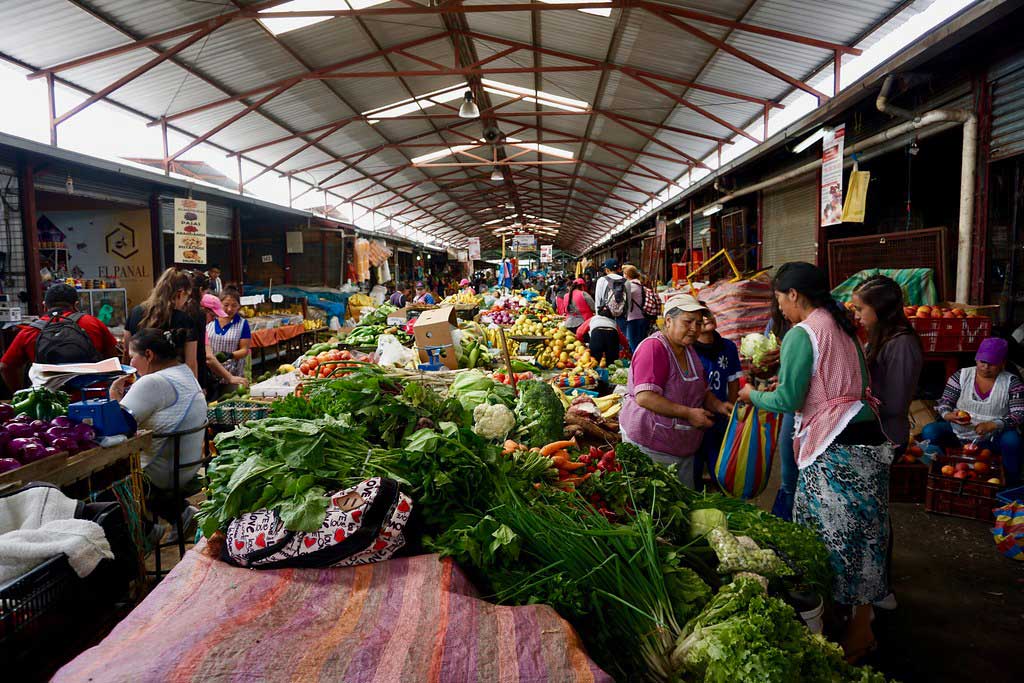
When I first came to Ecuador in the 1980s, I assumed thrift shops would be common due to widespread poverty and Severo’s fondness for secondhand clothes. However, what I found was unexpected. Severo took me to Feria Libre in Cuenca where I saw countless vendors selling cheap used clothing. “This is where many of the donations from wealthier countries end up,” he explained. They are not given away but sold by vendors in these markets.
Foundation Hogar de Esperanza was established as a legacy to Severo and to honor all that he taught me about Ecuador and its people. It was only natural that a Thrift Shop would become part of this foundation. In 1993 when I buried him in Cuenca, it felt appropriate that he was dressed in his favorite finds from the Thrift Shops in Toronto.
In August 2016, I opened the Esperanza Thrift Shop. At the time, I was told that it wouldn’t work.
“Ecuadorians won’t buy used clothing,” “Expats won’t donate.” “It’ll be as popular as a snow shovel in Guayaquil,” I was warned.
But I pressed on. I have learned that Expats love to donate, but we soon realized their clothing often wouldn’t fit the smaller Ecuadorians that we serve — you can’t exactly give a XXL sized shirt to a child. We learned much of the clothing donated during the coastal earthquake, ended up in landfills since clothing appropriate in the Andes proved not be appropriate for the hot coastal climate.
I worked on developing a different type of Thrift Shop that donates clothing to those in need and raises funds for our charity. Items deemed not sellable would be repurposed, avoiding landfill or resale for personal profit.
Today, I’m proud to say Esperanza Thrift Shop treats donations with the respect they deserve: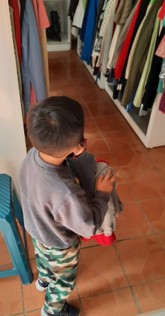
- First, we help those in need. Tens of thousands of items have been given to people — and not just dumped on them. They shop with dignity using store credits, choosing what they like.
- Second, profits support our medical and social programs, raising over $50,000 a year.
- Third, we create jobs and provide training. From donation pickups to customer service, our thrift shop offers employment and skill-building.
- Fourth, we get creative! Oversized shirts become baby blankets, pet toys, or diaper bags. Broken appliances get repaired by youth who are learning valuable skills. Nothing goes to waste — if it can’t be worn, it gets reincarnated.
I used to hate thrift shops. Now? I love them — well, our thrift shop, at least. I even buy my clothes there. Who would’ve thought? Tip Top Tailors probably has a missing person’s poster of me by now.
On a recent trip to Newfoundland, my mother noticed my new fashion sense — or lack thereof. “Where’s all your fancy clothes?” she asked, eyebrow raised.
I joked, “Well, no one’s donated men’s clothes recently, so no fresh outfits for me!”
She was horrified. “You were not raised like that!” she yelled, before storming out with my father. When they came back, my dad whispered conspiratorially, “Don’t be mad — she bought you some new clothes.”
Cultural norms are hard to change, but Esperanza Thrift Shop is making progress. Ecuadorians are now bringing in donations, reshaping what a thrift shop can be in the community.
Every time we deliver a baby starter kit to a young mother; every time we provide boots to kids in the Amazon or give medication to someone who can’t afford it — I feel Severo smiling down. So, when you support Esperanza Thrift Shop, know that your donations are used with respect, creativity, and a whole lot of love.
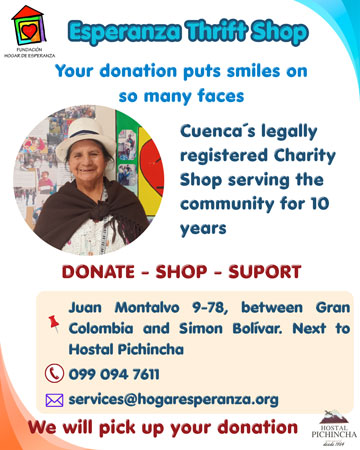
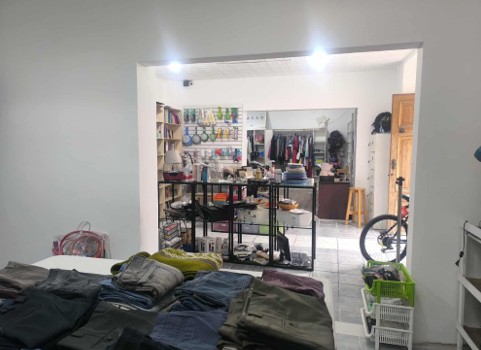 Esperanza Thrift Shop has grown. From its humble beginnings, we now serve the community from our brand-new renovated store located in the Hogar de Esperanza complex at Juan Montalvo 9-78, boasting over 800 square feet of space. We have started training programs for seniors and single mothers where they make interesting items that we sell in our reception lobby. Those profits go directly back to those individuals.
Stay tuned because in the coming month, we will be opening our first on-line store where you can shop from the comfort of your own home. Not only will we have donated items for sale, but there will also be new items and the option for you to sell your own goods on consignment. On October 4th, we will also be having a fashion show highlighting some of the exquisite finds from our Thrift Shop.
Help us celebrate nine years of service by getting rid of things you no longer need and donating them to help those in need. You can contact us at services@hogaresperanza.org or at 099-094-7611 to arrange for a pickup.
_________________
Garry Vatcher is president and founder of Foundation Hogar de Esperanza. He has been coming to Ecuador since 1987 and permanently moved to Cuenca 11 years ago. The foundation provides emergency assistance to thousands of people each year. With his guidance, the foundation has forged alliances with some of Ecuador’s major institutions including hospitals, the National Police, Amazon communities, universities, and governments. The foundation has received numerous awards and recognition for its work from local and international bodies. For information about all Foundation Hogar de Esperanza projects, go to https://hogaresperanza.org