













Funerals, femurs, and forbidden exes.
For most of my life I suspected that old people were up to something. They had a club, a code, perhaps even a ritual handshake.
As a teenager I caught glimpses: my grandmother, who occasionally offered solemn homilies about patience or thrift, but never once mentioned that she had married at the age of seventeen to give my grandfather something to look forward to when he was on shore leave from World War I. The rest was silence. It seemed clear that the real business of old age was conducted in secret chambers, with the curtains drawn.
 Recently, I was invited to what can only be described as the Inner Circle: a clandestine gathering of Cuenca High Life columnists. Picture, if you will, a conclave of cardinals and high priestesses, but with more orthopedic shoes. To my astonishment, I was the youngest present other than our hostess. They let me in anyway, perhaps assuming I had finally passed whatever initiation was required — probably surviving my first colonoscopy.
At last, the veil was lifted. The number-one obsession of this society? Funerals. Not in the distant, philosophical sense, but in the practical, retail sense. Should one prepay or postpay? Cremation or burial?
I listened to passionate arguments worthy of the Senate in ancient Rome. The merits of an urn were debated with all the fervor of Caesar crossing the Rubicon. One fellow leaned in confidentially and told me he had already chosen his niche at the cemetery, “best location in the building, elevator access.”
The second sacred topic was hospitals. Not whether they cured you, but whether they upgraded your spare parts efficiently. Heart transplants and knee replacements were weighed like features on new smartphones. “That hospital gives you the latest model knee, titanium and Bluetooth-ready,” one whispered. “But their stents are out of date.” Everyone except yours truly seemed to have a pocket-sized Consumer Reports of Cuenca’s cardiologists.
And what of family, you ask? A few brave souls ventured references to children or grandchildren, but these were swiftly ignored, as though family anecdotes were an unseemly breach of protocol. Ex-wives did surface once or twice, but only in careful, tangential murmurs—murmurs kept brief, perhaps because of the alert ears of current spouses, who were watching like Stasi informants. It was safer to debate burial plots than marital ones.
So there you have it. I have infiltrated the cabal, penetrated the sanctum, and staggered out alive. The great mystery of old age turns out not to be wisdom or serenity, but a rolling seminar on crematoria, cardiologists, and the comparative hand tremor levels of orthopedic surgeons. The public has a right to know. The secret society of elders is exposed at last. and you saw it here first.
And then, inevitably, the talk turned to logistics of the final curtain call—how to line up a good doctor who will sign your death certificate properly without fuss or delay, a matter treated with all the solemnity of choosing a wedding caterer.
From there it meandered into the geometry of conversation itself: the seating protocols in cars and aircraft when one or more passengers are deaf in one ear, and the choreography required so that the right heads are turned the right way and the dialogue is not blown away by the slipstream.
After a lacrimose choral rendition of the official company anthem, The Frank Sinatra classic My Way, the meeting was adjourned.



Hogar Esperanza News
Fabianos Pizzeria News

Fund Grace News

The Cuenca Dispatch

Week of September 20
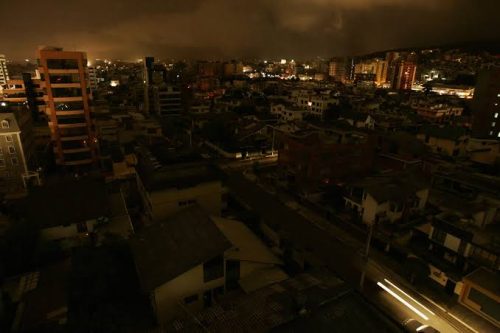
Ecuador turns to industrial power cuts to protect Mazar and keep homes from going dark.

Ecuador raises its 2026 growth forecast, but El Niño could spoil the outlook next year.
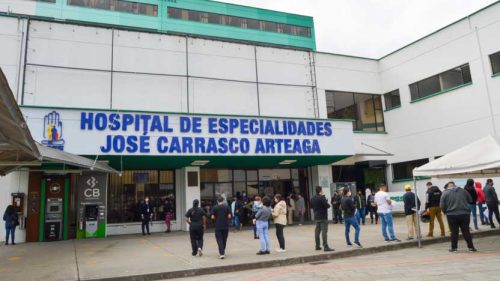
Cuenca retirees challenge medical and therapy changes at IESS senior center.