









How much salt is too much? The answer isn’t as clear as you may think
By Shi En Kim
Salt — that beloved, ubiquitous, indispensable condiment.
An essential nutrient, and yet the source of serious disease when consumed in excess. What counts as excess, however, is a bitter debate among some scientists.
Regularly consuming too much salt can lead to hypertension, or high blood.
For most healthy adults, the World Health Organization recommends eating no more than two grams of sodium a day, and the American Heart Association (AHA) recommends a hard sodium cap of 2.3 grams a day, equivalent to a teaspoon of salt. This limit is based on claims that consuming that amount or less would not raise blood pressure levels. Ideally, the AHA says sodium consumption should be two thirds of that, especially for those who already have high blood pressure.
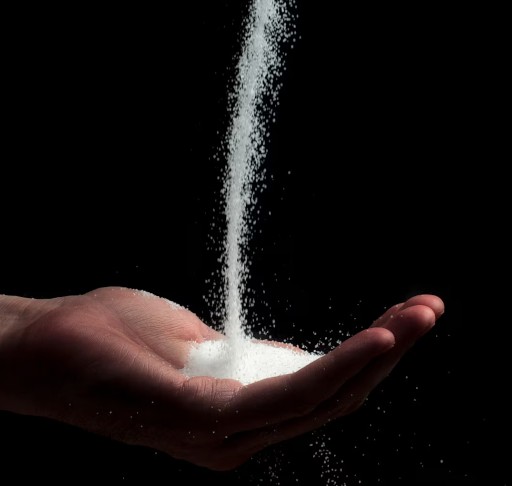 But it’s all too easy to overshoot this limit—a cheeseburger with the usual condiments, a can of soup, or two slices of pizza will each suck up your salt budget for the day.
The daily average sodium intake of Americans currently sits at 3.4 grams. Worldwide, that number is 4.3 grams, propped up by countries in East and Central Asia, which are well-known for their rich cuisines.
When it comes to blood pressure, no scientist disputes the downsides of an exorbitant salt intake. But the controversy lies is the threshold — how much salt is too much?
What does salt do to your body?
Table salt consists of two oppositely charged ions, sodium and chloride. The more maligned actor of the duo is sodium. Sodium ions cue the body to release or retain water so that sodium levels remain steady. But a chronic excess of sodium can push the body too far.
During a sodium spike, the body counters by retaining water, resulting in a blood volume expansion. The heart kicks into high gear to push elevated quantities of blood around. Under high traffic, the blood vessels stiffen, ratcheting up the pressure on their walls. The kidneys also have to slog away to filter out extra salt from the bloodstream that’s then excreted in urine.
All this strains the heart and the kidneys. Like a worn tire that has lost its tread, over time these blood-pressure first responders weaken. Long-term overconsumption of salt can spell kidney failure, heart disease, and stroke.
In other parts of the body, a salt-hooked lifestyle can increase the chances of stomach ulcers and cancer. Moreover, some studies claim that salt pulls calcium from the bone and can lead to osteoporosis, though the effect has not been observed unilaterally across different groups of people.
The debate over salt
Salty food can be particularly hard to limit because our bodies are wired to crave it.
Salt is essential for health. Insufficient dietary salt can lead to muscle cramps, and more serious conditions like insulin resistance and atherosclerosis, a condition of arterial constriction that’s a precursor to stroke. Too little salt can also be fatal, but today it’s rare—only 2 percent of people in the U.S. are at risk of under consuming salt.
Despite this limited risk, some researchers have soured on the low-salt movement for better health, claiming that salt warnings are too strict. In 2013, an assessment published by the Institute of Medicine—a nonprofit science advisory group that now goes by the National Academy of Medicine — reopened the inquiry into the 2.3 gram limit, citing the lack of evidence for such a spartan requirement. Their pushback heightened what’s known in the medical community as the “salt wars”.
After the report, the AHA claimed that the evidence was incomplete and disagreed with the findings.
Sticking with existing healthcare guidelines is challenging in practice, says Franz Messerli, a professor of medicine at the University of Bern in Switzerland. For one, no country in the world has stayed below the sodium ceiling that major health organizations are preaching. Messerli is part of the camp that considers the strict crusade against salt to be overblown.
Part of his argument is that salt’s relationship to blood pressure can be obscured by other factors, such as a person’s medical history, stress levels, occupation (outdoor workers regularly exposed to heat, for example, can get away with a salt-rich diet), and daily habits. Those who have a physically active lifestyle can also tolerate a higher salt intake, as exercise lowers blood pressure.
________________
Credit: National Geographic