












If George Orwell was alive: Observations on a world he warned us about but that we built anyway
If you tell people today that they are being watched, most of them shrug. Some even smile. Surveillance has moved from a threat to a service, from a badge of oppression to a badge of convenience.
George Orwell imagined a world where Big Brother kept constant watch to crush dissent. He did not quite foresee a future where people would volunteer for their own monitoring, trading their privacy for discounts, free shipping, or “personalized experiences.”
In Nineteen Eighty-Four, Orwell depicted a society where language was not merely distorted but weaponized: where “freedom is slavery” and “ignorance is strength.” The goal was not persuasion but confusion, the slow erosion of a citizen’s ability to think clearly.
 Today, the assault on language is subtler, but just as corrosive. Euphemism reigns. War becomes “stabilization efforts,” censorship becomes “content moderation,” lies become “alternative narratives.” Words, once tools of clarity, now serve primarily to soften, to mask, to mislead.
Orwell warned that truth would be the first casualty of totalitarianism. But he could not have predicted how willingly truth would be sacrificed on the altar of partisanship, distraction, and convenience. It is not that information is hidden; it is that it is drowned, buried under floods of noise. The Ministry of Truth does not need to rewrite history if it can simply overwhelm it with ten thousand versions.
Most unsettling of all is the realization that the dystopia Orwell feared no longer needs jackboots or secret police to survive. It thrives through apathy. When surveillance is accepted, when language is hollowed out, when truth is optional, there is no need for overt tyranny. The machine runs on consent, or at least on indifference.
In Orwell’s imagined future, fear was the primary weapon of control. In ours, it is distraction. The telescreen has been replaced by the smartphone, but the end result is much the same: a populace too busy, too entertained, too numbed to notice the bars closing around them.
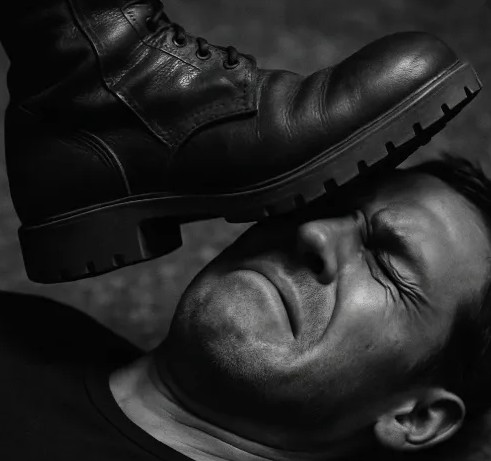
We do not live in Orwell’s world precisely. We live in something stranger: a world where many of his nightmares have come true, but dressed in brighter colors and softer words. It is not a boot stamping on a human face forever. It is a smiling avatar asking if you’d like to “opt in” to personalized tracking “for a better experience.”
Orwell wrote, “To see what is in front of one’s nose needs a constant struggle.” That struggle is harder now, not because the nose has changed, but because the air is thicker, the distractions louder, and the lies more politely worded.
The future Orwell warned about is not just here. It is home.
________________
Follow Charlie Larga on Substack.