












Military report claims criminal gangs have established ‘micro-states’ in coastal and Amazon provinces
According to a report released by a former army intelligence chief, criminal organizations have established micro-states in Ecuador. Colonel Mario Pazmiño, regional director of Latin American Security College, describes the micro-states as criminal sanctuaries where gangs have replaced local government authority.

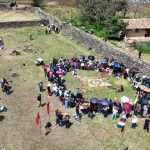
Criminal gangs openly display their authority in micro states, including in this community in Carchi Province.
According to Pazmiño, the micro-states are operating in Durán, Nueva Prosperina, Esmeraldas, Santo Domingo, Portoviejo and in at least two communities in Carchi Province on the Colombia border. “These have been developed on critical land and sea drug transport routes from Colombia to the shipping ports in Guayaquil, Manta and Machala, while others are forming in Amazon mining districts,” he says. “These sanctuaries are spaces where police and the military are afraid to enter and have increased in size since 2024.”
Most of the micro-states are run by the Choneros, Tiguerones and Lagartos gangs, says Pazmiño, although smaller splinter groups are also “players in the game.”
Under the government’s war on narco gangs, the military has carried out patrols in all sanctuary areas, Pazmiño says, but the operations are limited. “There is a show of force for several days but then the military and police withdraw and the gangs reestablish criminal governance. Unless there is an ongoing government presence in these micro-states, the criminals will remain in control.” He adds that although the primary intent of gangs is to maintain control of drug and mining transportation routes, they also exert authority over local businesses through extortion and even operate within schools and hospitals.
One of the most alarming aspects of the micro-states, says Pazmiño, is the gang strategy of recruiting boys as young as 10. “The drop-out rate in the schools is as high as 50% and these children have no option but to join the gangs,” he says. “An entire generation is being trained as killers and is being taught that territorial battles with competing gangs is a normal way of life.”
Ironically, says Pazmiño, the micro-states often operate more efficiently than the elected governments they replace. “Through extortion, they have established a quasi-taxation system and they control the roads and highways and even who gets treatment at clinics and hospitals.”
He adds: “The legitimate authority remains in place, in the mayors’, prefects’ and government offices, but it does not challenge gang control. This is similar to the arrangement in large parts of Colombia.”
Without effective government counter-measures, Pazmiño says the micro-states will expand in the coastal provinces and in the Amazon. “First, we must recognize that the problem is not simply a law enforcement issue but also consider its social roots,” he says. “Yes, we must establish a continuing military and police authority in these areas but, at the same time, we must address the social conditions that allow criminals to dominate.”
All micro-states, which can be areas as small as five or six city blocks, says Pazmiño, suffer extreme poverty and low employment. “The schools and clinics must be fixed and legitimate authority must demonstrate a desire to improve the lives of the people living there, especially the children. Unfortunately, this is not happening, and all the people see from time to time are heavily armed soldiers. There is a limit to what a guns-on-guns strategy can accomplish.”
Pazmiño’s report says the gangs will remain in Ecuador’s coastal region until they are dislodged. “Except in areas of illegal mining, they have no interest in expanding operations into the sierra and most of the Amazon,” he says. “This is a battle to control the major drug routes, and these are on the coast and in the littoral, leading to the ports.”