


















No-so-funny-money: Here’s how to avoid getting stuck with counterfeit dollars circulating in Ecuador
By Frances A. Hogg
It happened to me twice in so many months. I had paid a worker in cash only to have a ten-dollar bill returned to me a day later. I could see immediately that it was fake. The number in the lower left corner was brown, not the coppery-gold color it should have been, and the paper felt different and was too light in color. I knew that counterfeit bills are a huge problem in Ecuador. In March of 2016, seven policemen were arrested in a scheme where 9.8 million dollars in counterfeit bills were confiscated before they could be dumped into the economy. I felt stupid. How could I have been so dumb as not to have noticed such an obvious fake?
On reflection, I don’t believe I was that dumb. I believe I paid the worker only with twenty-dollar bills but assumed he had gotten stuck with a bad ten and decided that the good-natured gringa could probably absorb the loss better than he could. I decided not to press the issue and exchanged the bad bill for another one, this time, with a shiny gold number in the corner.
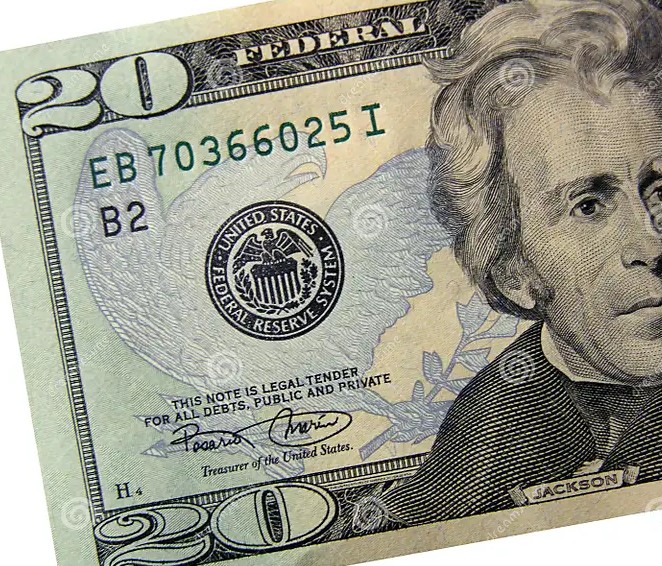 I also accepted the experience as a lesson and promised myself to pay more attention to the money that passes through my hands. I began to check the ink on bills, and the color and feel of the paper. So, I had no problem accepting the $20 bill I helpfully exchanged for a customer who needed change at the Hogar de la Esperanza Thrift Store. It looked real enough. The numeral at the bottom was shiny and it felt slightly raised when I ran my thumbnail across it. But when I bought a bag of coffee at the Carolina Bookstore the next day, I got a call later from the proprietor, Lee Dubs. He said, “I knew it was fake as soon as I saw it.”
My husband Robert delivered an authentic bill to Lee in exchange for the fake one. We examined the counterfeit closely. We showed it to others, and everyone agreed. What an excellent forger. My shiny gold ink test was apparently not good enough. I wondered, should we invest in a bill-checking machine? Or one of those pens that supposedly checks the chemical content of the paper? My research brought up depressing news. New and sophisticated technology allows forgers to manufacture bills that can fool these systems.
So how can you spot a fake? Counterfeiters often can duplicate one or two security features, but not all of them. Try more than one of the following tests:
Check the paper. Compare the feel and texture of the paper with another bill you know is authentic. To me, the paper of an authentic bill has a silkier texture. Also, there are tiny red and blue threads woven in and out of the paper. Some counterfeiters try to reproduce this effect by printing red and blue threads onto the bill in a similar pattern, but the threads are extremely fine. Blurry printing of the threads points to a bad bill.
Do the fold test. Paper currency is composed of 25% linen and 75% cotton, so it can be folded as many as 4,000 times without damaging the fibers. Fake bills will show a sharp crease when folded and a cracking or deterioration of the paper at the fold. But even if the paper it is printed on is authentic, the bill may not be.
Counterfeiters can bleach lower-denomination bills and then reprint them to look like higher-value currency. It is important to check other indicators.
Check the serial numbers:
Every bill of the same denomination has a separate and unique serial number. Identical serial numbers are an indication of a counterfeit. Until 1995, all U. S. Federal Reserve notes had serial numbers beginning with a letter, then eight digits, then one more letter. Now, only one- and two-dollar bills have this numbering. If the serial number of your five- or higher denomination bill begins with only one letter, it may be counterfeit.
The first letter at the beginning of the serial number is always a letter between A and L. For the second letter, O and Z are never used. Sometimes the last letter is replaced with a star. The serial number is printed twice on either side of the bill. In the upper left-hand corner, you will find a letter and a number printed in black ink under the green serial number. The letter should match the second letter at the beginning of the serial number. If it doesn’t, the bill is fake.
Serial number letters also correspond to specific years/series. You can find the letters that correspond to different years on the internet.
Check the watermark:
All bills higher than ones and twos contain watermarks. A watermark is made by pressing an image into the paper during its manufacture, causing minute differences in the thickness of the paper. If you hold a bill to the light and look on the far-right side of the bill, a watermark of the same image as the bill’s portrait should appear. (If Abe shows up on your twenty, the bill has been bleached and reprinted in a higher denomination.) Some counterfeiters try to print a watermark, but a true watermark is only visible when held up to a light. If there is no watermark or the watermark is visible without being held up to the light, the bill is a fake.
Check the ink:
The black ink used to print U.S. currency contains iron. If you fold a bill in half so that part of it stands upright, and pass a magnet over it, the paper may follow the movement if the magnet is strong enough. Also, all authentic U.S. print currency has raised printing which is difficult for counterfeiters to duplicate, however, MY fake $20 had raised printing! To detect raised printing, run your fingernail across the bill. You should feel a difference between the printed and non-printed areas.
Check the special ink:
Since 1996, bills with a value of five dollars or more have the denomination printed with special ink that is thicker to the touch. It is a coppery-gold but changes color when viewed from different directions.
Look for the Security Thread:
All bills except for the one and two-dollar denominations are imbedded with a plastic strip called a security thread that can be viewed when the bill is held to the light. The strips run from the top to the bottom of the bill and are micro-printed with the denomination (such as USA TWENTY). In the ten- and fifty-dollar bills the security strip is to the right of the portrait, and in the others, it is located to the left.
The security strips glow a different color when viewed under an ultraviolet light: the five glows blue; the ten glows orange; the twenty glows green; the fifty glows yellow, and the one-hundred glows red. The new one hundred-dollar bills have a visible blue security ribbon with a holographic effect—if you view the bill from side to side, little bell designed within the ribbon will move back and forth.
Check the print quality:
Authentic bills are printed on die-cut printing plates with great detail, which allow extremely sharp and clear fine lines. Even digital printings systems are rarely capable of this level of detail. Examine the printing to see if there is any blurring. Also, micro-printing can be found around the portrait. Look at it through a magnifying glass. If the micro-printing is blurred, the bill is probably counterfeit.
Use a counterfeit detection device:
Unfortunately, counterfeiters have been able to get around devices such as special pens that change colors when run across the paper. A UV light may be helpful, as it is difficult for the forgers to replicate the color-specific security strip technology.
What can you do if you end up with a counterfeit bill? While there are unconfirmed reports that counterfeit bills have been issued by some ATM machines, in general, bills you receive from a bank should be authentic. Be diligent when receiving bills from other sources. The twenty-dollar bill is the most frequently counterfeited denomination. If you accept a counterfeit bill you are stuck with it. Don’t try to palm it off on another individual. It is important to remove the currency from the economy. If you follow the steps above, checking every larger bill with two or more of the above tests, you should be able to avoid getting stuck with money that’s not so funny.
________________
Frances A. Hogg is a writer and editor living in Cuenca. She is the founder of the Cuenca Writers Collective. Check out her website at FrancesAHogg.com.