















‘Slavery’ case reveals horrors on Japanese-owned farms; Gov’t to set new minimum wage; Industrial blackouts explained; Pase del Niño agenda
Domingo, 15/121/2024
Hola, Todos –
Titular –
¡El Rey de Copas! (The King of Cups!) – In spite of a 1-0 loss to Independiente del Valle in the finals, the Liga de Quito was crowned champion of the LigaPro 2024. <And there you have as much sports as I can translate.>
Cuenca –
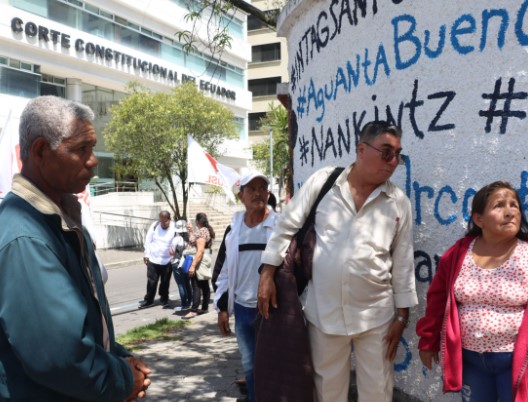
Victims of slave-like conditions at Japanese-owned haciendas in Esmeraldas and Manabi Province received a favorable ruling last week from the Constitutional Court. (El Mercurio)
2 ríos en nivel bajo (2 rivers at low level) – According to ETAPA, there have been 155 days of drought which has caused irregular flows in the rivers. Ayer, the Yanuncay and Tarqui were at low levels with only the Machangara and Tomebamba rivers at normal levels. Citizens reported rain in the Cajas, giving hope that the flows can be maintained and there will be enough water to avoid rationing. <It would be nice to be able to get rid of the big stockpot full of water on the kitchen countertop. It’s been sitting there for “in case” rationing starts without notice.> Sunday update: Following moderate to heavy rain Sunday afternoon and early evening, ETAPA reported that all four rivers were flowing at normal or above-normal levels.
De El Mercurio del sábado, 14/12 (2 articles):
Cardenal Luis Cabrera presiderá Pase del Niño (Cardinal Luis Cabrera to preside over Pase del Niño) – This year Luis Gerardo Cabrera, who was recently named a Cardinal by Pope Francisco, will say the main mass in the New Cathedral on el 24/12. The Niño Viajero parade is one of the religious and cultural traditions most rooted in the hearts of Cuencanos. The day will start with an overflight of the city at 7:30. The parade itself will be extended by 2 hours so that the vehicle with the Sacred Image will descend at 17:00 instead of 15:00.
The image of the Niño Viajero, safeguarded in the del Carmen Convent is paraded through the streets of Cuenca every 24/12, attracting over 90,000 people. The event combines faith, devotion and popular art. <It’s a feat of endurance to watch the whole thing if you don’t have a balcony to sit on with a beer in hand.>
Agenda –
23/12 –
18:00 – Change of padrinazgo (Godfathership or sponsorship) in the Catedral de La Inmaculada.
19:30 – Departure of the image of the Niño Viajero from the Catedral to El Carmen.
20:00 – Vigil of the nuns in El Carmen convent.
24/12 –
07:00 – Departure of the Niño Viajero from the El Carmen convent.
07:30 – Overflight from the Third Division of the Tarqui Army.
08:30 – Mass in the Catedral de La Inmaculada.
09:30 – Rise(?) of the Sacred Image to the parque San Sebastián.
10:00 – Start of the parade.
19:00 – Ending mass.
Sucesos –
De El Mercurio del sábado, 14/12 (1 article):
Tres heridos por caída de árbol en Puertas del Sol (Three injured by falling tree in Puertas del Sol) – 2 women and a boy were injured in the sudden fall of a tree along the bank of the río Tomebamba in the Puertas del Sol sector. The eucalyptus fell onto Ricardo Darquea Granda and Victor Manuel Albornoz streets a las 16:20 ayer. The people walking there were hit by branches, and a roof and outside wall of a house were also damaged as well as a public light pole.
Nacional –
Suspenden multas (Fines suspended) – Roberto Luque, minister of Transporte y Obras Públicas (MTOP) announced that payment of traffic fines issued by the radars on national roads will be suspended for 180 days. During this period, citizens can do paperwork such as register their vehicles, buy and sell cars, and renew licenses with having to pay outstanding fines. This is not debt forgiveness, but a temporary solution to a serious problem. <No naming of what the serious problem is, though. Maybe the power crisis? Or maybe a political decision?>
“Monstruo” llamado Furukawa (“Monster” named Furukawa) – Although slavery was abolished in Ecuador in 1852, haciendas owned by Furukawa, a Japanese company, held thousands of people as slaves for over 5 decades, from 1963 to 2019. According to the sentence from the Corte Constitucional, Furukawa used a type of modern slavery known as servidumbre de la gleba or serfdom. <Sounds like the Spanish colonial encomienda system.> They maintained this system in their haciendas for people who harvested abacá <the strongest fiber in the world and used for textiles> and who lived without running water, electricity, sanitary facilities and without access to health care or education. In order to make this apparently legal, between 2011 and 2019, the company signed lease contracts with the workers. <What were they leasing? The bodies and services of the workers until death did they part?>
The court’s sentence declared that Furukawa violated the prohibition against slavery, nullifying their human dignity, and ordered reparations of $41 million for intangible and material damages as well as public apologies. Each victim was supposed to be paid $120,000 by Furukawa, and of the 1,244 people who were enslaved according to a 2019 registry, barely more than 300 received compensation.
The Court declared that the Ministerio del Trabajo and the Ministerio de Salud did not act speedily in favor of the victims in spite of knowing about the situation since 2018. The court ordered the issuance of a interinstitutional public policy, public apologies, legal reforms to avoid impunity by businesses, to eliminate the practice of slavery and other forms of precarious farm work, the creation of a documentary about serfdom, and the declaration of a day of commemoration for the victims of Furukawa.
In abril of 2021, Carlos Vera, a judge in the Unidad de la Niñez y la Familia del Santo Domingo ruled in favor of the victims and ordered the delivery of 5 hectares of rural land to the plaintiffs, payment for their labor, and held the State responsible for what happened. It also revoked an award to Kiroko Furukawa, attorney for the company, which was awarded in 2005 for services in favor of strengthening the labor sector of the country. <So wrong in so many ways. Arbeit macht frei?> However, the Government and Furukawas appealed and ruled out the delivery of land and exempted the public entities from responsibility. A second action of protection fared badly as well with the judge denying it and the Provincial Court upholding the denial. After this, it was sent to the Corte Constitucional in enero of 2022 which ruled in favor of the workers on el 5/12/2024.
Relato de una pesadilla (Story of a nightmare) – Along with the Comisión Ecuménica de Derechos Humanos (CEDHU), an NGO which sponsored the legal process, survivors of the exploitation told of their lives at Furukawa which they called a “monster.” Daynis Ortiz’s story was a key for the judges to understand the life of a mother in the haciendas where she did not get medical attention before, during or after the birth of a child. She also couldn’t send her kids to school because of the distances they had to walk, and the option was that once they were old enough, the kids were put to work along with the parents. Segundo Ordóñez said many of his coworkers suffered work accidents, and there was no medical attention in any of these cases. Workers lost limbs, they bled to death, and confronted serious illnesses. He said they were treated like animals. At no time did Furukawa deny the victims’ claims.
Also read: Former employees describe ‘slave-like’ conditions.
De El Mercurio del sábado, 14/12 (2 articles):
Gobierno definirá los salarios para el 2025 (Government to define salaries for 2025) – Similarly to the last 8 years, the workers and employers of the country could not agree on the amount to raise the Salario Básico Unificado (SBU). Workers proposed an increase of between $25 & $102, and thought the SBU should reach $562 which is the amount considered the basic basket for the poverty line. The final proposal of $25 from the workers was presented by Cristóbal Buendía, attorney for the Federación de Trabajadores Públicos y Privados del Ecuador. The idea was that the increase should be $100, but it could be done gradually over 4 years with $25 per year. This was done for 2 years during Guillermo Lasso’s administration, but not applied after Lasso left office. In 2024 the raise was only $10.
Employers wanted the raise be be based on Article 118 of the Labor Code and a formula that takes inflation and economic growth into account. The maximum raise employers wanted was $4. Since there was a lack of agreement, on el 20/12, the Government will announce the raise for 2025. The last time labor and employers agreed on the amount was in 2016.
El “apagón” industrial será de 20 días (Industrial “blackout” will last 20 days) – Starting domingo and until next 5/1/2025, at least 7 large industries in the country will need to shut down to save 330 magawatts a day. This action will apply to some industries that are catalogued as AV1 and AV2, which are the largest consumers, but not all. The companies in segment AV2 include 2 large mines (Mirador and Fruta del Norte) and 2 steel mills (Adelca and Novacero). The only company in this group that will keep electricity will be Petroecuador. In segment AV1, the only blackouts will be for the 3 largest cement plants. The rest of the companies, about 100, will have blackouts of up to 7 hours. For the residential sector, blackouts will be reduced to 2 hours from lunes to jueves, and starting el 20/12, there will be no blackouts. <Occupants of residences vote. Businesses don’t vote and campaign financing is different. Does Ecuador have lobbyists?>
De El Mercurio del viernes, 13/12 (1 article):
Extra y ecopaís bajan de precio (Extra and ecopaís drop in price) – The Agencia de Regulación y Control de Hidrocarburos (ARCH) announced new prices for Extra and Ecopaís which went from $2.67 down to $2.64/gallon. <I don’t think that the $.30 saved is enough to buy anything they sell in the mini-market at the gas station.> Super increased from $3.49 to $3.51. These prices went into effect last jueves and will be in effect until el 11/1/2025. Prices for Extra and Ecopaís are based on a system of tiers which prevent increases of more than 5% or decreases of more than 10% while Super is based on the international market.
And that’s all for today so hasta ? –
Jeanne



Hogar Esperanza News

Fund Grace News

Fabianos Pizzeria News

The Cuenca Dispatch

Week of September 20
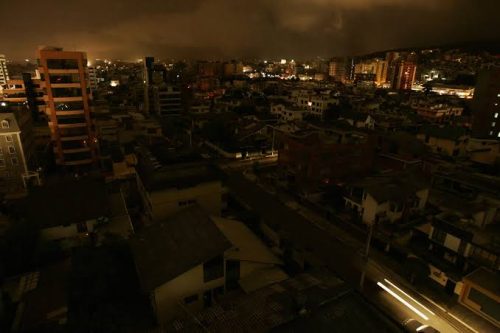
Ecuador turns to industrial power cuts to protect Mazar and keep homes from going dark.
Ecuador raises its 2026 growth forecast, but El Niño could spoil the outlook next year.
Cuenca retirees challenge medical and therapy changes at IESS senior center.