















Former employees describe ‘slave-like’ conditions at Japanese plantation on Ecuador’s coast
Ex-employees of a Japanese textile company in Ecuador told Tuesday of their dire living and working conditions, after the country’s Constitutional Court ruled the firm kept its staff in a “slave-like” setting.
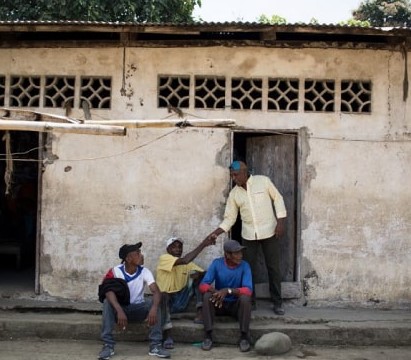
The living quarters provided on the Furukawa plantation had no running water and workers were frequently denied health care.
Some women gave birth to children in unsanitary and overcrowded camps, while others were denied proper medical attention after work-related injuries, according to testimonies given at a news conference in Quito. They also described cramped, filthy living quarters with no running water or bathrooms.
Constitutional Court judges last week ordered the company, Furukawa, to pay $120,000 to each of the 342 victims — a total of around $41 million. It will also have to make a public apology to them.
In its ruling, the court said: “The system consisted of taking advantage of people in conditions of extreme vulnerability, to live in camps within the haciendas and harvest abaca for the benefit of Furukawa.“
As of 2021, Furukawa’s plantations for abaca — a fine plant fiber — covered almost 23,000 hectares spread over three provinces on the Pacific coast, where the majority of the population is Black.
“We have been confronting the monster that is Furukawa,” Segundo Ordonez, a 59-year-old farmer, told Tuesday’s meeting at the headquarters of Ecuador’s Ecumenical Human Rights Commission (CEDHU).
He recalled a lack of medical attention on the plantations, where nine people died in work-related accidents. “A friend was cut when we were working in a downpour of rain. That was the most anger I felt, seeing him shedding blood like an animal and nobody doing anything,” Ordonez said.
Maria Guerrero recounted that her parents took her and six siblings to the Furukawa crops when she was two years old. She knew no other place for three decades and met her husband there, with whom she had seven children.
According to Guerrero, Furukawa overseers refused to allow the children to attend school and restricted adults from leaving the compound.
“I gave birth to all my children in the company, I did not have a postpartum check-up or a medical check-up during my pregnancy. It is something I will always carry in my heart as a wound,” the 39-year-old said.
Another resident of Furukawa. Susana Quiñónez, recalled “the great sorrow of life” on the farms. She arrived at Furukawa at the age of five, accompanied by her father, who already lived and worked on the farm. She says she was not allowed to play with other children, due to farm rules.
“We (the children) were the ghost workers, because no one knew us,” she said. “The media heard about the bad conditions, but they went to the company offices to ask about it, not to where we were working. They did not see the working and living conditions and the hundreds of elderly people, teenagers, pregnant women in the fields.”
She said workers and families lived 12 to a room with no access to sanitary facilities.
Furukawa has contested the Constitutionals Court’s decision, arguing that there were inconsistencies in the ruling and asking for a downward revision of the financial compensation ordered, which it deemed impossible to comply with.



Hogar Esperanza News

The Cuenca Dispatch

Week of September 20
Ecuador turns to industrial power cuts to protect Mazar and keep homes from going dark.

Ecuador raises its 2026 growth forecast, but El Niño could spoil the outlook next year.
Cuenca retirees challenge medical and therapy changes at IESS senior center.
Fund Grace News

Fabianos Pizzeria News
