
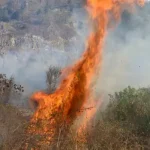
















Some claim Ecuador is in the ‘twilight of the oil era’ while others say investment can extend it
Ecuador is entering “the twilight of the oil era” that began 50 years ago, according to oil industry consultant Oswaldo Erazo. The prediction is based on a series of factors ranging from the maturity of the oil fields and their natural decline, and lack of investment. “I don’t see an end to the overall decline given current circumstances,” he said.
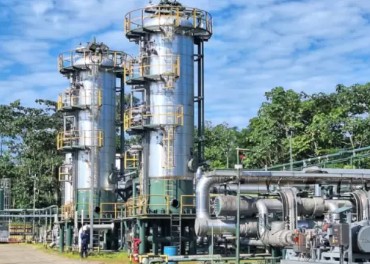
Oil production declined more than 4% in the first quarter of 2025 over the same period in 2024.
Pablo Lorenzo, an oil industry analyst for Barclay’s Bank, agrees with Erazo that the decline in oil production will continue for the foreseeable future, but says the trend can be reversed if “massive investment” is committed. “There are significant reserves in the ground, but these cannot be tapped without large infusions of money, as well as political will to reverse the current decline,” he says.
During the first quarter of 2025, Ecuador registered a 4.4% drop in production compared to the same period of 2024, and this followed a 2% drop in 2023 from 2022.
In addition, there is also a 6.6% reduction in crude oil exports so far in 2025, which has forced the government to import 20% more of petroleum products compared to 2024 due to the lack of refining capability.
According to Erazo, there are “structural causes” that prevent oil production from growing and from continuing to plummet. “We are approaching a point where there is no turning back, based on international competition and the seemingly low interest in the Ecuadorian government,” he says, adding: “I don’t see this changing.”
Lorenzo points to the lack of government investment in maintenance, storage and transportation system. “This is neglect of basic systems maintenance, which is essential in any business,” he says. “It has resulted in less domestic refining and more fuel imports.”
He adds: “It is almost outrageous that an oil producing country with large reserves is importing refined products to meet its domestic need,” he says. “It’s really an embarrassment.”
Both Lorenzo and Erazo blame the government for the poor condition of the oil industry. “Every president since 2000, has pledged to increase production as a way of boosting the standard of living but none have been willing to commit the funding for sustainable system,” says Lorenzo. “[Rafael] Correa invested the most, but he also made the crucial mistake in ignoring public opinion by opening the Yasuni Reserve to oil development and, unfortunately, the country will soon pay the price for his mistake as the wells there are being shut down.”
Erazo says it is ironic that Ecuadorian presidents see oil as a “kind of national savoir” but don’t provide the capital to expand or even maintain it. “In 2024, oil was 15% of the GDP and produced almost $2 billion in public revenue,” he says. “What is crazy is they turn around and spend $700 of that revenue to import gasoline and diesel because of the lack of domestic capacity.”



Hogar Esperanza News

Fabianos Pizzeria News

Fund Grace News

The Cuenca Dispatch

Week of September 20
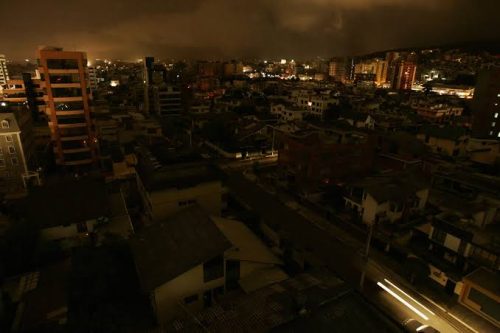
Ecuador turns to industrial power cuts to protect Mazar and keep homes from going dark.

Ecuador raises its 2026 growth forecast, but El Niño could spoil the outlook next year.
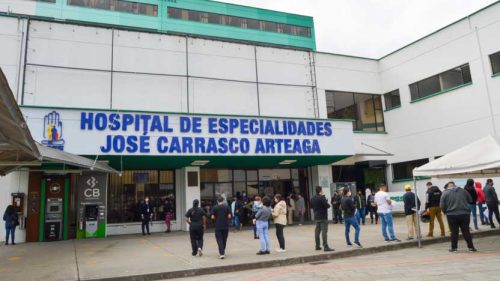
Cuenca retirees challenge medical and therapy changes at IESS senior center.