















The IMF and economists urge Ecuador to eliminate subsidies to reduce national debt
The International Monetary Fund (IMF) warned Tuesday that Ecuador will be unable to reduce its public debt until it sharply reduces or eliminates subsidies. The IMF said the government should begin immediately to reduce the $4 billion annual subsidy applied to gasoline, diesel and natural gas.
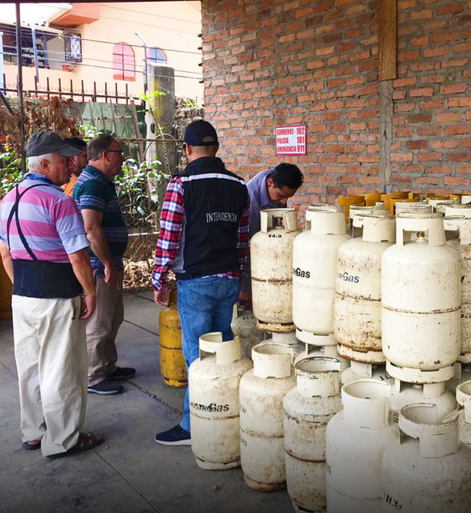
The IMF and economist urge the government to reduce fuel subsidies, especially those for LP gas.
The Finance Ministry reported in March that the government faces a deficit of at least $5 billion in 2025 and says most of it for fuel subsidies.
“The subsidies amount to at least 1.5% of GDP and put continuing strain of the government’s ability to meet its obligations,” the IMF said in its report. “The percentage is expected to grow as a result of the worldwide tariff war currently underway, and this is why it is urgent for the government to address the problem now.”
The IMF added that impact of subsidies is strongest on the poor population as it reduces the quality of health care, education and other public services.
Alberto Dahik, director of the Ecuador Center for Economic Development (CESDE) agrees with the IMF assessment. “More than 80% of the debt that Ecuador assumed between 2010 and 2024 has been used for subsidies,” he claims. “Every government in that period, including the current one, claims the loans go for other projects and public investment, but this is not true.”
Dahik says the debt is applied “disproportionately” to protect the status quo for the country’s wealthiest families. “The cruel irony is that subsides are said to provide assistance to the poor, but this is a lie since the poor suffer the most due to underfunded public services needed to raise their standard of living.”
Dahik warns that maintaining the subsidies threatens the country’s pension system, education and health care services. “Many aspects of these functions are already on the verge of collapse.”
Adjusted for inflation, Dahik says the country has spent $59 billion for fuel subsidies in the past 15 years, most of it for LP gas. In Peru and Colombia, the cost of a cylinder of gas is $16 or $17 while in Ecuador it is $2 due to the subsidy, he adds.
“This is a massive burden on the public budget that no government wants to face,” Dahik says. “Despite endless talk about targeting subsidies to those who need them most, most of the relief goes to people who can afford to pay market prices,” he says. “It is time the government confront the problem and to put its house in order.”