
















‘They charge gringos more:’ When suspicion arrives before the price
Robert handed Paola a five-dollar bill and tucked the tomatoes, avocados and flowers into his market bag.
He had bought from her often enough that the exchange required little conversation. She named the price. He paid it. They smiled. Nothing about the purchase felt unusual.
Then Tom looked into the bag.
How much did she charge you?
Robert told him.
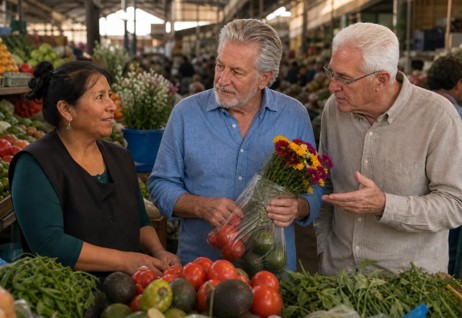
A simple mercado purchase changes when Tom asks Robert what he paid.
You know they charge gringos more.
Robert turned and looked back toward Paola’s stall. Five seconds earlier, he had been perfectly satisfied with what he bought and what he paid. The price had not changed. Something else had.
Do foreigners sometimes get charged more?
Yes. Foreigners are sometimes quoted higher prices in Ecuador, just as tourists and unfamiliar customers can be almost anywhere. Robert had heard the stories: taxi fares, apartment rents, contractors, repairs and market purchases. Some were probably true. Some were impossible to verify.
Pretending it never happens would make the rest of the conversation dishonest. The harder question is not whether overcharging is possible. It is how we decide that it has happened in a particular transaction.
How do you know what something should cost?
Local prices are rarely learned from a single purchase. We learn them through repetition, comparison and relationships. Robert knew roughly what tomatoes and avocados cost because he bought them often. He did not usually buy that particular kind of flower.
That gap mattered. Tom’s comment had introduced suspicion into something Robert could not independently verify. Would Paola have charged a Cuencano the same amount? Robert did not know.
And not knowing was the most important fact in the story.
When does uncertainty become suspicion?
Uncertainty becomes suspicion when we fill missing information with a story about someone’s motive. Robert had not discovered that Paola overcharged him. He had discovered that he did not know whether she had.
Those are different facts. Yet the mind can move from one to the other almost instantly:
I don’t know what these flowers normally cost. She charged me more because I’m a gringo.
Nothing happened between those two statements except interpretation. But an interpretation can feel like evidence when it matches a story we already know.
Then Tom found evidence
A few stalls later, Tom stopped in front of another flower display. The bunches looked similar to Robert. Tom asked the price. It was lower.
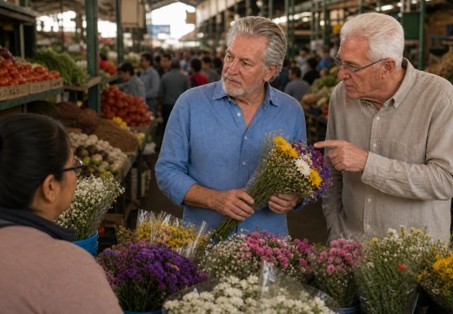 See?
See?
For the first time, Robert wondered whether Tom might be right. The second price did not merely preserve the suspicion. It appeared to confirm it.
Why might two prices be different?
Two prices can differ for many reasons: quality, size, grower, purchase cost, freshness, negotiation, regular-customer pricing or simply the vendor’s judgment about what a buyer will pay. And yes, one possibility is that a foreign customer was charged more.
The point is not that every innocent explanation is correct. The point is that a price difference tells us there is a difference. It does not, by itself, tell us why.
Robert could have walked away certain that the mercado had confirmed what expatriates often say. Certainty would have been comfortable. It would also have required him to pretend he knew Paola’s reason.
What changes when you know the person?
Several days later, Robert saw Paola again. He bought his usual vegetables and then asked about the flowers. He did not accuse her. He simply said that he had seen similar flowers elsewhere for less and wondered why.
Paola picked up two bunches and showed him details he had not noticed. They came from different growers. One had larger blooms and had cost her more that week. To Robert, they had looked identical. To someone who sold them every day, they were not.
Her explanation might have been complete. It might have been only part of the story. Asking did not guarantee that Robert now possessed perfect information. It gave him more information than suspicion alone could provide.
When Robert first arrived in Cuenca, Paola would have been only a vendor. Now she was Paola. A relationship did not guarantee fair treatment, but it created the possibility of a question, an explanation and a judgment based on more than a familiar phrase.
Later, Tom asked what Paola had said.
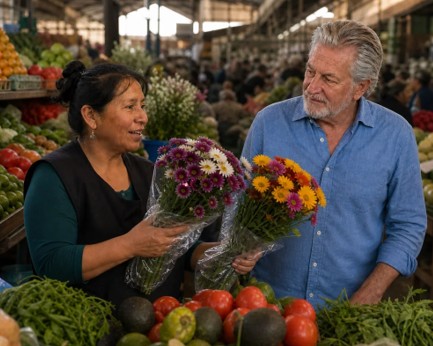
Robert discovers that asking a question gives him something suspicion cannot: more information.
So, was I wrong?
Robert thought for a moment.
I don’t know.
Tom laughed. ‘That’s your conclusion?’
Robert shook his head.
No. That’s the part I finally figured out. I didn’t know before either.
Sometimes foreigners are being overcharged. Sometimes we are comparing products, circumstances or relationships we do not understand well enough yet. Knowing the difference requires more than already believing the answer.
Suspicion can protect us. It can also become a shortcut that turns possibility into certainty before we have asked a question.
That same habit does not end at the mercado. In the Next Cradle companion article, “The Story We Tell Ourselves Before We Know What Happened,” we explore how uncertainty in relationships and life transitions becomes a story we begin treating as fact.
The next time someone says, ‘They charge gringos more,’ the most useful response may not be agreement or denial.
What do we actually know?
Before deciding what happened, swipe through the moments that changed Robert’s assumption. https://www.instagram.com/p/Dcq79kmEb9Q/?img_index=1



Hogar Esperanza News
Nice apartment banner

Property Manabi

Fund Grace News

Fabianos Pizzeria News

The Cuenca Dispatch

Week of September 06

U.S. sinkings of Ecuadorian fishing vessels trigger court scrutiny after 28 crew members are released.

Cuenca targets a November launch for its first new international link to Chiclayo.

Exports hit a quarterly record, but Ecuador’s import bill is rising even faster.