








U.S. Caribbean blockade could increase the flow of cocaine through Ecuadorian ports
Interior Minister John Reimberg said Thursday that the U.S. blockade of Venezuela could increase the flow of illegal drugs to Ecuadorian ports. “We are aware that this action and the capture of [Nicolas] Maduro could disrupt the flow of drugs in the Caribbean and we are increasing our operations at our borders,” he said.
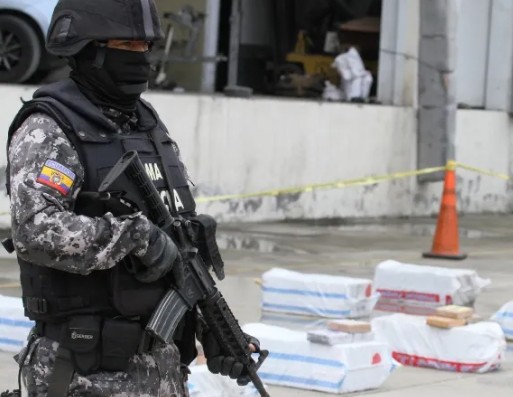
A soldier guards a cocaine shipment seized in November near the Colombian border in Esmeraldas Province.
According to several security experts, drug cartels will be looking to replace cocaine transport routes as a result of the increased U.S. military presence in the Caribbean Ocean.
Former general and chief of staff of the Ecuadorian Army Wagner Bravo predicts that much of that traffic will be rerouted to Ecuador. “The best estimates are that 3,000 tons of cocaine are affected by the blockade, and much of it will need to ship from other locations,” he says. “Because there are already established routes from ports in Ecuador, it’s natural that the gangs and cartels are now looking south.”
Bravo says that Ecuador’s “porous” border with Colombia is an obvious entry point. “There are hundreds of illegal crossings from Colombia and these are very poorly policed by the Colombia and Ecuador military. The drug gangs know this and are planning accordingly,” he said.
Bravo added that, in addition to Ecuador, drug shipments will increase from the Colombian Caribbean coast. “Despite the U.S. naval presence, most shipments will continue to get through.”
According to Bravo, without intensified detection and control, the amount of cocaine moving through Ecuador could double. “I continue to worry that the government is not doing enough to control corruption at the ports in Guayaquil and elsewhere. There is resistance from exporters, especially banana and seafood interests, to increasing law enforcement and surveillance and if changes are not made the contamination of shipping containers with drugs will increase.”
Bravo predicts that additional violence and money laundering will accompany the new influx of cocaine. “There are many side effects to increasing drug trade and we can expect these to intensify near the ports.”
Reimberg said there will be a “significant increase” in the number of military personnel assigned to the Colombian border to slow the flow of cocaine into the country. “The Colombian army also plans to boost deployments at the border and we are in discussions with their leadership to coordinate our efforts,” he said.