











‘We don’t need a car in Cuenca.’ Then Tom bought a watermelon
Margaret and her husband, Tom, agreed they didn’t need a car in Cuenca.
They agreed less often about the walk home.
“We walk everywhere,” Margaret liked to tell friends back in the United States. “The market. Restaurants. The pharmacy. Everything’s right here.”
Tom usually nodded. He liked their life without a car. No insurance payments. No searching for parking. No mysterious dashboard light that cost three hundred dollars to explain.
Then, one Saturday, he bought a watermelon.
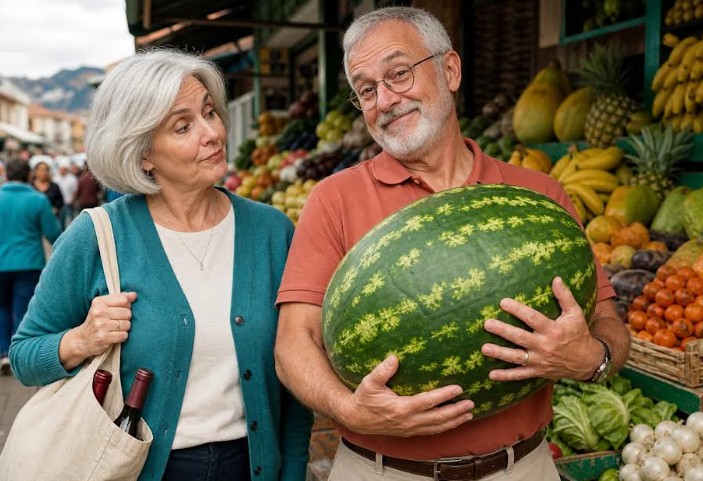
Tom had found a bargain. Margaret was still calculating the delivery cost.
Margaret looked at it.
“Why such a big one?”
“It was practically free.”
“Does that include delivery?”
Tom smiled at the vendor, who had completed his part of the transaction and appeared comfortable leaving the marriage to sort out the rest.
“It’s good for us,” Tom said.
“So is walking. You’ve managed to make them conflict.”
They stepped aside to arrange the shopping.
Margaret took the bread and tomatoes. Tom took the potatoes. The watermelon required further discussion.
“Put it in your other bag,” Margaret said.
“The potatoes are in that bag.”
“Move the potatoes.”
“To where?”
They looked down at their purchases. Somehow, everything had fitted better when it belonged to the vendors.
Tom noticed two bottles of wine in Margaret’s bag.
“Do we need both of those?”
“They were on special.”
“So was the watermelon.”
“The wine will keep.”
“So will the watermelon if we never get home.”
It looked closer on the way there
At the first corner, Tom changed arms.
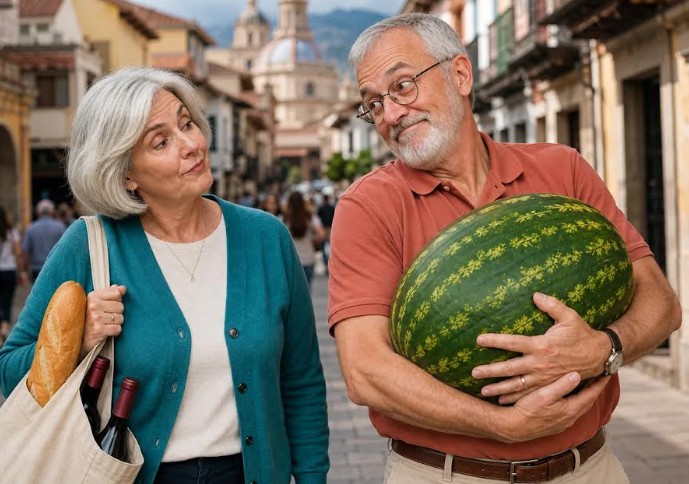
The apartment had looked closer when they were empty-handed.
“Taxi?”
“We live six blocks away.”
“You said four.”
“It feels like four without a watermelon.”
Tom looked up the street. Their apartment was somewhere beyond several blocks of excellent reasons to reconsider the purchase.
He had made this walk many times. He liked it. There was the bakery where they sometimes stopped, the shop with things in the window neither of them could identify, and the corner where Margaret invariably remembered something they needed.
Today he hoped her memory would fail.
“Let’s keep going,” she said.
They kept going.
Halfway down the next block, Margaret stopped to adjust the wine bag.
“Everything all right?” Tom asked.
“The handles are thin.”
“Perhaps you should have bought smaller bottles.”
She gave him a look he recognized from several previous countries.
He shifted the watermelon against his other hip.
“You said you wanted more exercise,” she reminded him.
“I wanted to walk. I didn’t say I wanted to take a watermelon.”
A statement made in lighter circumstances
They reached another corner.
A taxi passed.
Neither mentioned it.
Margaret had told quite a few people that they didn’t need a car. She had said it enthusiastically, sometimes to people who hadn’t asked.
It was one of the things she loved about their life here. They could leave the apartment, pick up a few things, have coffee, and come home without finding keys or discussing traffic.
Tom loved that, too.
The difficulty was that “a few things” had grown during the morning.
Bread had led to tomatoes. Tomatoes had reminded Margaret about dinner. Dinner had apparently required two bottles of wine.
Then Tom had discovered agricultural value.
Now they were carrying the evidence.
“Let me take it for a minute,” Margaret said.
They attempted an exchange.
Tom received the wine. Margaret received the watermelon. The bread briefly became nobody’s responsibility.
After several adjustments, they stood facing each other.
“Well?” Tom asked.
Margaret considered the watermelon.
“It’s heavier than it looks.”
“I’ve been trying to bring that to the committee’s attention.”
She handed it back.
We walked here. That counts.
Another taxi approached.
Tom raised his eyebrows.
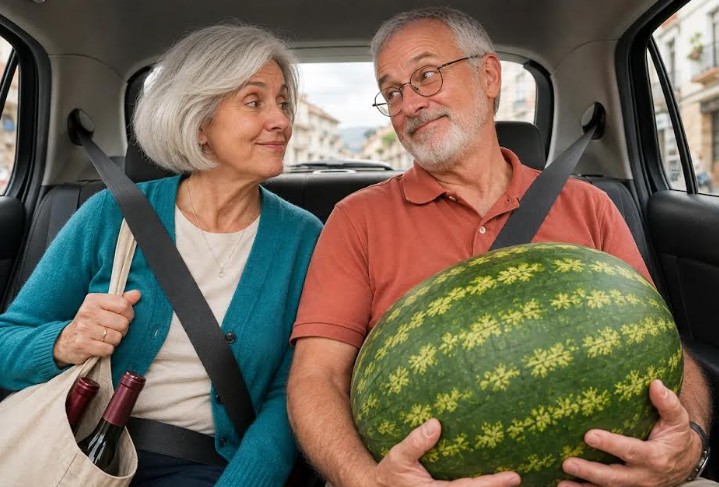
The apartment had seemed closer when they were empty-handed.
Margaret looked at the shopping, then up the street.
“You told everyone we walk everywhere,” he said.
“We do.”
“So we can’t take a taxi?”
“We walked here. That counts.”
Tom raised his hand before the ruling could be appealed.
Getting into the taxi required one final rearrangement. Margaret settled the wine beside her. Tom lowered himself into the seat with the watermelon on his lap.
For the first time since leaving the market, neither was holding a bag by its handles.
They sat quietly for a moment, enjoying this development.
“We could have walked,” Margaret said.
“Yes.”
“I just didn’t want the bread getting crushed.”
“Of course.”
She looked at him. He looked out the window.
Their apartment arrived considerably sooner than it had been arriving on foot.
Perhaps that was part of what they liked about living here. They could enjoy the walk to the market and change their minds about the journey home. A decision made before buying potatoes did not have to govern the entire afternoon.
Taking a taxi hadn’t required them to buy a car, leave Cuenca, or notify everyone Margaret had spoken to.
It had required raising a hand.
At their building, Margaret gathered the bread and wine while Tom prepared to lift the watermelon again.
“See?” she said. “We still don’t need a car.”
Tom looked down at his bargain.
“Next time, we’re buying grapes.”
Some of us carry more than groceries because we’ve already said we can manage. In my Next Cradle companion, “I Can Do It Myself. But Do I Want To?”, a dinner host discovers she has arranged a lovely evening for everyone except herself.
“Margaret and Tom’s walk home is also a six-slide story. Swipe through it here.”




Hogar Esperanza News
Fabianos Pizzeria News

Nice apartment banner
The Cuenca Dispatch

Week of September 06

U.S. sinkings of Ecuadorian fishing vessels trigger court scrutiny after 28 crew members are released.

Cuenca targets a November launch for its first new international link to Chiclayo.
Exports hit a quarterly record, but Ecuador’s import bill is rising even faster.
Property Manabi

Fund Grace News
