














Healing or hustling? Some countries push back on U.S. pressure to end the services of Cuban doctors
By Jonathan Mason
A diplomatic argument is growing in the Americas after a letter from the Inter-American Commission on Human Rights (IACHR).
The letter was sent on May 24 to all members of the Organization of American States (OAS). It asked if they have deals with Cuba to host Cuban medical workers. If they do, it requested details about how those doctors are paid, whether they can join unions, and what their working conditions are like.
This comes as the United States increases its attacks on Cuba’s overseas medical missions. The U.S. says Cuba takes most of the doctors’ wages and gives them only a small share. In February, U.S. Secretary of State Marco Rubio placed visa limits on officials involved in what he calls “labor trafficking.”
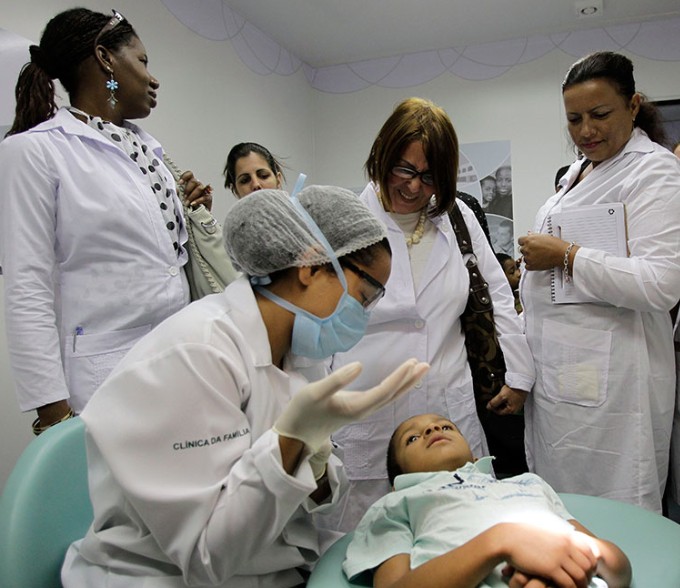
Cuban doctors examine a child in Jamaica.
Cuba disagrees strongly. It says the medical missions are about helping poor countries and promoting global health. The Cuban government says the doctors are treated fairly and that their work helps fund Cuba’s own free health system.
The issue is complex because of differences in how medical training is financed in different countries.
Both Cuban and U.S. doctors face the burden of repaying the cost of their medical training, but in very different ways. In Cuba, medical school is free, but doctors often repay the government by working on state-directed assignments, including overseas missions where much of their salary is taken by the state.
In the U.S., doctors pay for their education with large student loans, which they repay privately, often influencing their choice of specialty and driving up healthcare costs. While both systems impose a form of financial or labor obligation that affects medical careers and healthcare delivery, the Cuban model is state-controlled and framed as service, whereas the U.S. model is market-driven and framed as personal debt.
Some Caribbean nations have defended Cuba. Barbados said Cuban doctors are important and there is no reason to think their rights are being abused. Saint Vincent and the Grenadines was even stronger. Officials there called the inquiry political and said it threatens a vital service. Prime Minister Ralph Gonsalves praised the Cuban doctors for their work during COVID-19 and after the La Soufrière volcano eruption in 2021.
Jamaica responded more carefully. It said it would review the request and answer in a formal way. But it did not say it would stop working with Cuba.
Other countries gave mixed signals. Guyana has said it is reviewing its laws to make sure they follow global labor standards but also praised the help Cuban doctors give in rural areas. Brazil and Mexico, both of which have used large Cuban teams in the past, have not officially responded yet.
Cuban President Miguel Díaz-Canel attacked the letter and the U.S. position. He said the U.S. is trying to destroy a helpful program while doing little to assist other nations. He called the program a success that shows Cuba’s commitment to health and international friendship.
The IACHR gave countries 30 days to respond. The issue could now become a serious debate across the Americas. Many small and poorer nations still rely on Cuba’s help, even if others question how the program works.
From 2002 until 2019 under leftist President Rafael Correa, Ecuador also had a strong partnership with Cuba. Hundreds of Cuban medical professionals were invited to work in Ecuador, especially in rural and underserved areas. They provided general healthcare, surgeries, and specialist services.
After President Lenín Moreno took office and shifted away from Correa’s policies, the government ended the agreement with Cuba. In November 2019, Ecuador officially announced the departure of about 400 Cuban doctors, stating that their contracts had expired and would not be renewed.