















A splash of chlorine and a hint of espresso: Savoring Cuenca’s good-tasting mountain water
There’s a certain satisfaction in turning on the tap in Cuenca and watching clear water pour out, clean enough to drink straight without boiling, filtering, or crossing yourself.
People from many parts of the world find this remarkable, and rightly so. Much of Latin America, not to mention half the United States where most people think they will die if they don’t have bottled water on tap, so to speak, would envy that kind of convenience.
But before we raise a glass in celebration, it’s worth having a closer look at what exactly is swirling around in that glass.
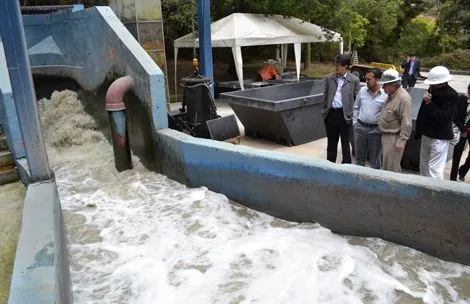
Watching the water flow at one of Cuenca’s water-processing plants.
Cuenca’s water comes from the Andes — the source of all things good and cold — and is treated at a handful of facilities with names like Tixán, Cebollar, and Sustag.
These plants do a fine job of removing the mud and parasites, and then they hit the water with chlorine gas to finish the job. Not chloramine, that long-lasting chemical stew favored by American cities looking to keep their water disinfected all the way to the desert. No, Cuenca uses old-fashioned chlorine gas, the kind that does its job and then mostly evaporates if given a chance.
This means that the water coming out of your tap is usually safe, fresh-tasting, and not overloaded with chemicals — unless, of course, you’re the kind of person who thinks anything with a chemical name must be poisonous. In which case, you may want to sit down for this next part.
A recent scientific study found trace amounts of caffeine in Cuenca’s water. Not a lot — you won’t get a buzz from it — but enough to show that somewhere, probably upstream, someone’s espresso made a return trip through the plumbing. Along with caffeine came the usual modern soup: low levels of pharmaceuticals, the kind of thing that passes through people, pipes, and polite conversation. The scientists call these emerging contaminants. The rest of us just say, “Well, at least it’s not giardia.”
Then there are the disinfection by-products. When chlorine meets leftover organic matter — bits of leaf, bug, or whatever nature throws in — it reacts to form things like chloroform. Yes, that chloroform. But not enough to knock anyone out, unless you’re planning to drink 100 gallons a day and hold your breath. The levels found in Cuenca’s water are well below any legal or medical thresholds. Still, it’s one of those facts that’s both mildly unsettling and weirdly reassuring at the same time. Like knowing your neighbor keeps bees but wears gloves.
The further the water travels from the treatment plant, the more the chlorine dissipates.
This is a good thing for taste, but it can be a bad thing if the water pressure drops and something unsavory sneaks into the pipes. This is why it’s not crazy to run a carbon filter under your sink or to let the water sit in a jug before drinking it. It’s also why people get twitchy when their taps go dry for more than a few hours. In a system that relies on steady pressure to keep things clean, nothing good ever follows an air bubble.
Still, you could do a lot worse than Cuenca’s tap water. Most of Ecuador still struggles with consistent water treatment, and in many rural areas people are either boiling their drinking water or pretending not to notice its aroma.
Cuenca, thanks to a mix of geography, planning, and a bit of outside funding, has one of the most reliable systems in the country. You can brush your teeth, rinse your lettuce, and fill your kettle without worry — most of the time.
That said, if you’re the sort who likes to dabble in brewing or fermenting, especially something delicate like ginger beer or sourdough starter, you’ll want to give your tap water a little extra attention. The chlorine that keeps the bugs out of your stomach may also kill off the friendly yeasts and bacteria that give life to your bubbles. Boiling the water and letting it cool, or letting it sit uncovered overnight, usually does the trick. It’s a small price to pay for a happy ginger bug.
But it’s also a reminder that modern water is never just water. It’s a carefully managed blend of source, science, and sociology. What comes out of the tap reflects everything we’ve flushed, filtered, dumped, or drugged. It’s clean, yes, but not quite pure in the way romantic poets or bottled water commercials would have us believe.
So when you drink from the tap in Cuenca, do so with gratitude. But also with just enough skepticism to ask what’s really in the glass. It won’t hurt you. In fact, it might even be good for you. Just don’t expect it to be entirely innocent. Water, like most things in life, carries a story — and a trace of espresso.