
















Are probiotic supplements a waste of money? For some people they do even more harm than good
By Connie Chang
In recent years, probiotic supplements have been publicized as a miracle cure for everything from digestive woes to mental health ailments and hormonal imbalances. The idea is compelling: Swallow some “good” bacteria and transform your gut into a happy, humming ecosystem.
But while the enthusiasm for probiotics is rooted in our growing understanding of the microbiome and its impact on our health, for some populations, like cancer patients and the immunocompromised, supplements may hurt rather than help.
Like many of her colleagues, Suzanne Devkota, director of Cedars Sinai’s Human Microbiome Research Institute, used to think that over-the-counter probiotics were, at worst, a waste. And for most healthy people, that still holds true: “Your natural microbiome will probably crowd out the probiotic, so you might be throwing away your money, but it won’t be harmful,” she says.
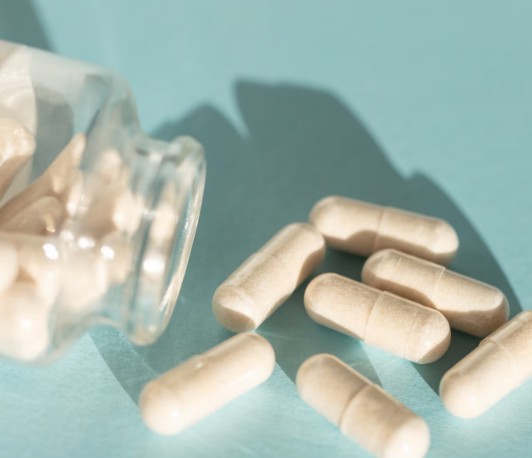 But a pair of papers published in 2018 offered “data that was so compelling that it completely changed how we talked about probiotics,” Devkota says. The research investigated a scenario in which taking probiotics was universally thought to be helpful — after a course of antibiotics — and found otherwise. Soon, researchers discovered other situations, such as in the immunocompromised or for patients undergoing cancer immunotherapy, in which probiotic supplements can be problematic.
While probiotic supplements aren’t always bad, trouble arises, experts say, when a cookie-cutter solution is offered to a problem that needs nuance. The optimal microbial mix for a young, healthy person, for example, might look different than one ideal for a middle-aged adult with a chronic illness. “Theoretically, you could sequence your microbiome, know what you have and what you’re missing, and then select a probiotic to fill in the gaps,” Devkota says. Unfortunately, however, that’s where commercial probiotics are lacking.
Why probiotics might not help after antibiotics
Taking antibiotics disrupts the microbiome by killing good bacteria alongside the bad. The impact to health can be serious and long lasting, leading to issues like obesity, diabetes, asthma, and other autoimmune conditions.
For many, it might make sense to reach for probiotic supplements after a course of antibiotics to re-establish a healthy microbiome, since they’re thought to foster “good” bacteria in the gut — a thought process that Devkota and many of her colleagues previously acknowledged. But the science says otherwise.
To test how quickly the microbiome can be coaxed back after taking antibiotics, researchers in one study administered a 7-day course of antibiotics to 21 participants and then divided them into three groups. One group adopted a wait-and-see approach, another received fecal transplants from their own pre-antibiotics stool, and a third took an 11-strain commercial probiotic for four weeks.
To the researchers’ surprise, the microbiomes of the group who ingested probiotics were the slowest to return to their pre-antibiotics state. Even five months after the last dose was given, the microbiomes of this group did not yet recover.
In comparison, the microbiomes of the wait-and-see group returned to normal within 21 days, while the fecal transplant group recovered in as little as one day. The scientists confirmed these results in mice as well as in test tube studies, where probiotic bacteria inhibited the growth of bacteria from human stool samples.
“These results suggested that, in the post-antibiotic setting, probiotics may be counterproductive,” says Eran Elinav, an immunologist at the Weizmann Institute of Science in Israel who led this study.
It turns out the minimal strains in commercially available probiotics can push out the wide variety of bacteria in a person’s gut, which typically contains thousands of strains.
________________
Credit: National Geographic


Hogar Esperanza News

Fund Grace News

Fabianos Pizzeria News

The Cuenca Dispatch

Week of September 20

Ecuador turns to industrial power cuts to protect Mazar and keep homes from going dark.

Ecuador raises its 2026 growth forecast, but El Niño could spoil the outlook next year.

Cuenca retirees challenge medical and therapy changes at IESS senior center.