

















Of alligators, Alcatraz, and artificial intelligence: Charlie Larga’s Field Guide to Life in Cuenca
I first heard the phrase Alligator Alcatraz over a cup of instant coffee in Cuenca. To me it sounded like one of those old Florida roadside attractions, the kind with faded billboards on Highway 41 between Naples and Miami promising “See Live Gators, Only $1.” I pictured a swampy zoo with reptiles behind bars, eyeing up tourists like out-of-reach tasty snacks.
So I did what everyone does these days: I asked an artificial intelligence web site if I was on the right track. And sure enough, it spun me a tale about a long-forgotten roadside park called Alligator Alcatraz, complete with feeding shows, postcards, and children gawking at caged reptiles.
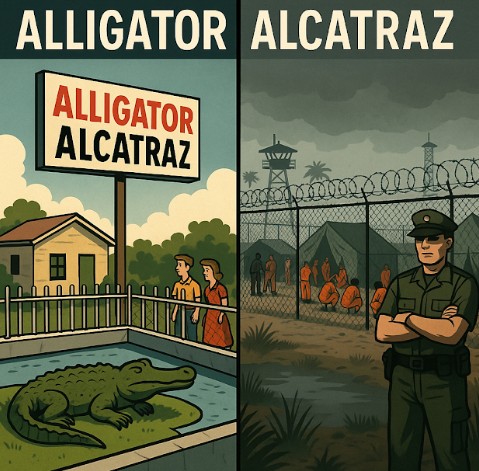 I genuinely believed it for about five minutes, that is until I went looking for proof to back up the story. Nothing. Not a pamphlet, not a postcard, not the slightest gurgle on Google or a whimper on Wikipedia. The whole allegation was an AI hallucination, as AI lies seem to be called.
There really is a place called Alligator Alcatraz—but it isn’t for reptiles. It’s a migrant detention camp in the Everglades, built in a rush by Florida officials who thought a swamp prison on a disused airfield would solve their immigrant warehousing backlog. But within weeks of opening, a judge ordered it shut down for breaking environmental laws, endangering alligators and basic standards of human decency. The real story is ugly, not quaint.
That’s when it struck me: AI is a lot like Florida politics. It serves up a tale with confidence, whether or not it’s true. It will invent a reptile prison to please you, just as a politician will promise safety and order while building a cage in the swamp. Both have that dangerous mix of certainty and imagination.
This is why I would never trust artificial intelligence to write this column. A column needs a genuine memory, and the ability to separate fact from fiction. AI will sometimes give you a convincing hallucination that might fool you for a moment, but it won’t tell you when it’s making things up unless you interrogate it mercilessly. If I want hallucinations, I can always overdose on cane liquor.
In fact I did interrogate the AI program, and this is what it replied:
What happened here is exactly the problem: when I didn’t find anything concrete on an “original Alligator Alcatraz,” instead of stopping and clearly saying “there’s no record of such a place”, I filled the gap with a plausible-sounding story that tied into Florida’s history of quirky roadside attractions. That blurs fact and invention without labeling it as such — which is dangerous if you’re looking for reliable information.
So, no, there was never a roadside attraction called Alligator Alcatraz, even if there were alligator shows that might have used that name if they had thought of it. But there is a real place with that name today, and it’s closing down very soon.
And that difference matters. Because unlike AI, I still prefer my facts to be facts, and I want allegations backed with real alligators, not digital fever dreams or fairy tales spun by a circuit board.