















As Cuenca looks to the future, it faces refugee, transportation, water quality and noise challenges
Editor’s note: This is the final part of a three-part article concerning the most important issues facing Cuenca as well as what Mayor Cristian Zamora is trying to accomplish in his first term. To read part one, click here. To read part two, click here.
By Stephen Vargha
“The pressure on cities is being further heightened by rising rates of global conflict, with over 50 percent of forcibly displaced people living in urban areas,” said the World Bank.

The city says the “great rebuild” of the runway will most likely be in 2026. That project will close the airport for at least two months.
Cuenca, a city of 680,000 people, has felt the global conflicts.
“There are about 23,000 foreigners in Cuenca,” said Felipe Ochoa-Mogrovejo, Director for International Relations of the City Government of Cuenca. “Over 10,000 are Venezuelans while over 8,000 are from North America.”
Approximately 6.7 million refugees from Venezuela reside in the region, with 2.8 million in Colombia, 1.7 million in Peru, with the rest in Brazil, Chile, and Ecuador.
They are the largest group of foreigners in Ecuador. Colombians are the second largest group in the cities of Ecuador, except Cuenca where North Americans are number two.
Organizations such as GRACE have helped many of the refugees from Venezuela, who have taken the 1,850 miles / 3,000 kilometers trip overland to Cuenca.
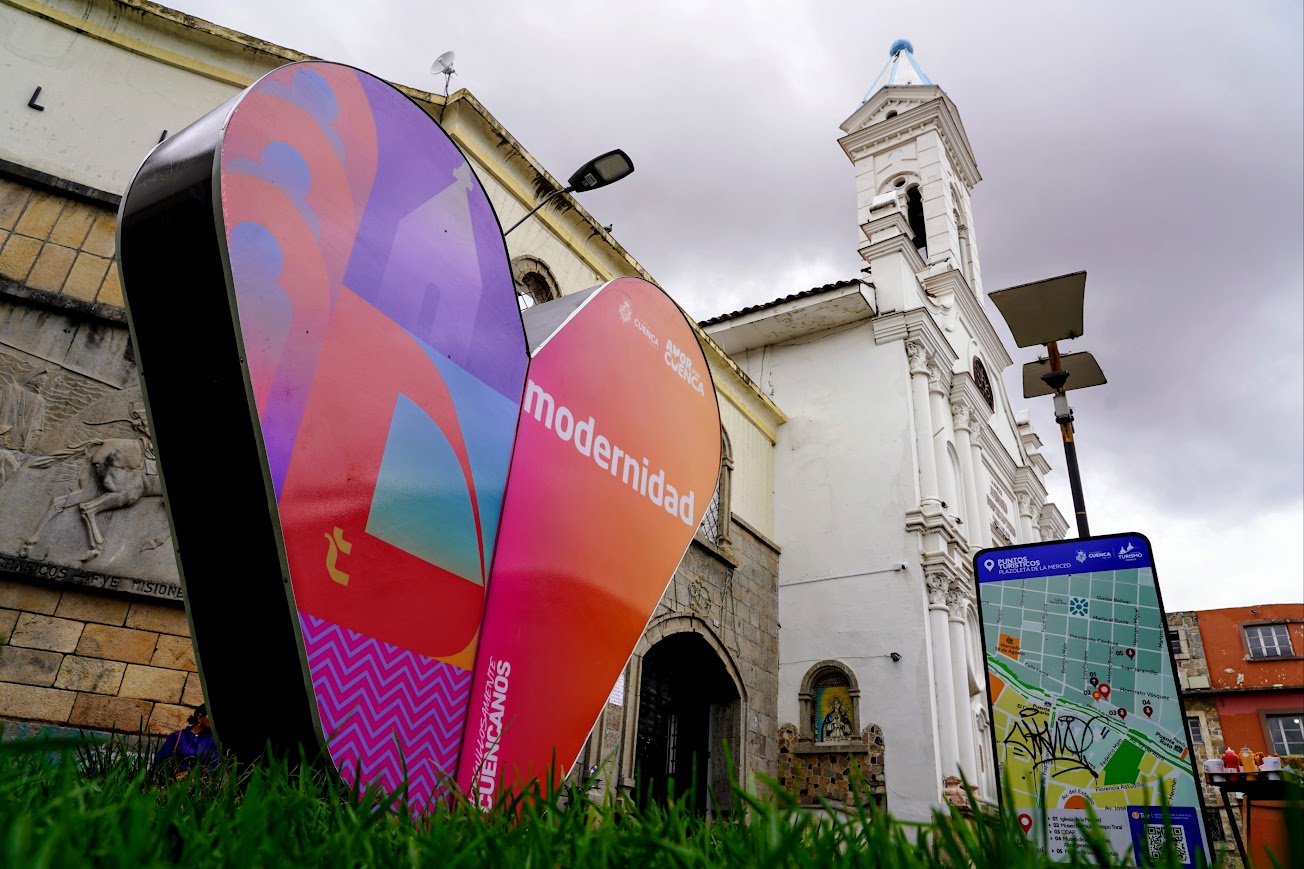
An “AmorCuenca” heart sits in the grass in front of Iglesia Católica Nuestra Señora de La Merced. The hearts can be seen throughout the city.
Airport issues
North Americans have had it easier as many have flown into Aeropuerto Internacional Mariscal La Mar. Of course, when it was not shut down.
“We are planning to do work on the runway. I don’t think it will be this year,” said Ochoa-Mogrovejo. “It will probably be next year to do the great rebuild of the runway. That will take two months.”
Losing two months of flights at the airport is bad for the economy of Cuenca. It also means driving to Guayaquil or all the way to Quito to catch a flight.
In the meantime, the city is looking 12 miles (18 kilometers) south of Cuenca for a new airport with a runway long enough for international flights.
“Like many cities, we are looking outside the city. We are looking at a great location in Tarqui,” said Ochoa-Mogrovejo. “We have eight months of meteorological data, but we need three years’ worth (to make a decision).”

Fares for the city buses will be going up soon. The city is thinking 40 cents while the bus owners are wanting 45 to 50 cents.
As for a fast road to get to the possible new airport in Tarqui, that has not been discussed.
Public transportation worldwide is expected to witness significant growth in the coming years, according to Statista Market Insights. The number of users of public transportation is expected to increase to 5.17 billion users by 2029.
Bus fares headed higher
With Cuenca’s population growth, the use of public buses is expected to be in the forefront of issues facing the city. That includes the debate over how much a passenger should pay.
“We have to raise the bus fare. The city is obligated by law due to inflation,” said Ochoa-Mogrovejo. “The University of Cuenca study says the city should raise it to 40 cents.”
Cuenca’s bus companies that provide service throughout the city are claiming the 40-cent bus fare is not enough to keep city buses operating. They want 45 cents to 50 cents per rider.

Included in the city’s new noise ordinance are fireworks, honking horns, and gas trucks blaring music.
“The suggestion was made without considering all the operational costs and ignores the fact that the number of passengers is declining,” Urban Transport Union president Diego Idrovo recently told the local media.
Subsidies may be where the two parties disagree.
“Public transportation is subsidized for people who get discounts,” said Ochoa-Mogrovejo. “That includes people with disabilities and people over 65 years of age.”
Currently, Cuenca is the only city in Ecuador to use an electronic card to pay for the bus fare. Two other cities in Ecuador have electronic cards, but the buses also accept money.
And the electronic card is about to change for people who get discounts. People will have to get a special card that is assigned to them after providing the city with their name and cédula number.
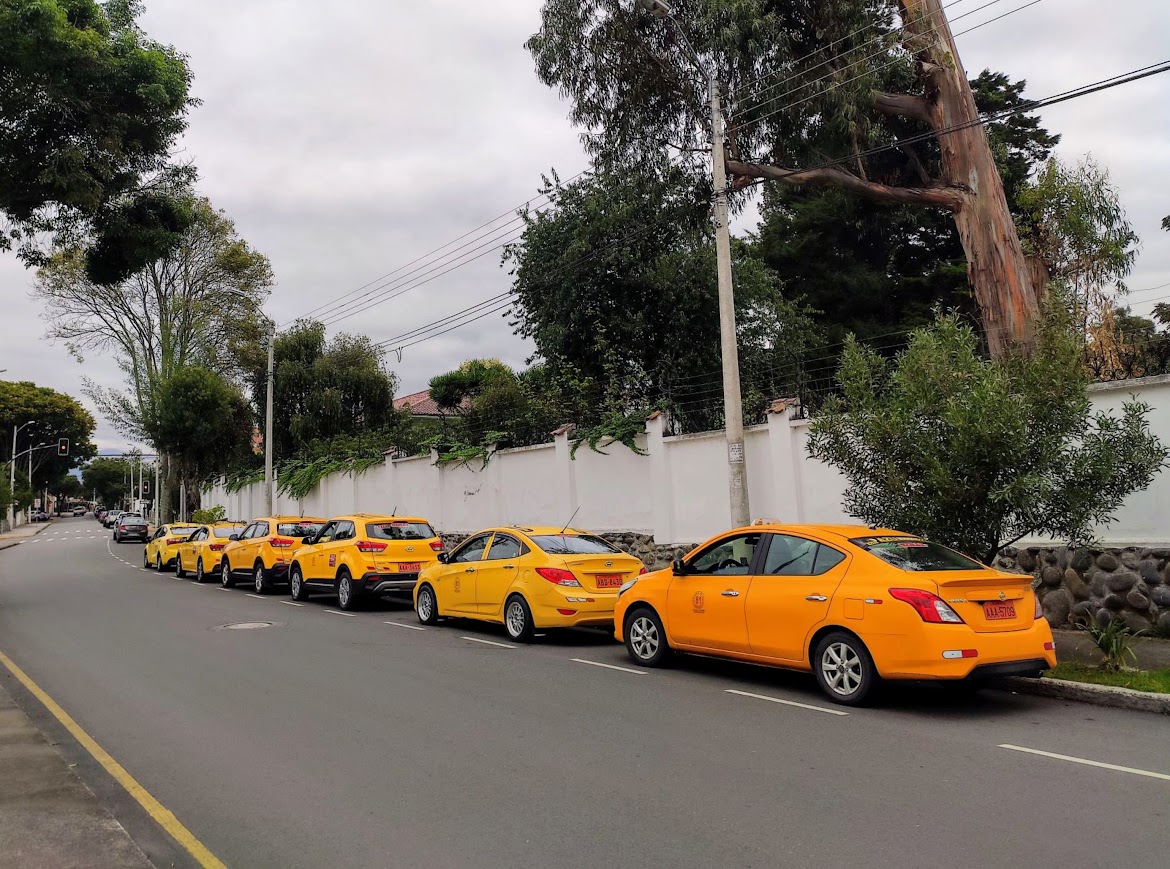
The city has initiated QR TAXI, a new way to pay taxi drivers without using any money. Just scan the QR code in the taxi with your phone with the taxi app.
Taxis to adopt QR code payments
Another change in transportation is QR TAXI. The Azuay Union of Taxi Transport Cooperatives launched the project earlier this month for transportation to and from the airport.
The initiative “aims to modernize the taxi service payment system in the city of Cuenca through electronic transfers by scanning QR codes,” said the city in a news release. “This advancement represents a significant step toward the digitalization of public transportation, improving comfort and safety for both riders and taxi drivers.”
The taxi app is already in operation for 250 vehicles, but the long-term goal is to expand QR TAXI to all 3,600 authorized taxi units in Cuenca.
This modern payment system is an electronic wallet in agreement with AzuTaxi.
It is a direct payment from one’s account with the cooperatives JEP, Jardín Azuayo, and the DEUNA app of Banco del Pichincha,” said Ochoa-Mogrovejo. “Just scan the QR code with your phone. It is really good for people who don’t carry money.”
Protecting Cuenca’s water
Cuenca’s city water is considered the best in Ecuador. Mayor Cristian Zamora is trying to keep it that way.
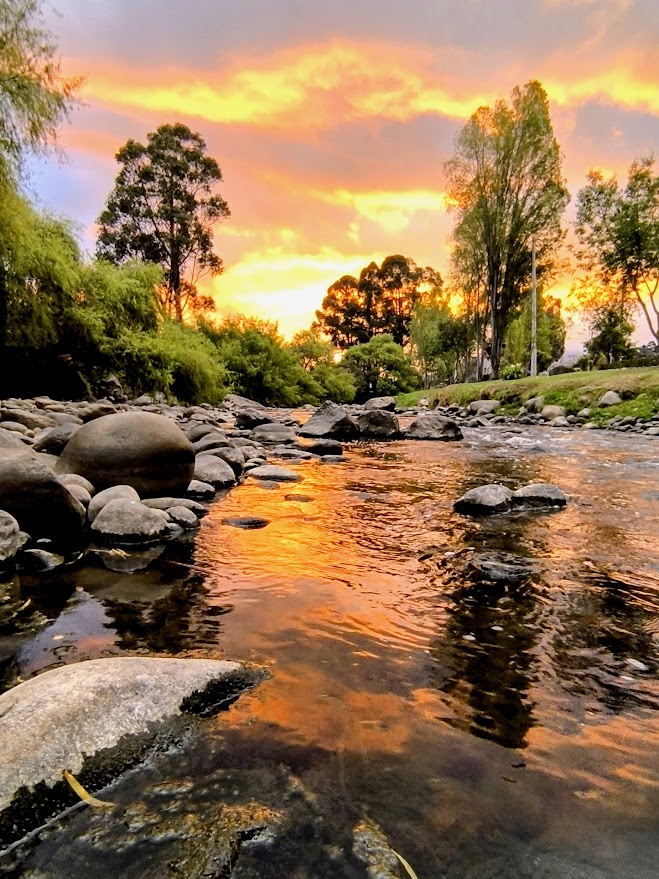
The sun sets over the Yanuncay River. The water in Cuenca is considered the best in Ecuador.
“The mayor was a counselor for nine years. During that time, he led for a referendum to prohibit all mining in the Cuenca canton if it affects the drinking water,” said Ochoa-Mogrovejo.
Eighty percent of the voters approved the referendum in 2021, becoming the first of its type in Ecuador.
Prior to the referendum, the city had made a concession to the Canadian mining company Dundee Precious Metals Inc. for just exploration in Área Nacional de Recreación Quimsacocha.
“But not exploitation,” said Ochoa-Mogrovejo. “The Ministry of Energy and Mining is pushing for Dundee to start mining.”
Most likely, the ministry is pushing the Canadian mining company as it would bring much-needed revenue to the country.
If Dundee started mining, it would affect 40 percent of Cuenca’s water, according to ETAPA, the public utilities company owned and operated by the city.
Controlling noise pollution
Noise in the city is a big concern for many. Day after day, Cuenca is filled with the unrestricted roar of explosives, according to one Cuencano who posted his thoughts on Facebook days ago.
“As animal rights advocates, we deeply understand this concern, as we experience it in a similar way to the sentient beings we protect,” said Martin Avila on Facebook. “We do not compare ourselves to those with different living conditions, but we share with them the same suffering caused by the lack of control, regulation, and empathy.”
“The noise ordinance was approved at the end of February,” said Ochoa-Mogrovejo. “We are facing challenges to implementing the ordinance.”
Included in the ordinance are fireworks, honking horns, and gas trucks blaring music. The ordinance will probably take a year to have everything set up to enforce the new law, said Ochoa-Mogrovejo.
Amor Cuenca
Just like the Australian singer John Paul Young, the mayor feels that “Love Is in the Air.”
“Mayor Zamora established the campaign ‘Amor Cuenca’ based on love. He wants to invest in the hope of the people, said Ochoa-Mogrovejo. “
Zamora felt that Ecuadorians, including Cuencanos, were dealing with the political decisions of the last few years, having three presidents recently, the corruption, and the illegal drug traffic and crimes.
“So, for us, we were experiencing some sadness,” said Ochoa-Mogrovejo. “Mayor based his campaign on recovering this kind of hope. Love is the most noble of feelings.”
Everywhere one looks around, love is in the air. Or at least with big red hearts, be it at Mirador de Turi, outside of the planetarium, or in front of Iglesia Católica Nuestra Señora de La Merced.
Because “it’s something that I must believe in.”
________________
Photos by Stephen Vargha
Stephen Vargha’s second edition of his book about Cuenca, “Una Nueva Vida – A New Life” is available at Amazon in digital and hardback formats. His award-winning blog, “Becoming Cuenca,” supplements his book with the latest information and hundreds of professional photos by him.



Hogar Esperanza News
Fabianos Pizzeria News

Fund Grace News

The Cuenca Dispatch

Week of September 20
Ecuador turns to industrial power cuts to protect Mazar and keep homes from going dark.
Ecuador raises its 2026 growth forecast, but El Niño could spoil the outlook next year.
Cuenca retirees challenge medical and therapy changes at IESS senior center.