












Many of Cuenca’s Eucalyptus trees will be replaced while fate of Calderon’s Araucarias is undecided
Editor’s note: This is the second part of a three-part article concerning the most important issues facing Cuenca as well as what Mayor Cristian Zamora is trying to accomplish in his first term.
By Stephen Vargha
Eucalyptus trees have been making news recently. Not for their beauty and abundance, but for the dangers the trees impose.
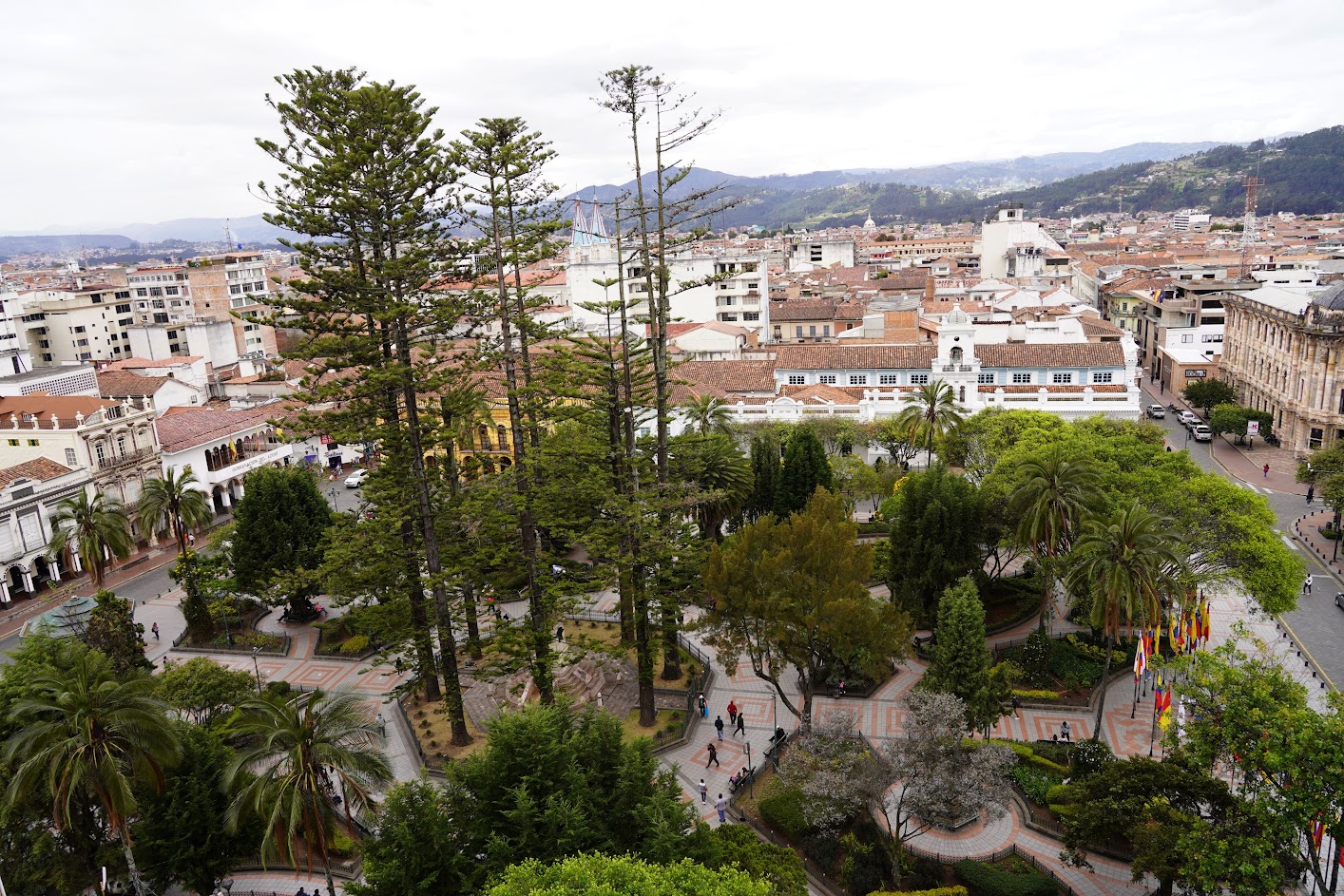
The eight Araucaria trees tower over Parque Calderón.
On January 30, a two-year-old and a seven-year-old were killed after two trees fell on them at Parque de La Paz. The eucalyptus trees that fell appeared to be in good health and showed no signs of disease, according to officials responsible for park maintenance.
Some have called the Eucalyptus trees a growing crisis. The alarming increase in trees falling – 41 in January alone – has increased the city’s rate of tree removals.
“Our goal is to cut down 1,300 trees this year,” said Felipe Ochoa-Mogrovejo, Director for International Relations of the City Government of Cuenca. “The mayor said that for every tree we cut down, 10 native trees must be planted in its place.”
It is part of the city’s Comprehensive Reforestation Plan. The Eucalyptus trees the city is cutting down are between 80 and 130 years old. Some trees are as high as 150 feet / 50 meters, making it time consuming to cut down.
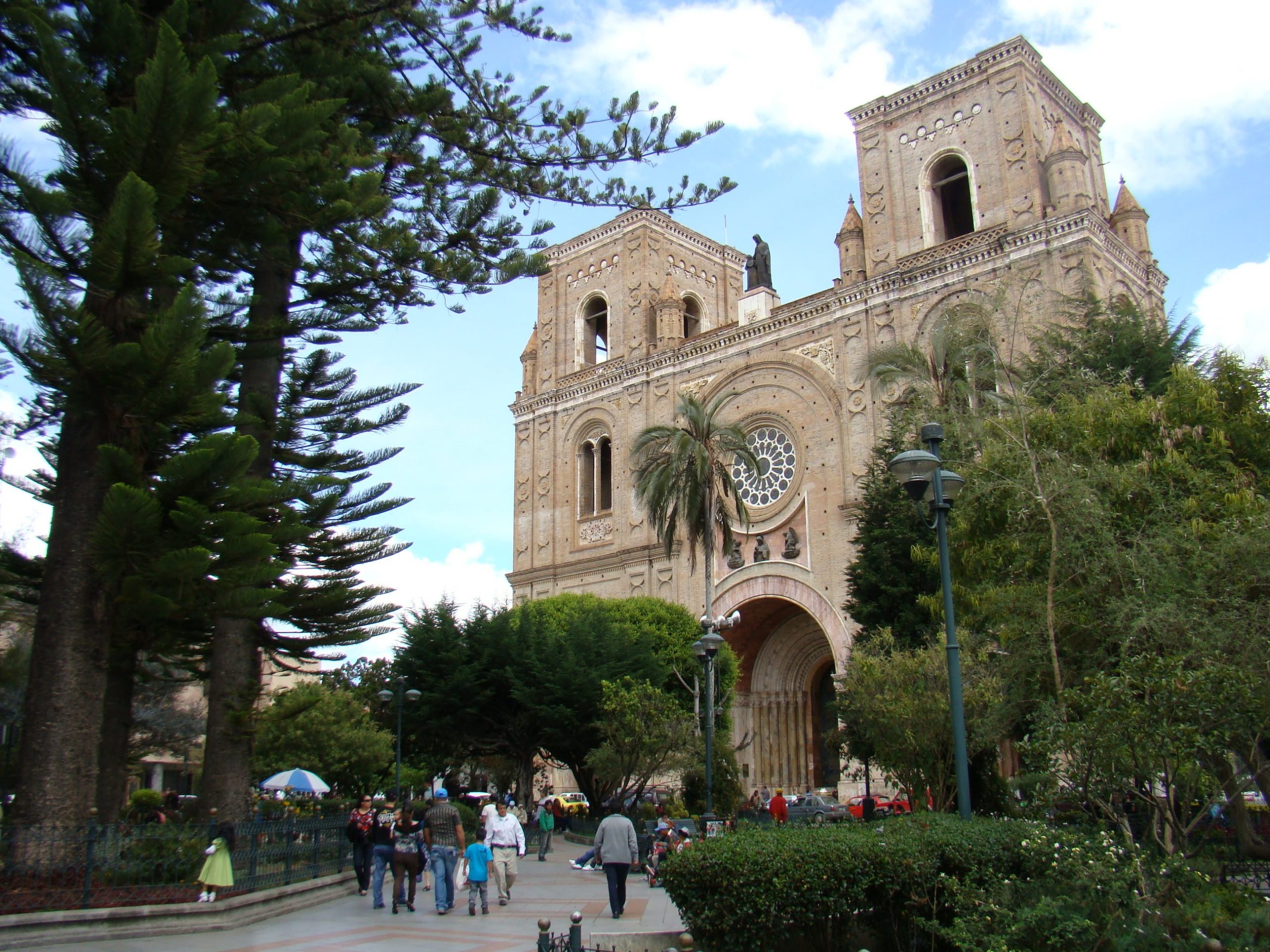
The eight magnificent Araucaria trees make for a pleasant walk through Parque Calderón.
The city has no idea of how many Eucalyptus trees there are as a study of the invasive species has never been done.
“We have declared an emergency to address these trees,” said Ochoa-Mogrovejo. “Two or three weeks ago, we joined the international association Trees in Dry Cities Coalition.”
The Trees in Dry Cities Coalition operates as a collaborative network of United Nations member states, cities, private sector partners, and international organizations, including the United Nations Convention to Combat Desertification.
“This collective effort aligns urban greening initiatives with key global commitments, creating a cohesive approach to tackle environmental and urban challenges,” said the coalition on its website.
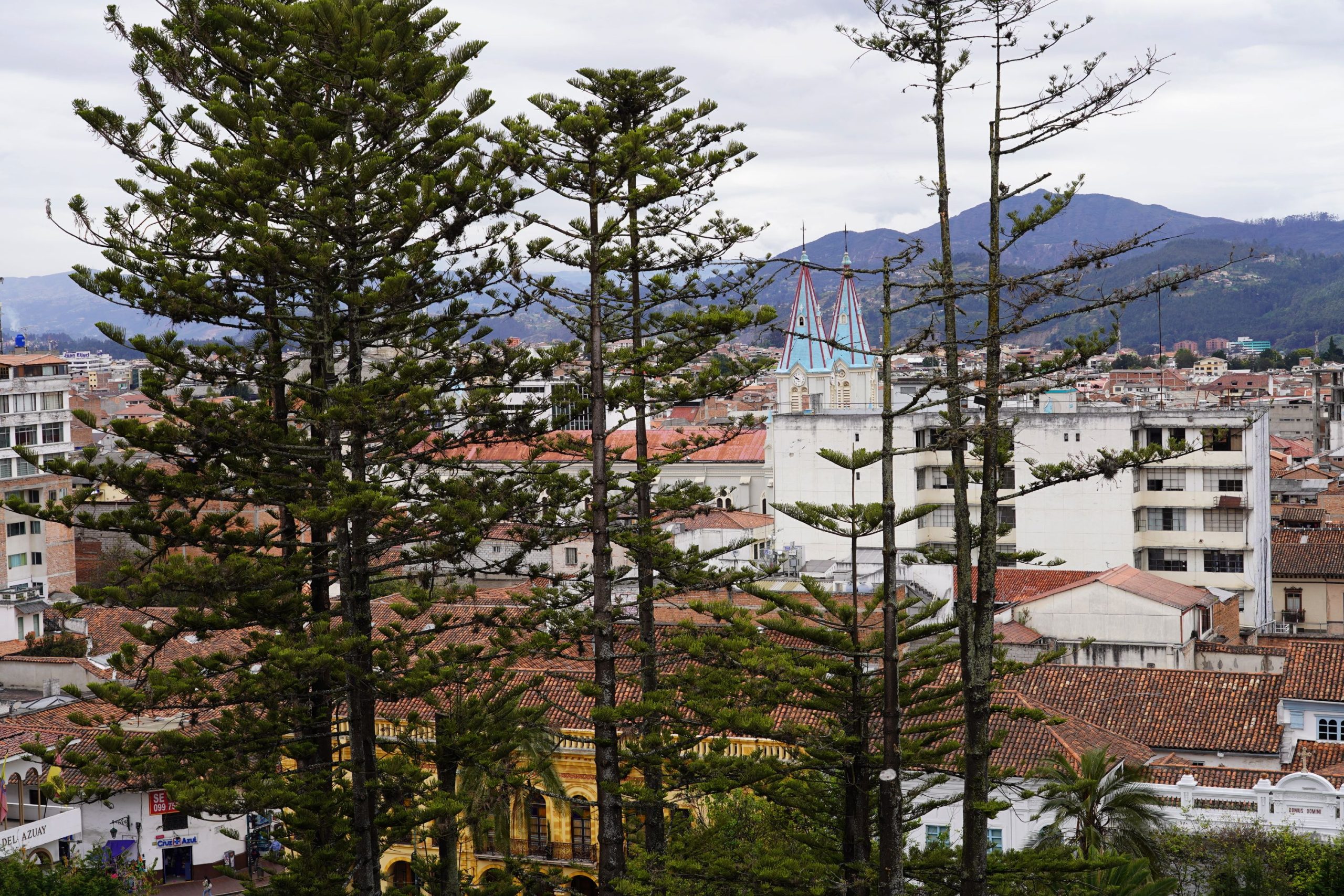
In 2020 and 2023, the city pruned the Araucaria trees in hopes of extending their lives.
It champions urban forestry as an impactful solution to build resilient, sustainable, and ecologically sound urban landscapes in arid regions.
Though Cuenca’s climate is classified as subtropical highland or temperate oceanic climate with dry winters, the city wants to learn more about how to address the Eucalyptus tree problem.
Originally from southern Australia, Eucalyptus trees are known as water guzzlers for their high water consumption, with a mature tree potentially needing between 30 and 50 gallons / 114 to 190 liters of water per day.
Groundwater levels may drop by 20 percent if Eucalyptuses are permitted to grow around a freshwater reserve for around 10 years, while other trees show the growth of groundwater at a rate of 10 percent.
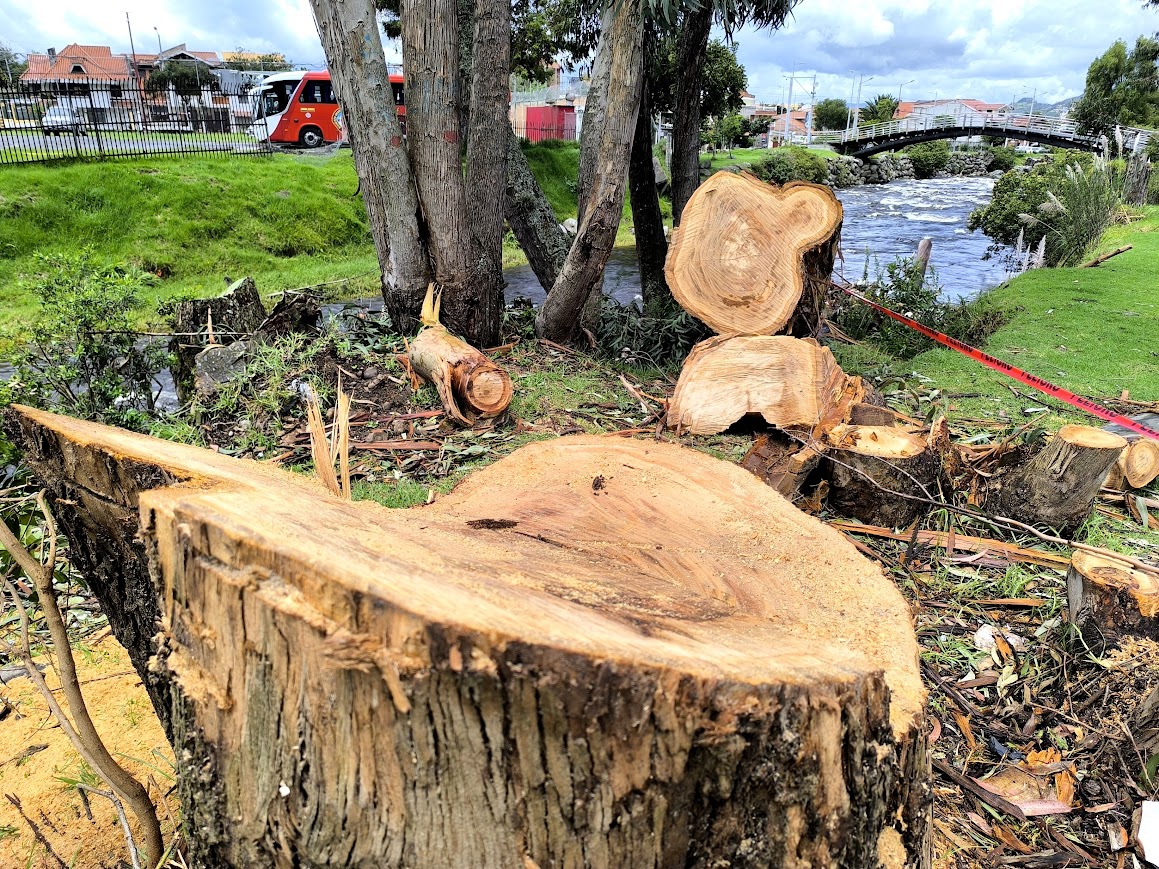
Eucalyptus trees are being taken down along the Yanuncay River, in the La Isla neighborhood.
The Eucalyptus tree is more invasive than other trees because its characteristics make it more attractive for planting.
“They are beautiful along our rivers,” said Ochoa-Mogrovejo.
But he adds that the trees need to be removed.
Environmental groups are concerned about the negative effects of Eucalyptus trees on the environment, including high transpiration rates, declining soil fertility, incompatibility with the preservation of biodiversity, and impeding undergrowth regeneration.
Governments are concerned too. California wants to get rid of the tree due to its high fire danger as well as consuming valuable water in a state that is 38 percent arid.
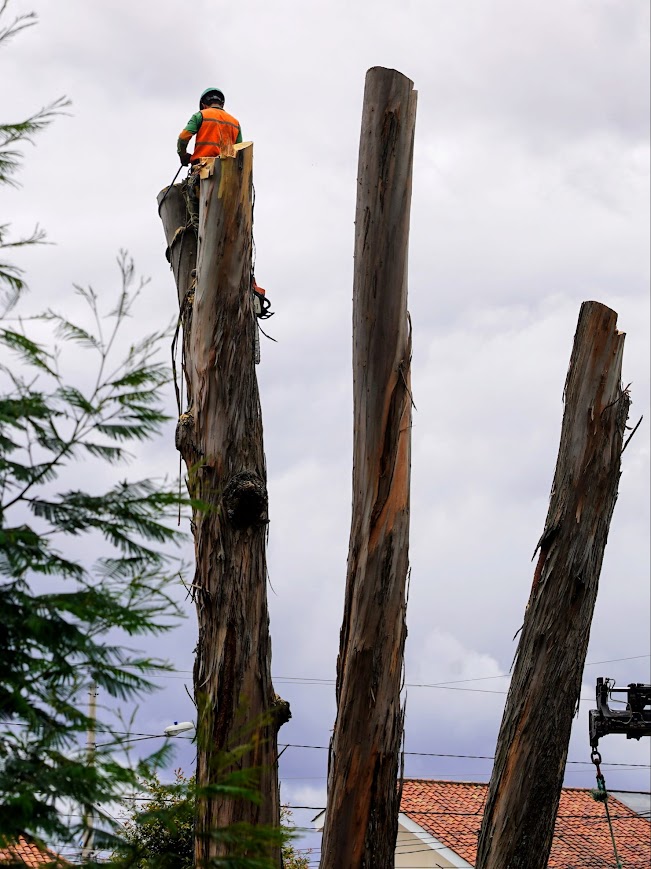
The city’s goal is to cut down 1,300 trees this year. These trees are being cut along Av. 27 de Febrero.
“Because Cuenca is now a member of the Dry Cities Coalition, we are learning how to deal with the Eucalyptus tree from Colorado, Barcelona, and Milan,” said Ochoa-Mogrovejo. “It is not just Cuenca. Recently a man in Barcelona was killed by a Eucalyptus tree.”
Currently, Cuenca is focusing on Eucalyptus trees in La Isla, Puertas Del Sol, Tres Puentes, Av. 27 de Febrero, Av. Ordóñez Lasso, Av. Remigio Crespo Toral, and the autopista (Pan-American Highway).
Little of the downed trees are wasted.
“We have a public enterprise that processes the wood,” said Ochoa-Mogrovejo. “They sell the processed wood to carpenters for them to use.”
The other tree problem in Cuenca is a lot smaller in scale. But it has a lot of emotions attached to it.
“The first results show a ‘state of slow death’,” said Ochoa-Mogrovejo. “They will be dead in eight years.”
Ochoa-Mogrovejo is talking about the eight Araucaria trees in Parque Calderón. Commonly called the Monkey Puzzle Tree, the eight magnificent trees were a gift to President Luís Cordero in 1875.
Historical data indicates that they were planted next to the fountain that at that time marked the center of the Plaza de Armas or Plaza Mayor, which would later be named Plaza Vargas Torres, and later what is now known as Parque Calderón.
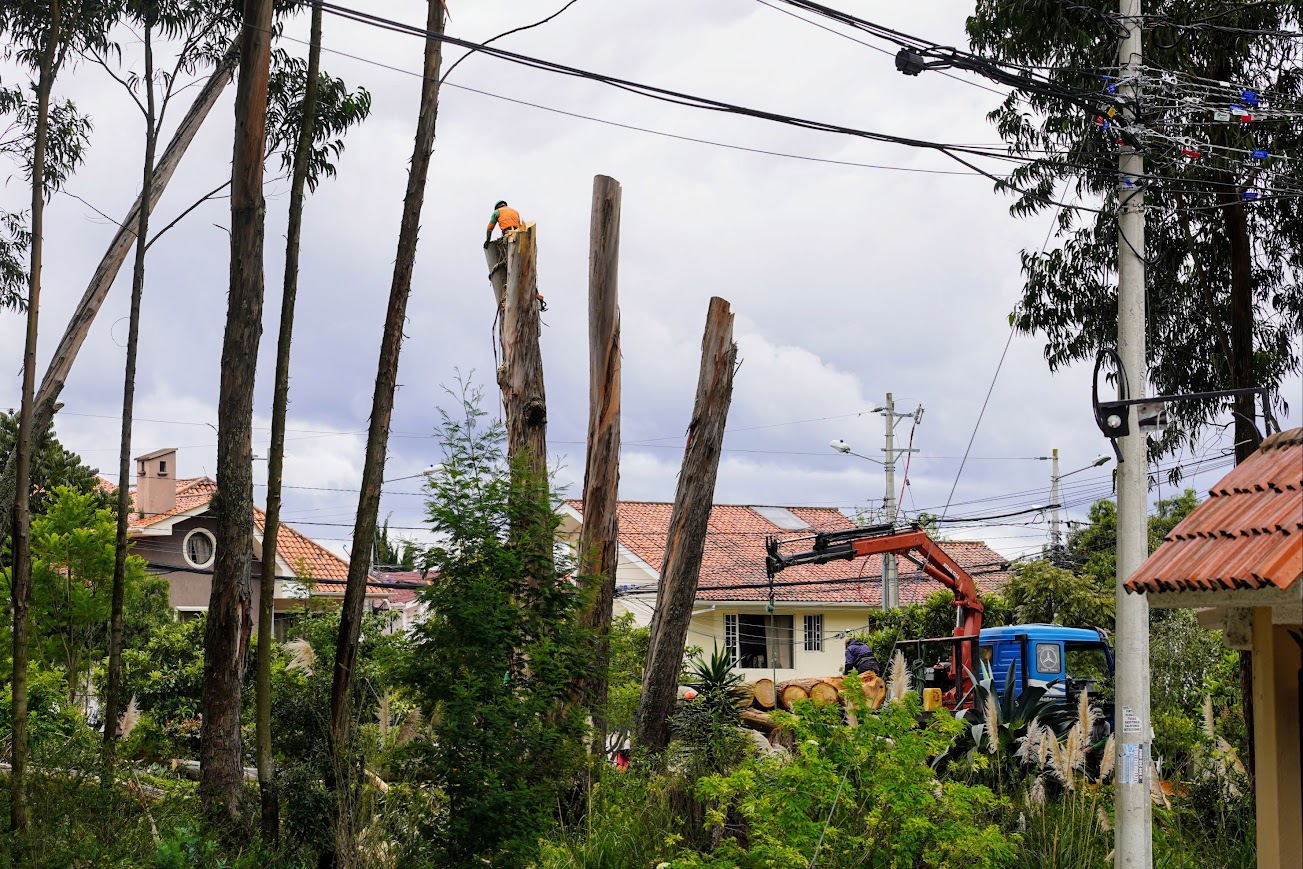
The city has a public enterprise that processes the cut trees. They sell the processed wood to carpenters for them to use.
The tree grows to a height of 50 meters / 150 feet in the cordilleras of central Chile. They are probably about that height in Parque Calderón.
In the wild, the trees can live up to a thousand years. The ones in the heart of Cuenca will probably only last about 160 years.
That is despite the city’s recent pruning in 2020 and 2023. The later pruning was more extensive. The goal was to make perfect cuts to the dry branches and return new energy to the trees.
In addition to the minor pruning, the Araucaria trees received special treatment to eliminate fungi and bacteria associated with climate change.
But that won’t be enough.
“Araucaria is expected to experience a drastic reduction in its potential distribution due to climate change,” said a 2023 study conducted by seven scientists. “If only the current remnant habitat is considered, the anticipated reduction is even more alarming. Some sites predicted to become unsuitable in the future are already impacted and deforested.”
On February 14, specialists from the National University of Loja took samples from the eight Araucaria trees by using a barrel, a technique that allows them to assess the structural and physiological health of trees without causing significant damage.
Final results are expected in April. But the city expects them to have the same conclusion as the preliminary results.
No plans for the trees’ replacement have been decided.
________________
Photos by Stephen Vargha
Stephen Vargha’s second edition of his book about Cuenca, “Una Nueva Vida – A New Life” is available at Amazon in digital and hardback formats. His award-winning blog, “Becoming Cuenca,” supplements his book with the latest information and hundreds of professional photos by him.