










As investigation concludes in the Malvinas case, it remains unclear who murdered four Guayaquil boys
Following testimony by four soldiers, prosecutors say it is clear that four Guayaquil boys picked up December 8 by a military patrol were subjected to “the most extreme forms brutalization” during their captivity. What remains unresolved is who killed them.
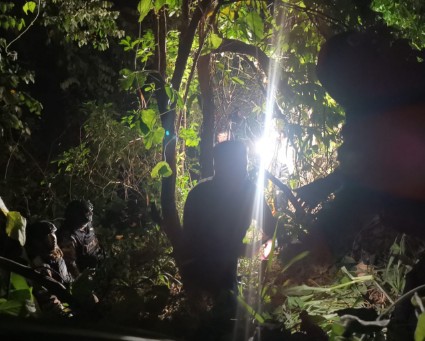
The bodies of four Guayaquil boys were found December 24 in a swamp near Guayaquil.
According to their parents and others, Steven Medina, 11, Josué Arroyo, 14, Saúl Arboleda and Ismael Arroyo, 15, were walking to a football field near their homes when they were detained by an Air Force patrol assigned to law enforcement support duties.
On December 24, the boys’ burned bodies were discovered in a mangrove swamp near the Taura Air Force, west of Guayaquil. Autopsies revealed all four had been shot in the head.
The murders, which received worldwide media attention at the end of 2024, have been code-named the Malvinas case.
In exchange for leniency by the court, four of the 16 patrol soldiers provided details of the boys’ detention, describing beatings administered by officers attempting to extract confessions about gang activities.
According to the soldiers’ testimony, the boys underwent more than eight hours of torture, beatings and humiliation. “They were beaten with fists, leather straps and metal rods, and stomped on and shot at for a prolonged period,” says prosecutor Carlos Rojas. “The pain they suffered is difficult to comprehend.”
“Two of the boys were thrown head-first into the back of a patrol truck, then brutally kicked by three soldiers,” Rojas says. “After that, they were thrown out the truck, sustaining more injuries.”
According to Rojas, two of the patrol officers were convinced the two 15-year-olds were members of a criminal gang and instead of turning them over to police as protocol requires, attempted to get information about gang crimes and plans.
In their testimony, the four soldiers said that after the beatings, which continued at the Taura base, the boys were taken to swamp, stripped naked, and abandoned.
Despite claims by lawyers for the boys’ families that they were murdered by the patrol, the testifying soldiers insist they were alive when patrol vehicles left the swamp.
Rojas says he believes the testimony but says it is possible some of the soldiers returned later and shot the boys. “Given the brutality of their treatment, it is very hard to make the case they were not murdered by the same people,” he says.
An attorney for one of the Air Force officers claims the boys were murdered by gang members worried that they had revealed gang secrets. “There is no justification for the beatings and for the fact that the patrol did not release the victims to police,” says Juan Borrero. “On the other hand, there is no evidence that my client or the other soldiers shot the boys.”
The Malvinas case investigation concludes April 30 with the trial to begin at a yet-to-be-determined date in May.