














Assisted senior living facilities are gaining acceptance in Ecuador, offering options to older expats
By Stephen Vargha
Older adults are living longer than ever before and the need for care is growing.
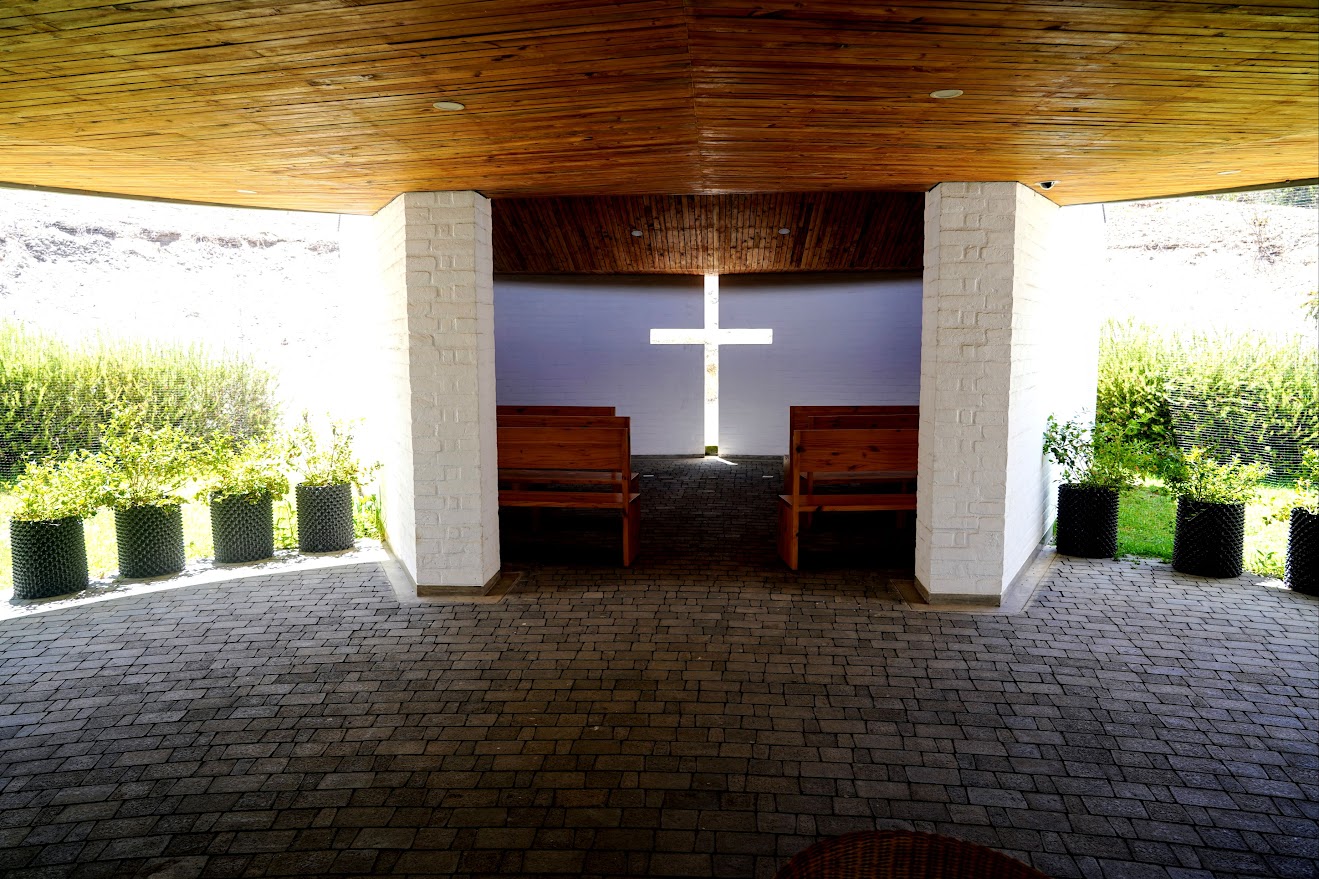
A beautiful and simple chapel is available to anyone. Light from the outside lights up the cross on the wall.
There are approximately 78 assisted living facilities in Ecuador. That is about one assisted living facility for every 233,000 people.
As of September, there are approximately 30,600 assisted living facilities in the United States or about one for every 11,280 people.
“A place to take care of people in the U.S. is normal,” said María Daniela Larriva. “In Cuenca, it has been stigmatized. People are expected to take care of their elderly at home. But now, people are getting used to it.”
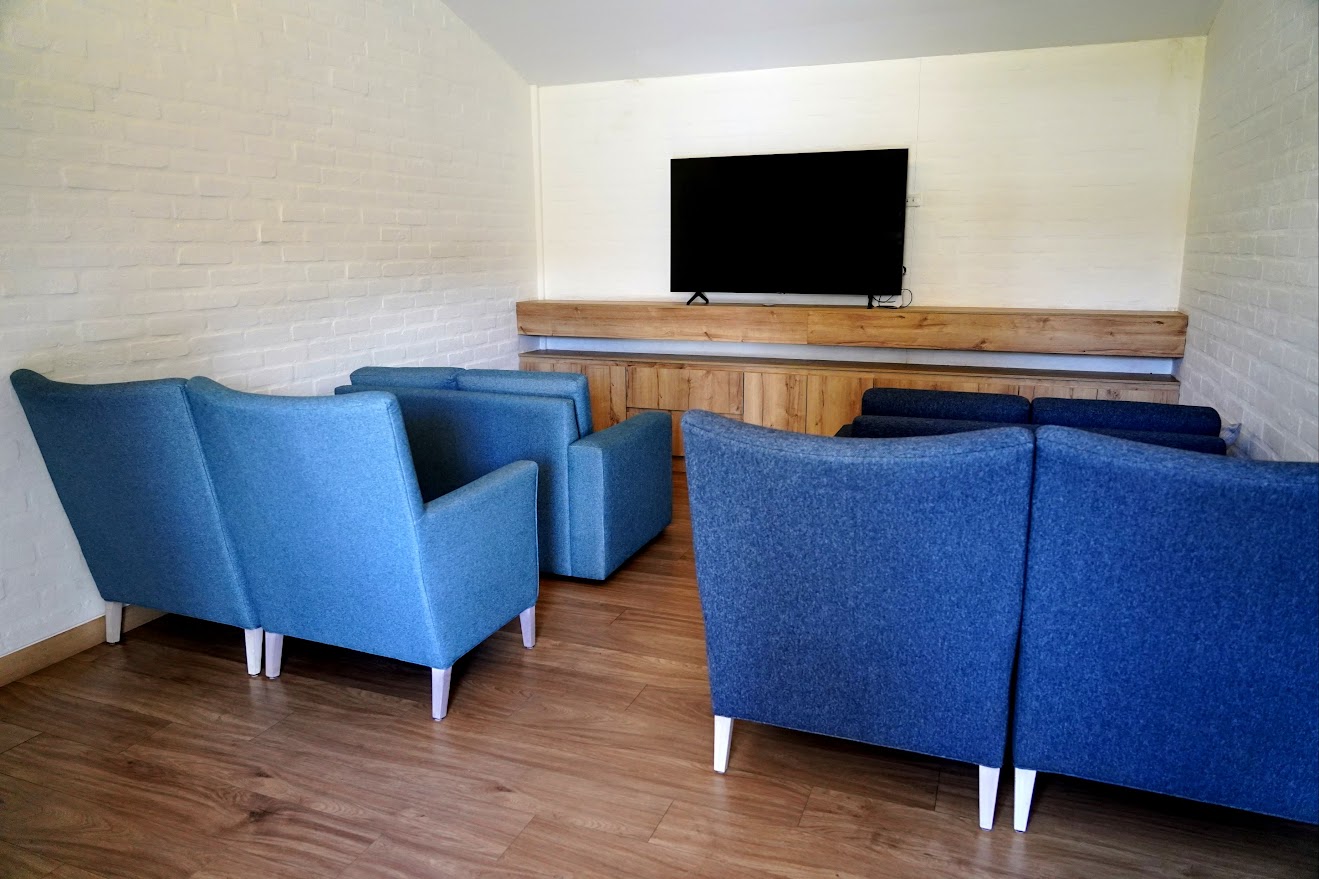
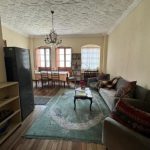
Movies and television shows can be watched in the cinema room.
Larriva is the founder and owner of Rioquinto Seniors Club. The 24-room assisted living and nursing facility is located on her family’s property, about 20 minutes northeast of Cuenca, in Challuabamba.
“Talking to my mother about my aunt in a place like this had me thinking of opening my own facility,” said Larriva. “There were a lot of restrictions as it was run by nuns. It was like a prison.”
With a BS in Psychology from UMass and a master’s degree in clinical psychology as well as post-graduate degree in the psychological treatment of migrants and the socially mistreated from the University of Barcelona, the Cuencana started to do her research.
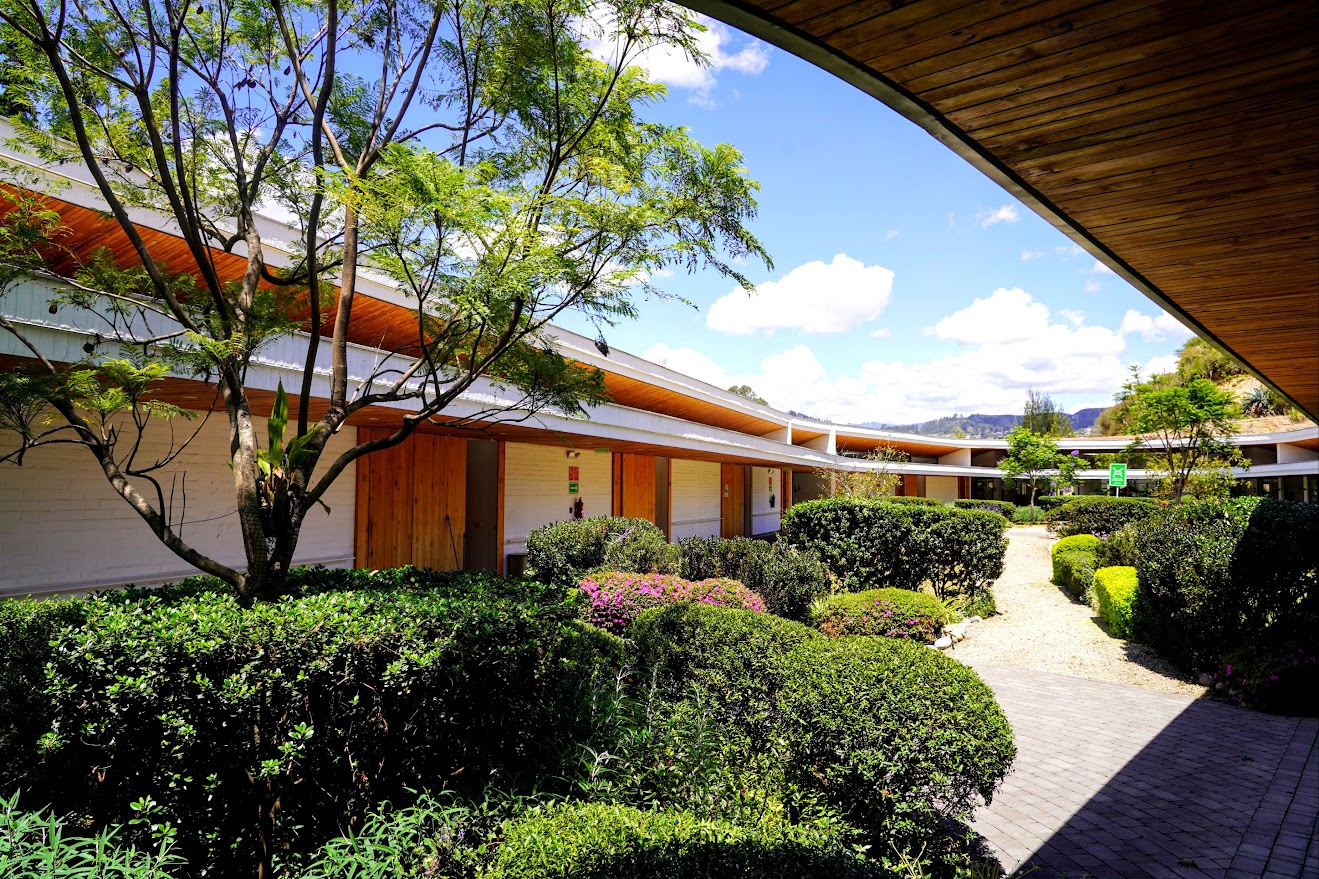
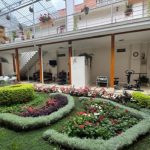
A courtyard in the middle of all of the rooms makes it a natural delight for the residents.
That included going to Medellín, Colombia to visit several facilities.
“The biggest thing to figure out was the level of care. Assisted living was my original idea,” said Larriva. “People are looking for a higher level of care, so we are a mix of assisted living and nursing.”
Designed by architects Carlos Espinoza and Alexis Schulman of Cuenca, the facility, with 24 rooms, won the 2022 Pan American Biennial of Architecture of Quito.
“I wanted an open place with lots of light,” said Larriva.
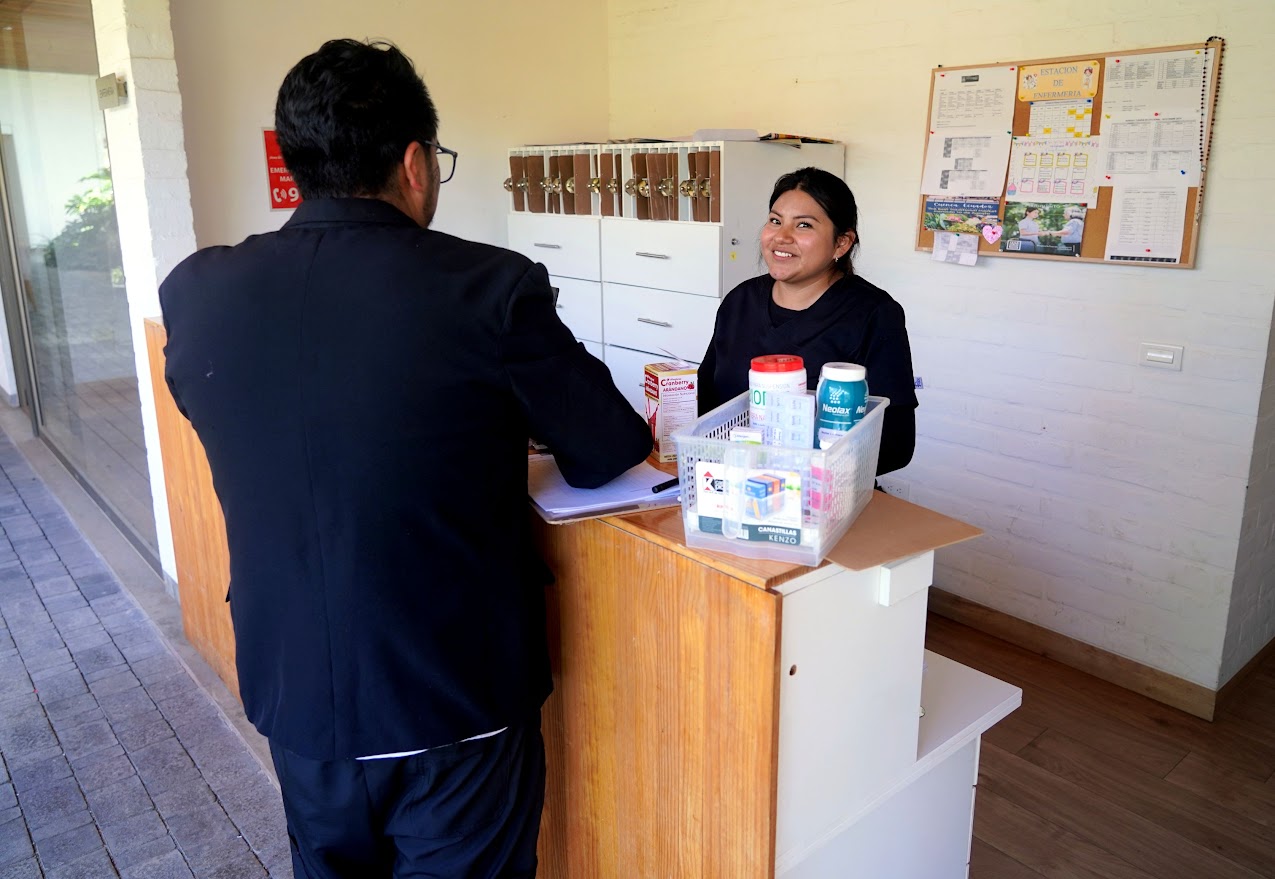
There is a staff of 29 to 30 people, with 16 nurses. They have a nutritionist, psychologist, occupational therapist, physical therapist, and social worker.
She added that because Rioquinto was built from square-one, they can specialize in their care.
“Everything has been designed for the elderly,” said Larriva. “I feel like a lot of places have been adopted for elderly care, such as a large house.”
The plan was to build a live-in facility that meets international standards, so the entire facility is on one level, making it easy to navigate for the residents.
All the suites include a private bathroom that is handicapped accessible and a small outdoor terrace. Each room is located around an airy central courtyard garden with a covered walkway circling the courtyard.
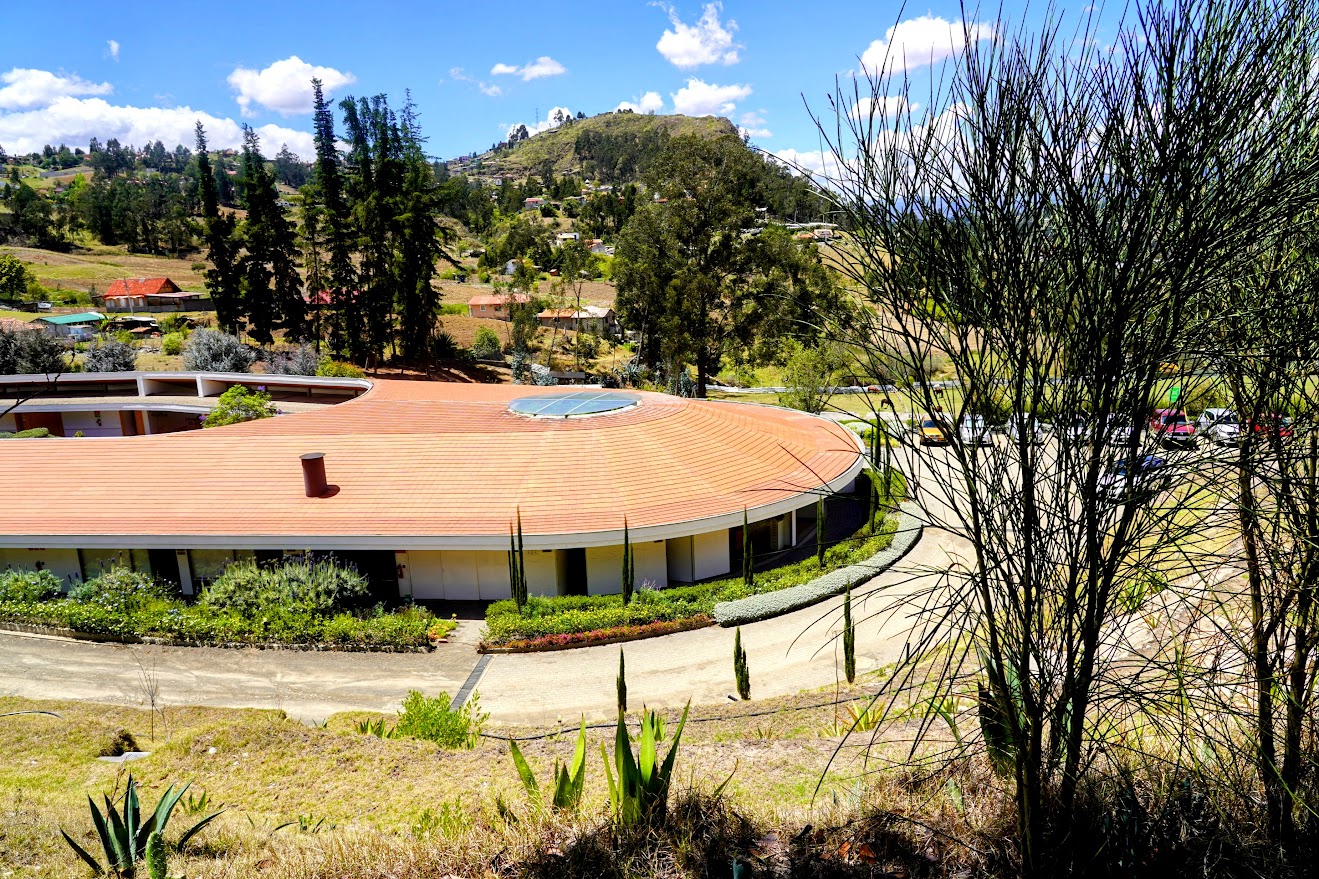
Designed by architects Carlos Espinoza and Alexis Schulman, the facility won the 2022 Pan American Biennial of Architecture of Quito.
There is a physical therapy/exercise room. For anyone desiring a need for prayer and worship, a chapel is at one end. A cinema room is on one side for groups of people to watch television and movies. And if one wants to chill outside, there is a covered area with tables, chairs, and plants.
Stimulation is an integral part of Rioquinto.
“Activities are important for a person,” said Larriva. “If you are at home just watching TV, you are going to deteriorate quicker.”
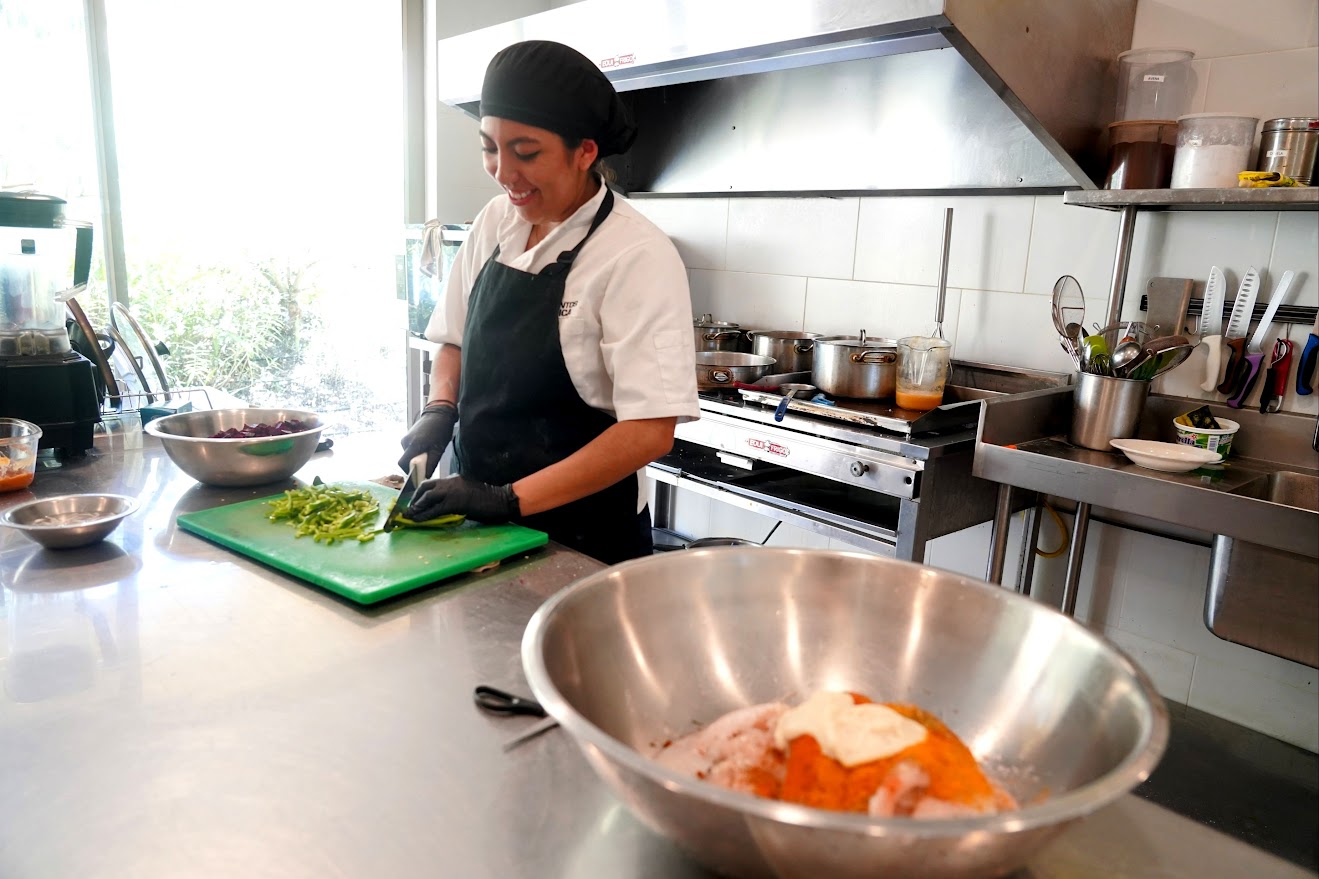
Fresh meals are made three times per day.
Currently, 23 rooms are occupied. About 60 percent of the residents are Ecuadorian, with the rest being expats from the U.S., Canada, Chile, and Russia.
“I always leave two rooms open for post-op,” said Larriva. “This is the fullest we have ever been.”
Rioquinto has a staff of 29 to 30 people. Sixteen are nurses. They have a nutritionist, psychologist, occupational therapist, physical therapist, and social worker. The rest are in supportive roles in the kitchen and general services.
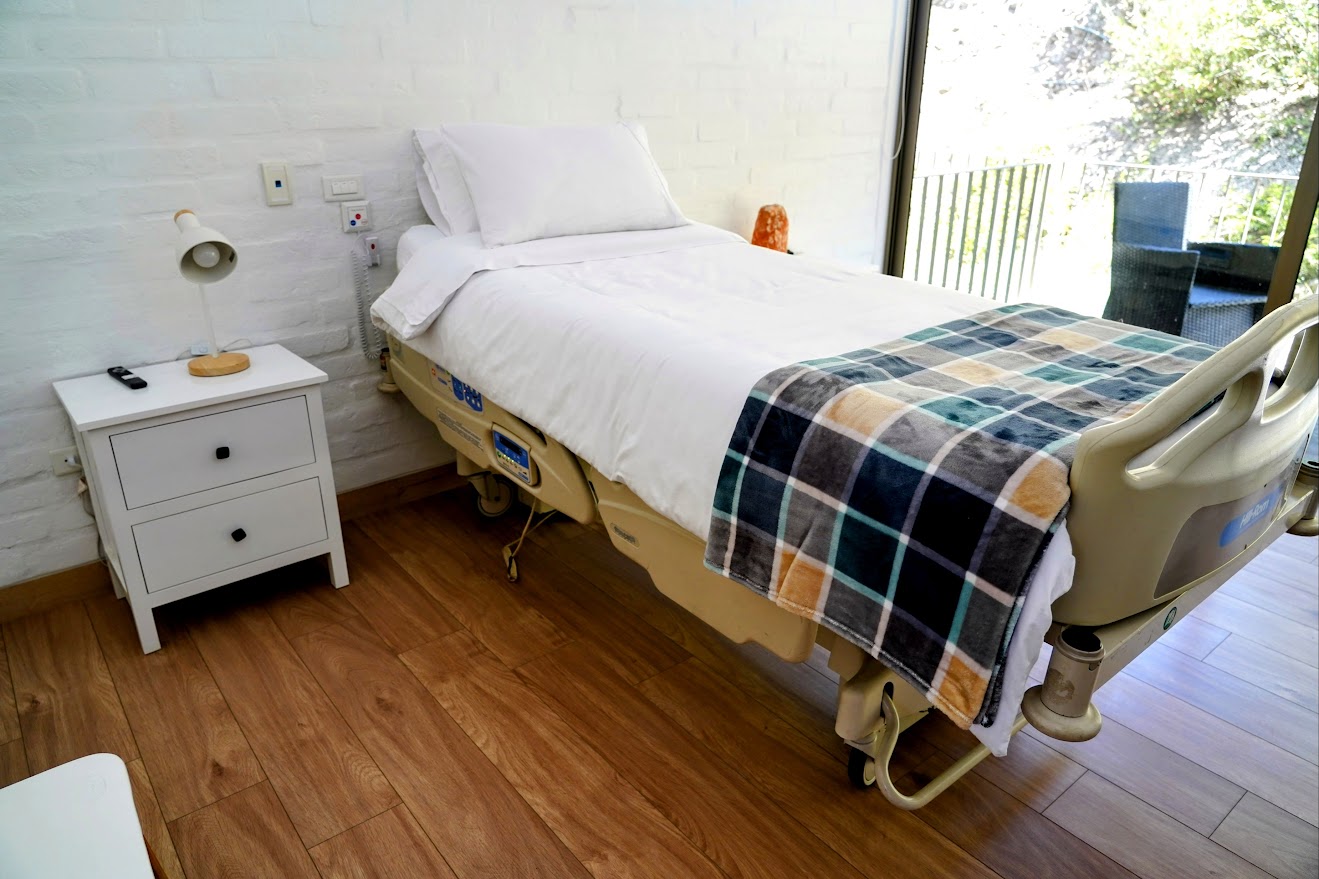
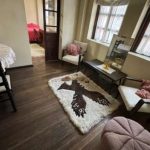
There are 24 private rooms at Rioquinto.
The Minister of Economic and Social Inclusion overlooks the operations at Rioquinto. There are standards to be met, including annual safety training and emergency health responses.
Every year Rioquinto needs to be recertified and unannounced inspections by the ministry can happen any time.
Heather Griffiths, an expat in Cuenca, had a friend, with a doctorate in psychology and spent her career in the U.S. working with the disabled, go with her to check out Rioquinto.
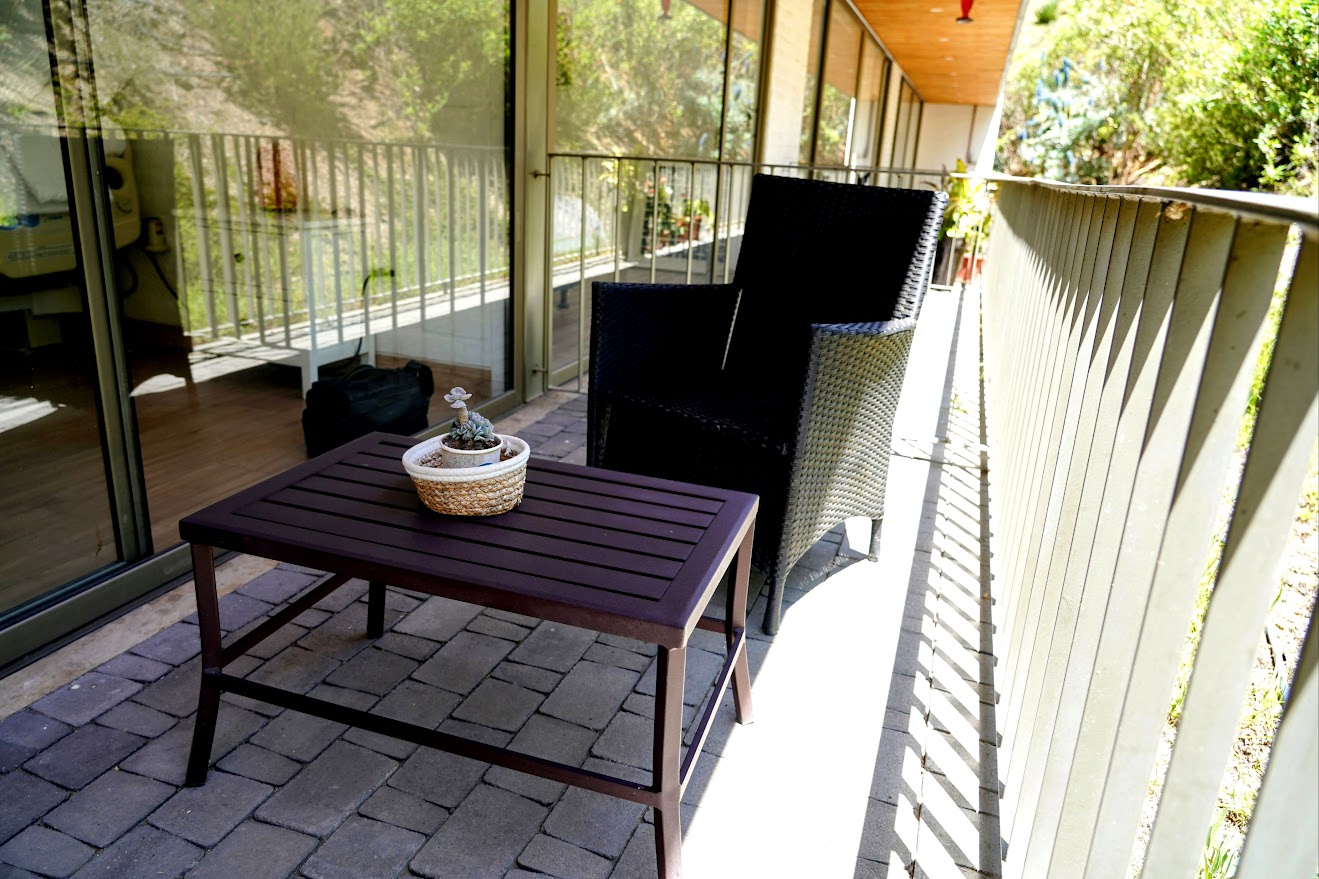
Every room has a small terrace to unwind and relax.
“She was blown away,” Griffiths wrote in an online review. “She also said that this facility would pass every single regulation governing such facilities in Colorado, where she worked.”
Many expats expressed Cuenca’s lack of high-quality adult assisted living options. Larriva said there are only five to eight facilities in the city that has as many as 10,000 expats.
Other expats are not worried about the lack of choices.
“We have assumed that at some point we will have some level of in-home care here, probably provided by one or more of our housekeeper’s able relatives,” said Gil Castle, who has lived in Cuenca with his wife for a dozen years. “But we have not explored any external assisted living options.”
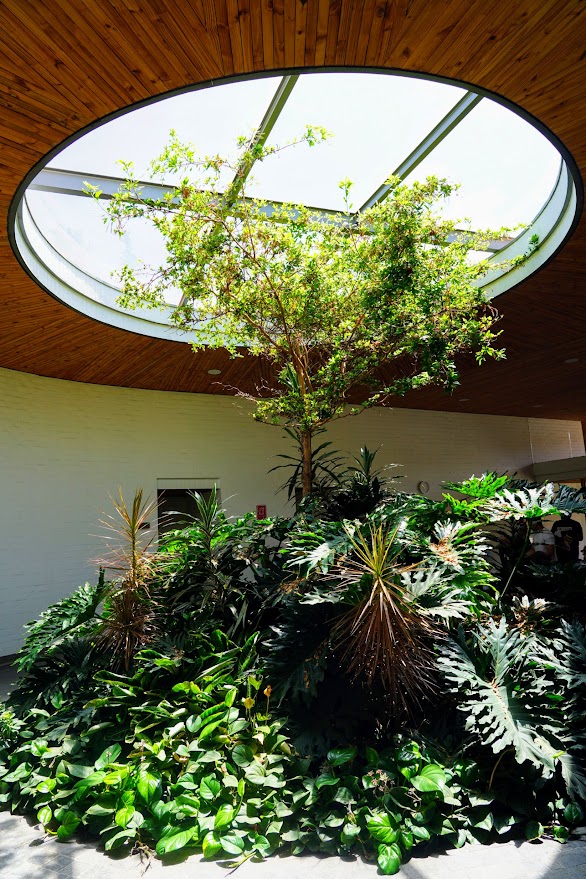
Light from a large skylight illuminates an interior garden.
A Continuing Care Retirement Community (CCRC), now known as a Life Plan Community, does not seem to exist in Ecuador. In the U.S., there are at least 2,000 CCRCs.
One resident of Rioquinto said there are only two assisted living facilities in Cuenca to consider: Rioquinto and “Los Jardines.”
As expats age, they are looking for a modern, comfortable, well-equipped facility. They want to live independently but be close to 24-hour help in case of an emergency. And of course, being close to friends is a necessity for most.
Cost is also important.
The average cost of assisted living in the United States is $4,500 per month or $54,000 annually, according to the National Council on Aging. The base fee for room and board does not include personal care services, which usually incur additional fees.
Nursing home care is even more in the U.S.: $8,669 per month for a shared room and $9,733 for a private room, according to Genworth’s 2023 Cost of Care Survey.
The basic monthly price at Rioquinto is $1,500. At that price, the resident is able to walk and does not need diapers. When taking a shower, the resident is checked on to make sure they are alright.
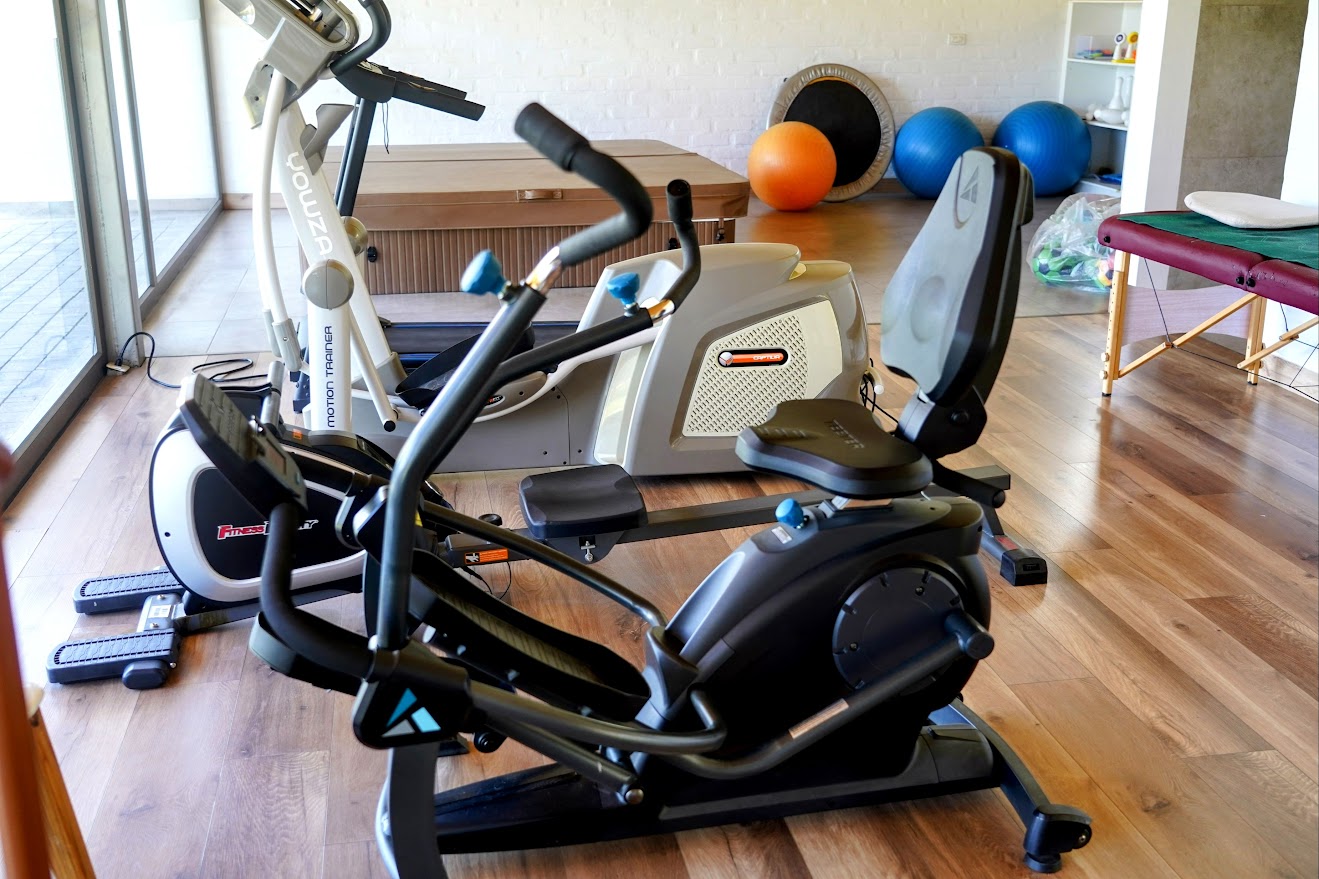
A small workout room is part of Rioquinto for those who want to exercise or need rehabilitation.
“The price is based on nursing. The price is higher here than other places where one nurse takes care of eight people,” said Larriva. “Everything else, including food, laundry, and therapy room remains constant. Haircuts are extra”
If one needs a private nurse 24/7, it is an extra $80 per day or $2,400 per month. That raises the monthly price to almost $4,000.
For an extra fee, Rioquinto will provide transportation to the doctor, pharmacy, bank, etc.
Insurance does not cover anything at Rioquinto, according to Larriva.
If one is interested in Rioquinto, they must schedule a visit. The next step is having a medical exam by Rioquinto before being accepted.
“We need to know the hours of nursing required to take care of the resident,” said Larriva.
Castle for the moment is not worrying about the current lack of facilities in the area.
“Given the number of aging Gringos in Cuenca, the odds are that more acceptable choices will be forthcoming by the time we would need them (knock on wood),” said Castle.
Other expats are ready if the situation arises.
“I know, as others have pointed out, that for this price, I could hire live-in help if necessary. But for me, that also means giving up a big degree of privacy. I’m not in love with the idea of having someone in my home 24/7,” said Griffiths. “I will decide when and if the time comes, but right now, I am inclined to think that Rioquinto would be the absolutely best choice for me.”
_______________
Rioquinto Seniors Club, Challuabamba (-2.862 -78.920), https://rioquinto.com/, 098-017-2694, info@rioquinto.com
Centro Geriátrico “Los Jardines”, Fray Gaspar de Carvajal y del Retorno, Cuenca, https://www.facebook.com/geriatricolosjardines/?_rdr, 098-489-9136, centrogeriatricolosjardines@gmail.com
Photos by Stephen Vargha
Stephen Vargha’s second edition of his book about Cuenca, “Una Nueva Vida – A New Life” is available at Amazon in digital and hardback formats. His award-winning blog, “Becoming Cuenca,” supplements his book with the latest information and hundreds of professional photos by him.



Hogar Esperanza News

Fund Grace News

Fabianos Pizzeria News

The Cuenca Dispatch

Week of September 20
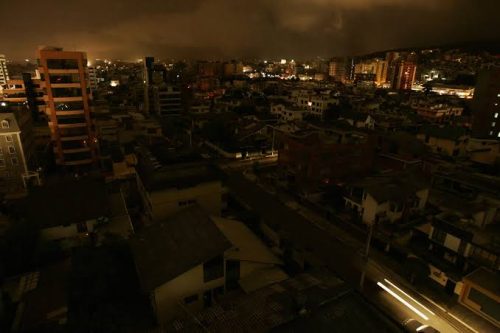
Ecuador turns to industrial power cuts to protect Mazar and keep homes from going dark.

Ecuador raises its 2026 growth forecast, but El Niño could spoil the outlook next year.
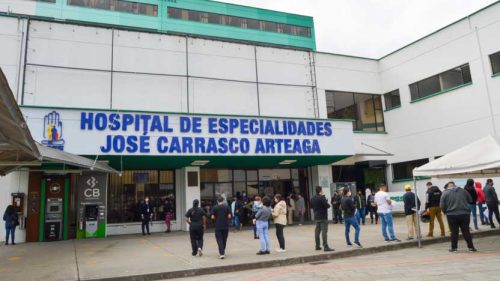
Cuenca retirees challenge medical and therapy changes at IESS senior center.