












Citizens Revolution changes its name in Assembly; Arrests made in Coca Coda corruption case; Cuenca air and noise pollution enforcement begins
Citizens Revolution is changing its name, at least in the National Assembly. The leadership of the 66 newly elected Citizens Revolution Assembly members said they will henceforth be known as the Citizens Caucus. “This does not represent a change in philosophy, it only provides a more accurate representation of our function as a legislative body,” party leaders said in a statement.
The Citizens Caucus will share power with President Daniel Noboa’s National Democratic Action party in the new 151-seat Assembly, each with 66 members.
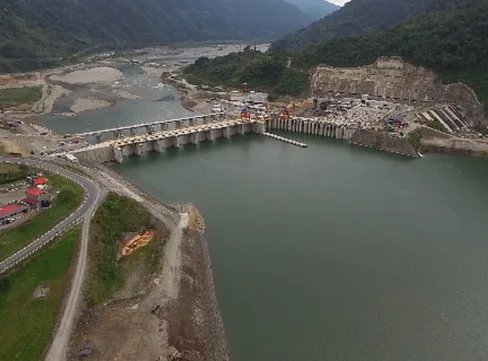
Two of the accused in the Sinohydro-Coca Coda corruption case were arrested early this week in Panama City.
Citizens Caucus leader Pabel Muñoz downplayed divisions in the movement following criticism of the name change by former president Rafael Correa. “We remain united in our objectives and being a productive force for resistance to the government when it is necessary,” Muñoz said.
“As with any legislative body, there are differences of opinion, but these are minor will not affect our overall goal,” he added.
In posts on his X account, Correa accused several members of the Citizens Caucus of “disloyalty” for accepting Noboa’s victory over Citizens Revolution’s Luisa González. “To change names is even more blasphemy and I reject it,” Correa wrote. “Citizens Revolution always! And on to victory!”
Arrests made in Coca Coda corruption case
Two suspects in the Sinohydro corruption case have been arrested in Panama, the Ministry of the Interior reported Wednesday. María Auxiliadora Patiño and José Xavier Macías were arrested by Panamanian police based on an Interpol alert Monday in Panama City. The pair will be extradited to Ecuador, the ministry said.
According to state prosecutors, Patiño and Macías were part of a criminal structure that collected $76 million in bribes from the Chinese company Sinohydro during the construction of the Coca Coda hydroelectric plant on the Coca River.
The plant has been plagued with technical problems since its construction and prosecutors say Patiño and Macías and others were bribed “ignore defects” and to provide work extensions in violation of the contract.
Former President Lenín Moreno, his wife, Rocío González, and daughter, Irina Moreno, are also being investigated in the case. Prosecutors say that Patiño and Macías were close friends of Moreno and González when Moreno served as vice president in the Rafael Correa government.
Air and noise pollution enforcement begins
Director of Cuenca’s Environmental Management Commission Carlos Orellana said Wednesday that the enforcement of new noise and air quality controls will “intensify in the coming weeks.”
Orellana said that “details of the new code have been resolved” and agents have begun enforcement activities. “We are walking the streets to identify cases of excessive noise and are also responding to public complaints,” he said on Radio Tomebamba in response to complaints from listeners about lack of enforcement.
“We are applying investigative resources to pollution detected in the city’s rivers to locate the sources,” Orellana added. “We are also working with the University of Azuay air quality center to identify air quality violations.”