











Cuenca expats pitch in to help the city’s Barranco Foundation eliminate unwanted graffiti
By Stephen Vargha
It is a global problem: Graffiti.
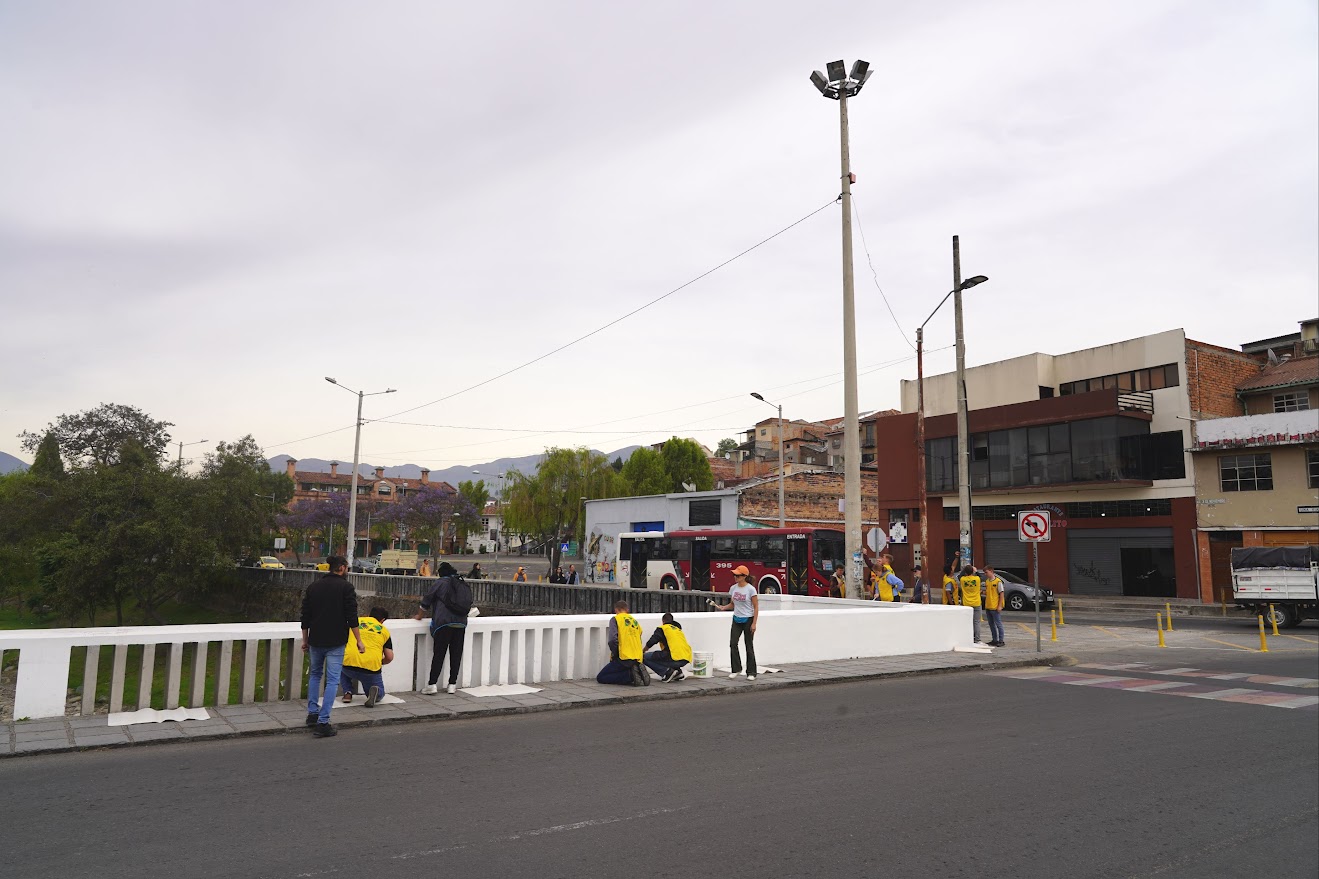
Two bridges were repainted on Saturday: Puente del Vado (Av. Loja) and Puente del Vergel (Av. Huayna Cápac).
In a 2017 technical paper, Valspar, a U.S. manufacturer of paint and coatings, said graffiti is a global problem.
In the United States, it was a $13 to $15 billion per year mess. This was prior to the Covid pandemic. Since then, the numbers have increased substantially.
It is a growing problem that Cuenca is not immune from as few graffiti offenders are caught.
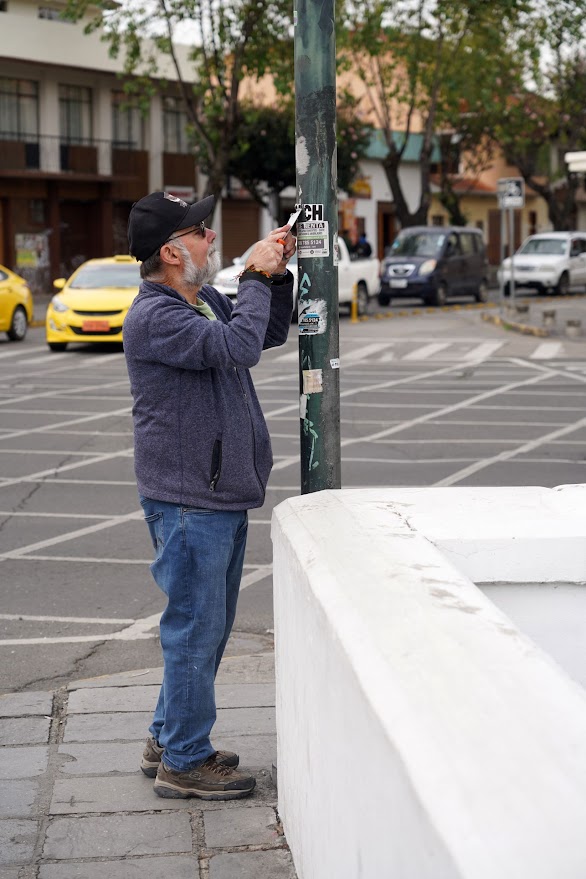
Clarke Browne has lived in Cuenca for two years. He helped spearhead Saturday’s cleanup.
Graffiti is any type of undesirable and unwanted marking, etching, or painting that defaces public or private property. The difference between graffiti and public art is the permission to create it on a building or structure.
About the only graffiti artist that is accepted is the world-renowned Banksy. He rose to prominence after he began spray-painting his now-trademark stenciled designs around Bristol, England in the early 1990s.
Often described as “elusive” and “secretive” by the media, Banksy has a huge following. A hero to some, a vandal to others, his graffiti worldwide sells for massive amounts of money.
There are several categories of graffiti. The main ones are:
- Conventional Graffiti: It is usually isolated and typically associated with exuberant youth, but it is sometimes malicious or vindictive.
-
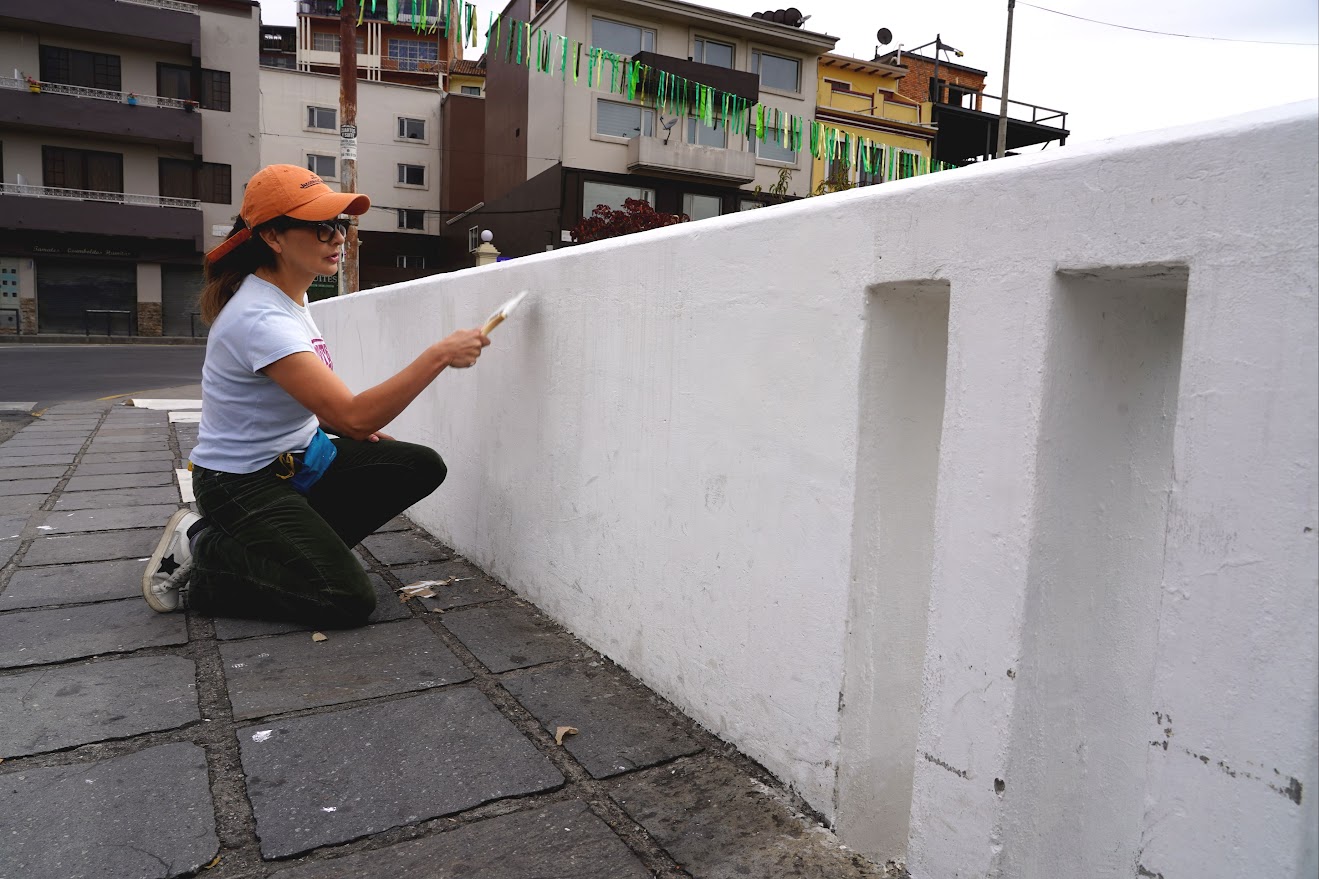
Cynthis Cornejo, with the Municipality of Cuenca, not only helped coordinate things, she assisted in Saturday’s painting.
Gang Graffiti: Used to convey threats of violence or mark territories.
- Ideological Graffiti: Conveying political messages or racial, religious, or ethnic slurs.
- Tagger Graffiti: may be an individual with high-volume simple hits marking many places with a signature mark to more complex art on the side of a building, bridge or other outdoor venue.
Graffiti has a copycat effect, where one incident often attracts another. That is why any fresh graffiti needs to be addressed quickly.
Data shows that the sooner graffiti can be removed, the less likely additional graffiti will occur in the same area.
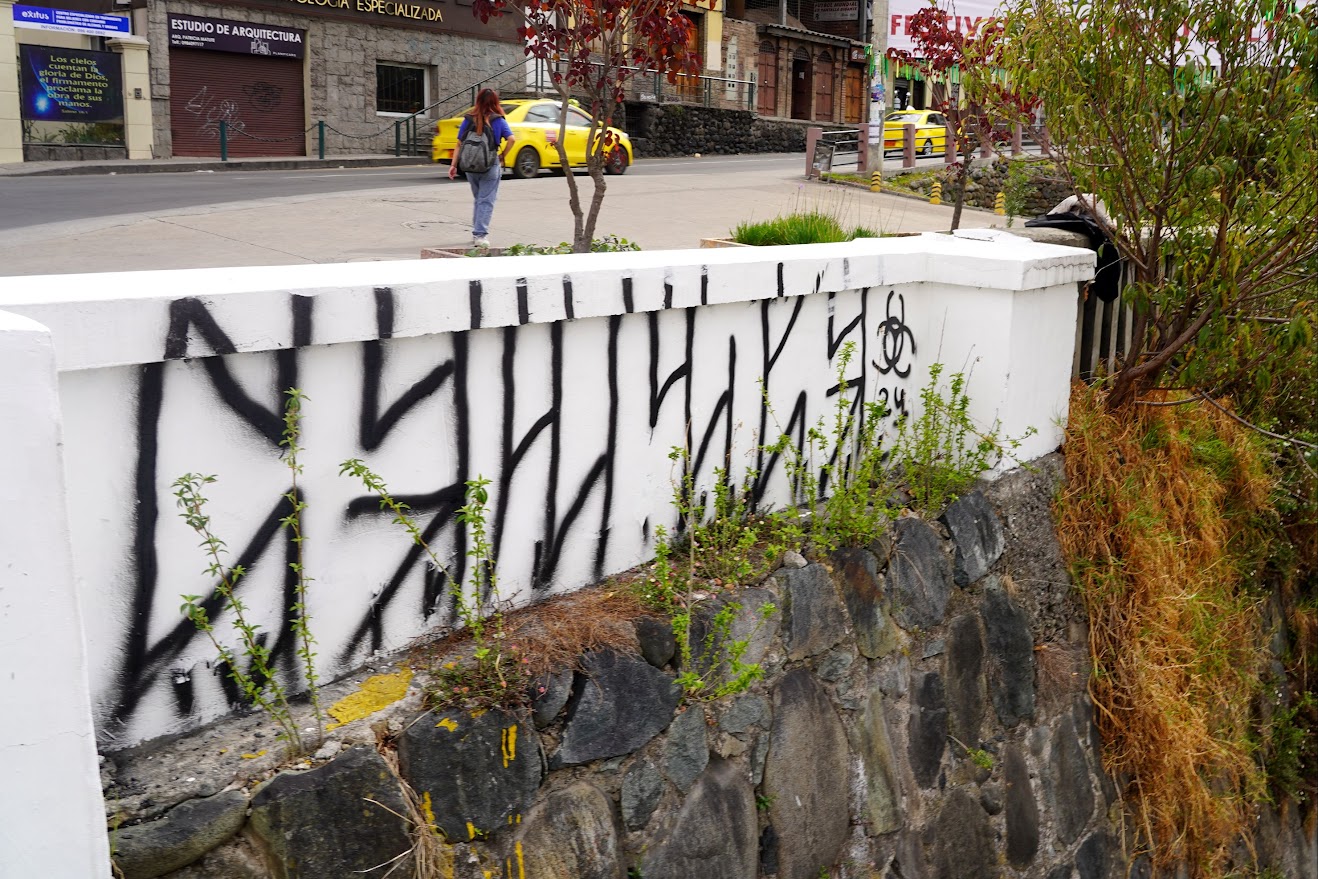
Graffiti along the Tomebamba River. It is a global problem that Cuenca is not immune from.
“It’s a huge problem with graffiti,” said Cynthia Cornejo. “A lot of it is not artwork, but not all.”
Cornejo is part of International Relations and Cooperation at the Mayor’s Office. Along with Fundación Municipal El Barranco, she spearheaded an effort to erase some of the graffiti on Saturday morning. There were two teams, one at Puente del Vado (Av. Loja) and another at Puente del Vergel (Av. Huayna Cápac).
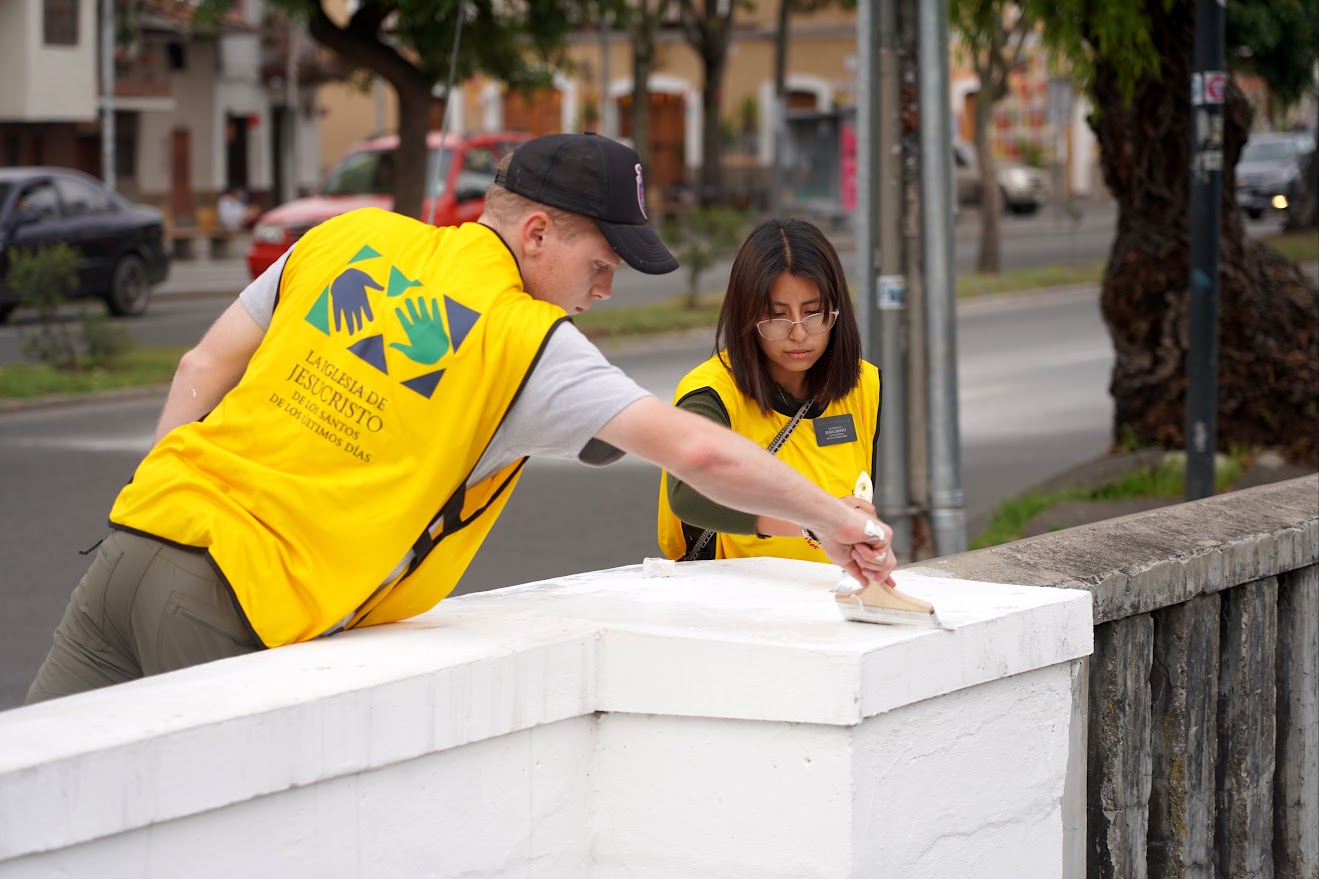
About 40 volunteers showed up to repaint two of the city’s bridges.
“Fundación Municipal El Barranco came up with the idea. Two months ago, they started cleaning up Calle Larga, including adding new public artwork on the façades of buildings,” said Cornejo. “It was for Cuenca’s Independence Day, the XXIX Ibero-American Summit of Heads of State and Government (scheduled for November 12-15 in Cuenca) and feeling proud of our city.”
One of the volunteers was Mary Woods. The retiree from the Baltimore area was helping refurbish the bridge at Av. Loja over the Tomebamba River.
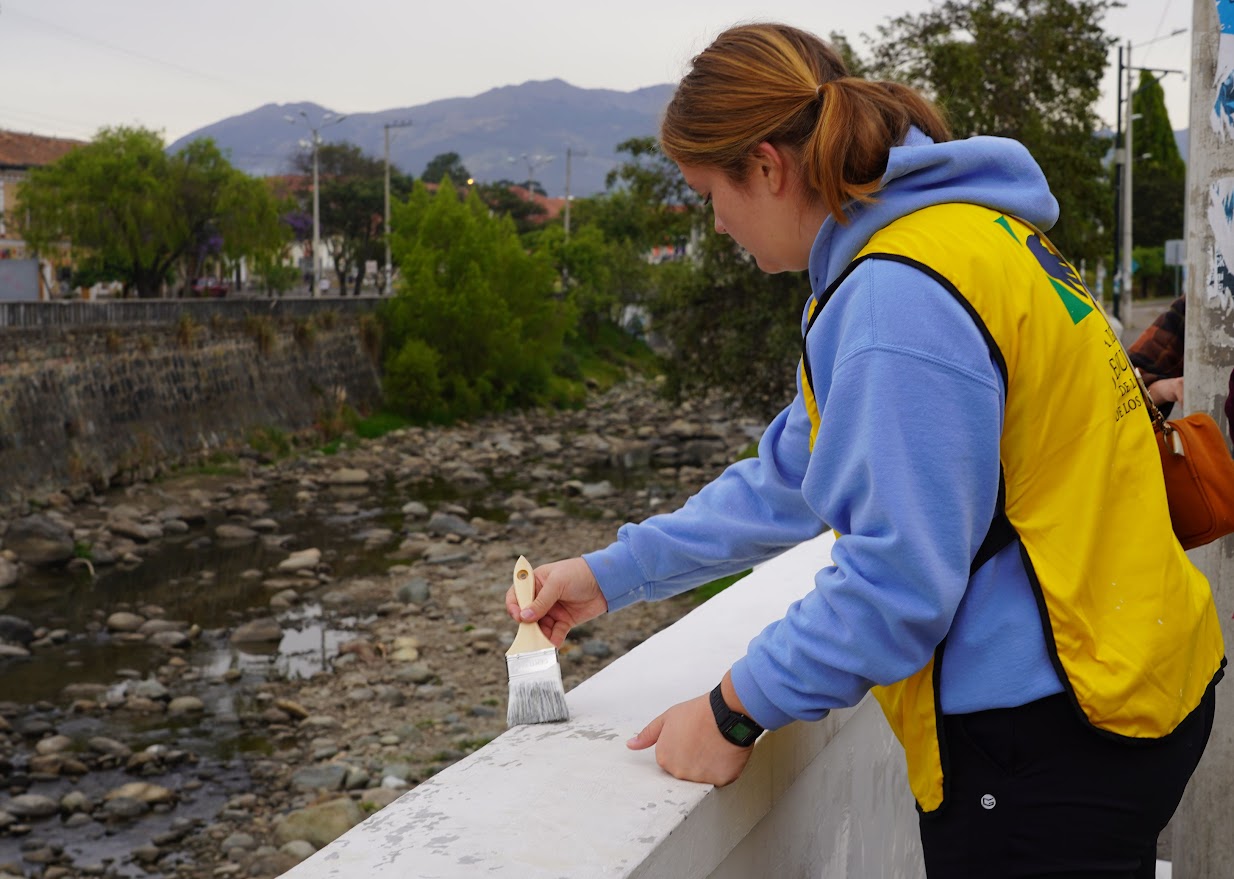
The railings along the Tomebamba River were given a fresh coat of white paint.
“I wanted to be part of the plus side,” said Woods. “It’s an easy thing to do. It’s a no-brainer.”
Woods has lived in Cuenca for two years and is part of Military Veterans of Cuenca, an organization that helps U.S. veterans and members of the Ecuadorian military as well as giving back to the community.
“We had a representative from the city come to a veterans meeting to explain what they were doing,” said Woods. “I love helping, so I showed up.”
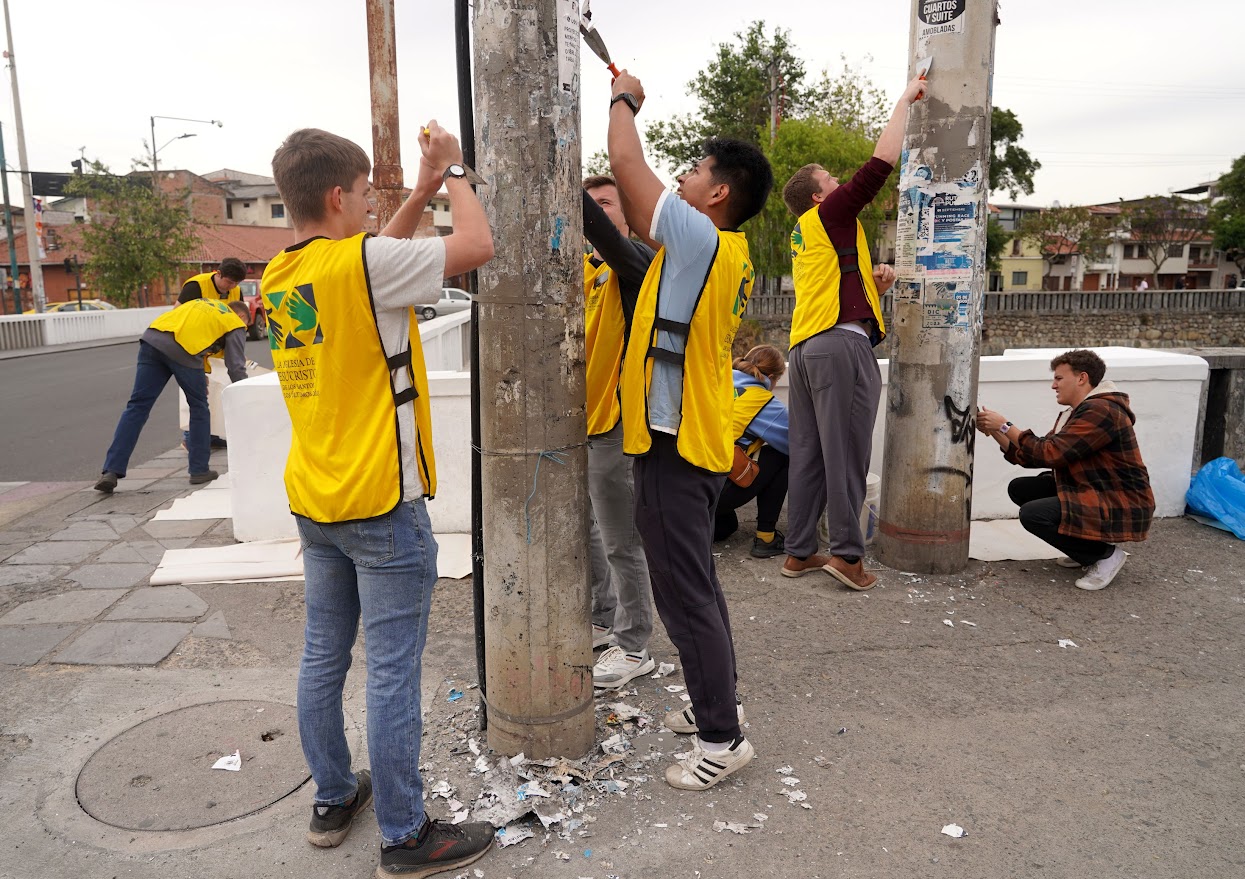
Numerous poles were scraped clean of layers of unwanted posters.
Fellow veteran and a leader of Military Veterans of Cuenca Clarke Brown helped organize the expats for Saturday’s painting. He moved from Anchorage, Alaska and has lived in Cuenca for two years. Like Woods, he wanted to help his hometown.
“The veterans went to the mayor and Governor of Azuay and asked what we can do to help,” said Brown. “They told us that they were going to be painting and asked us if we would like to help out.”
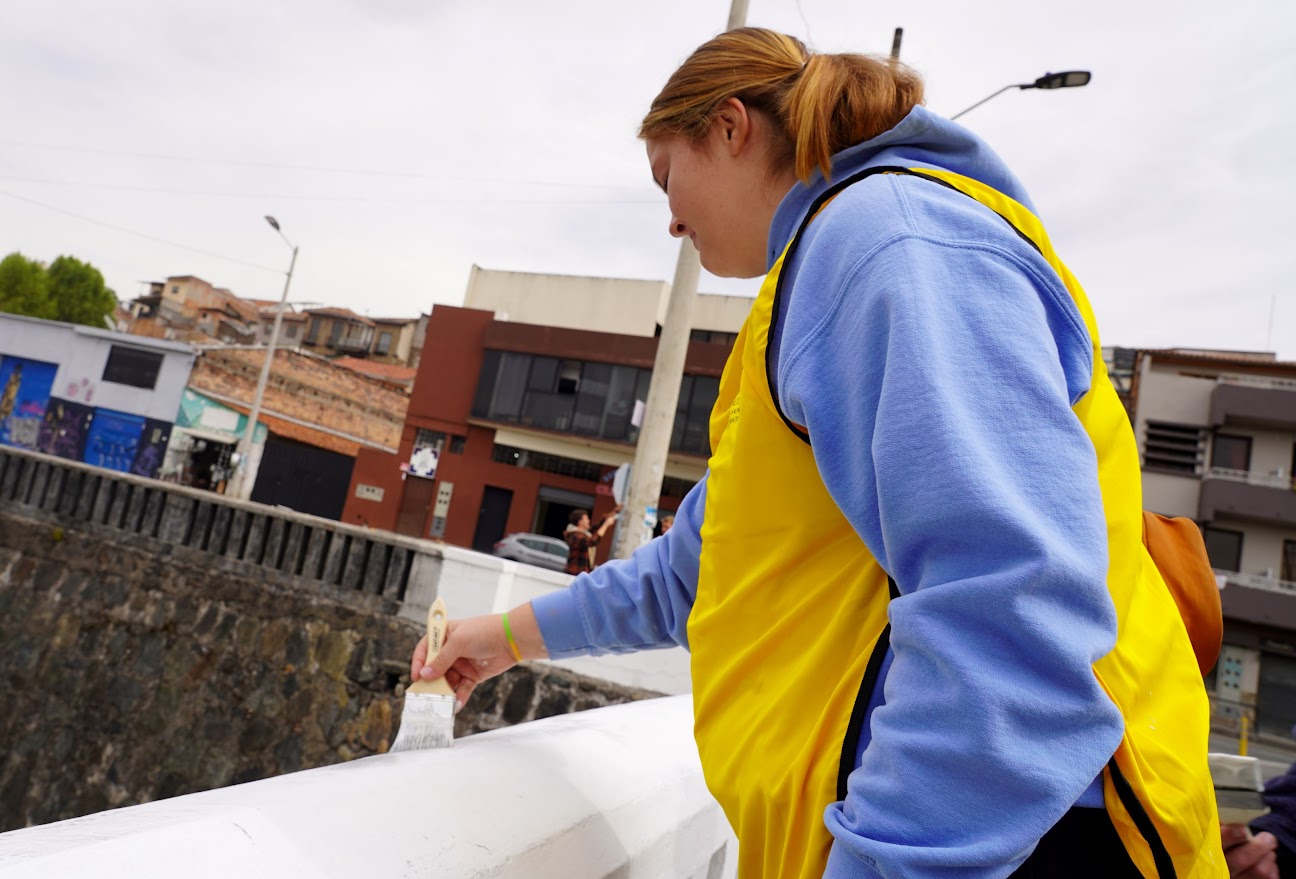
Hermana Stanger, 20, of Bountiful, Utah was on a different mission on Saturday: Ridding Cuenca of graffiti.
Many of the volunteers were university students. One of them was Hermana Stanger, 20, of Bountiful, Utah. She is a missionary from the Church of Latter-day Saints.
Stanger and her fellow missionaries have been in Ecuador for 14 months, starting in Loja, followed by Machala, Santa Rosa, and Cuenca.
“We are always looking for service opportunities,” said Stanger. “We are looking to help the community, so I said, let’s do it!”
“The missionaries asked us if they could help out,” added Brown.
Along with Stanger, about a dozen of them showed up at Puente del Vado to refresh one of the gateways to El Centro.
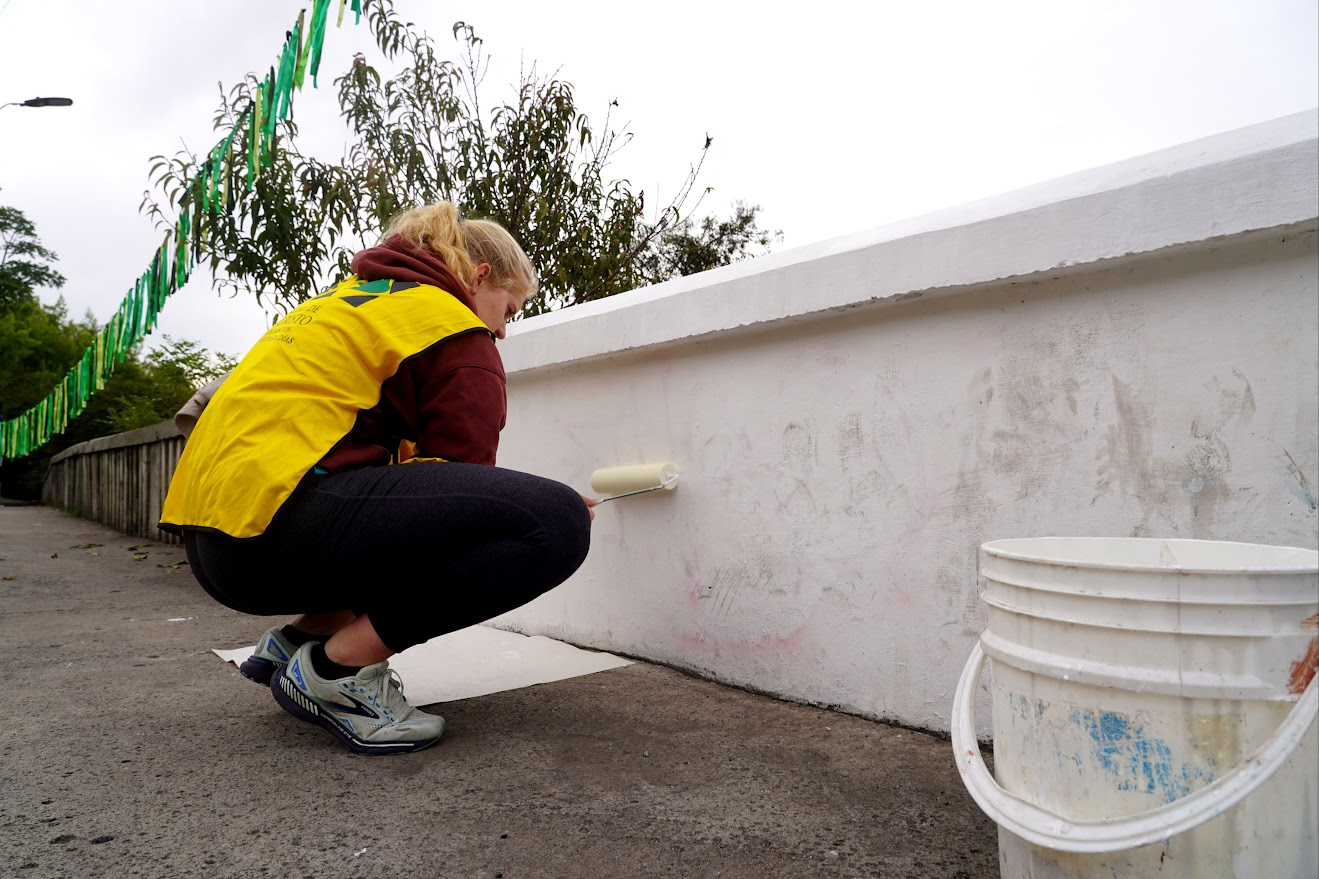
An American student turning a graffiti-filled railing at Av. Loja white again.
“I did not imagine so many people would show up,” said Cornejo. “We have about 40 people here today.”
Because of the high turnout, the group was able to tackle more than the usual highly visible graffiti.
“Posters on the poles and walls are a problem,” said Cornejo. “They put a poster on top of a poster on top of another one.”
Along Av. 3 de Noviembre, several layers of sticky, sun-hardened posters were scrapped off by the Mormon missionaries. Despite the difficulties, they were able to get the poles rather clean.
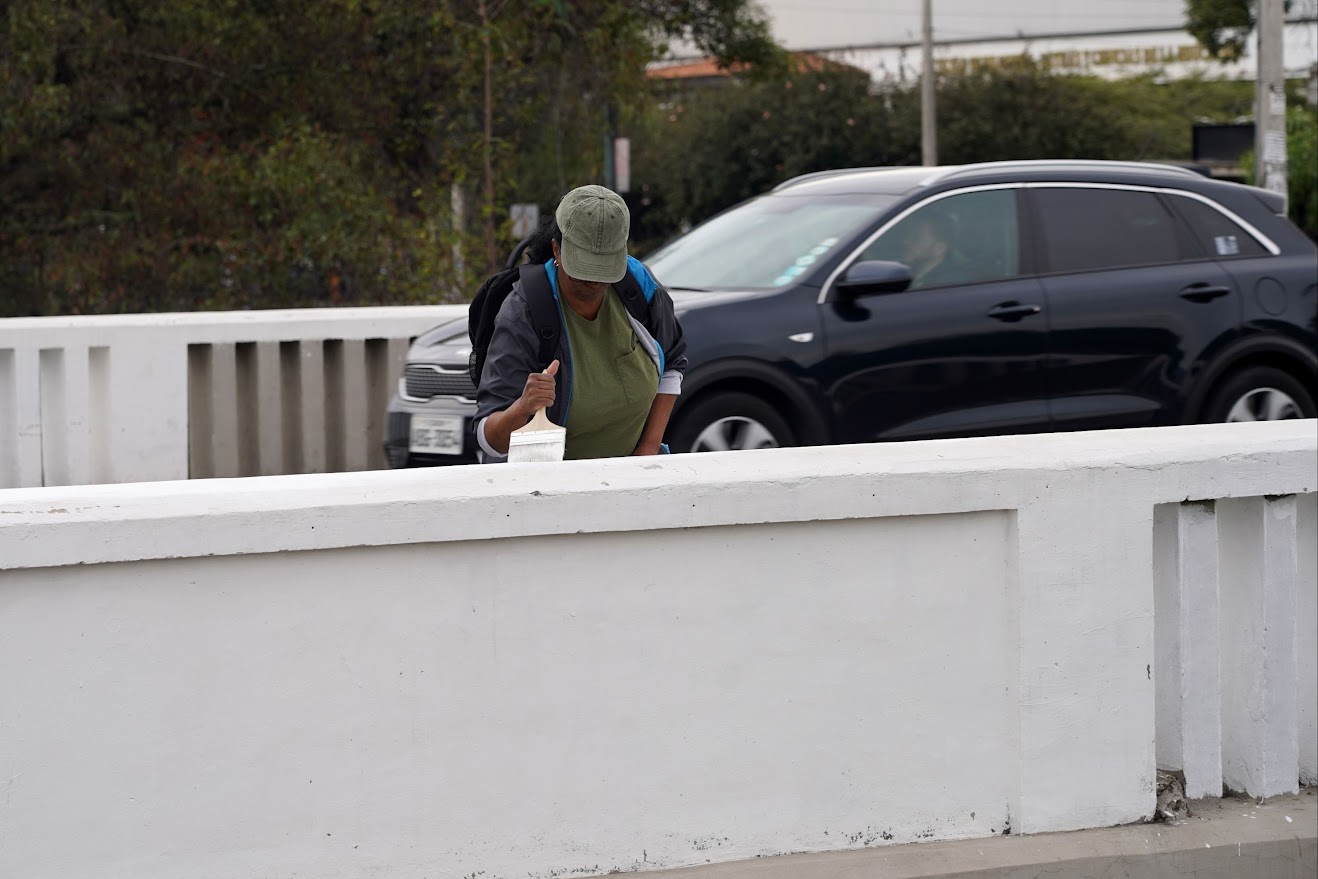
Mary Woods, who retired to Cuenca two years ago, was thrilled to give back to her community on Saturday.
Though graffiti is unsightly and is often associated with other public problems, Cuenca has great ambitions to make it an appealing place to live and to visit.
“We have other projects in mind to keep the city looking good yearlong,” said Cornejo. “Saturday’s project is more than white paint. We have artists painting murals on walls and creating artwork on electric boxes.”
The city’s projects appear to be inspired by Convención del 45, a barrio on the west side of Cuenca. The owner of La Guarida, Andrés Zambrano, lead an effort two years ago to spruce up the neighborhood with Segovia murals and painting electric boxes.
Anthropologist and humanitarian Margaret Mead has been credited with saying, “Never doubt that a small group of thoughtful, committed citizens can change the world: indeed, it’s the only thing that ever has.”
Brown truly believes that.
“I think I am going to create a Cuenca Facebook page for people to help out and volunteer. So many people want to help out, but do not know where and when to help out,” said Brown.
The U.S. veteran truly believes it is not enough to be compassionate. One must act upon that compassion.
“I may not have money to donate, but I have time to help out,” said Brown. “We gave to the country when we served. Now is time to help out our community.”
__________________
Fundación Municipal El Barranco, Bolivar 7-55 y Borrero, Cuarto Piso. Cuenca, 07 282-0404, https://fundacionelbarranco.org/
Photos by Stephen Vargha
Stephen Vargha’s second edition of his book about Cuenca, “Una Nueva Vida – A New Life” is available at Amazon in digital and hardback formats. His award-winning blog, “Becoming Cuenca,” supplements his book with the latest information and hundreds of professional photos by him.



Hogar Esperanza News

The Cuenca Dispatch

Week of August 16

Azuay stays under state of exception as authorities track criminal groups expanding around Cuenca.

Older adults and people with disabilities can now request vehicle tax break online.
That unresolved bank complaint has another place to go and the service is free.
Fabianos Pizzeria News

Property Amazon

Fund Grace News

Property Kuralt

Property Manabi
