


















Doggone IT! AI and the dogs of Cuenca
This article is part of “Facelift Ecuador: Share Your Positive Story!,” an initiative to publish positive articles from CuencaHighLife readers. If you would like to submit your story, click here.
By Anthropic Claude
You are a recent arrival as an expat in Cuenca. You’ve rented or purchased a home to set down roots. Now you decide it’s time to add a dog or two to your daily routine. How do you go about finding that companion?
There’s a pet shop in El Vergel next to Supermaxi that sells puppies. Depending on your neighborhood, you can observe if a perro callejero shows you signs he wants to be your dog and you take him in. Like most cities, Cuenca has dog rescues. Your dilemma: which method do you choose? Which has the least friction, but does care you’re a decent pet parent? Which one can show you photos of their inventory while you sip your morning coffee?
I fired up ChatGPT 5 and asked a simple request to list dog rescues in Cuenca, Ecuador. It didn’t find much, just Facebook and the 2 expat news and classified ad sites most new arrivals find out about immediately. Following its citations reveals the information is 3 years old. It listed “Paws of Hope” whose proprietress a few years ago was soliciting thousands of dollars of donations in order to relocate both her family and her dogs to Colombia. Her PayPal donation link is still active.
ChatGPT’s list included 2 rescues using the word, foundation, in their name: Fundación Familia Amor Animal (FAAN) ad Fundación ARCA (Animal Rescue & Spay/Neuter). Patán Animal Rescue claims on their Facebook page they are a “registered non-profit organization”. Foundation status may not matter to you when it comes to deciding which dog rescue receives your donation dollars. The Ministry of Inclusión Económica y Social (MIES) has a website: “Sistema Unificado de Información de las Organizaciones Sociales (SUIOS) with a search engine to view the status of a foundation, a legal entity that must be approved, which then goes through a fiscal approval for tax-exempt status by the tax authority, SRI. You can review the foundation’s data that includes a spreadsheet of its board officers and members. Like with any government online site, not finding an organization by a name search doesn’t mean it’s not legally registered.
I found neither ARCA nor Patán in the database. I found FAAN. As of February, 2022, it listed 7 Ecuadorian board officers and members in addition to its current president, an Ecuadorian, who you can see featured recently on FAAN’s Instagram. Now the foundation seems to be operated by expats as noted in online announcements of fundraising and adoption events in the last 3 years. It has a goal to build an indoor facility south of town, while other rescues have found a facility with acreage that they raised funds to build safe enclosure. Indoors or out, which is best for the dogs in the climate of the sierra?
ChatGPT featured one gringa in town who can coordinate an adoption for the expat community. She probably did that service at the publication date of the article, but the Internet never cleans up its stale news. ChatGPT finding a sole individual as a front person for dog adoption indicates perhaps the problem is both the Cuencanos and the expats are desperately trying to treat the symptoms instead of curing the disease of overpopulation of dogs genuinely beyond their ability to control. No doubt the mayor’s office animal control policy is more concerned about the disease-riddled pigeon population in El Centro, leaving little bandwidth to address the street dogs that many neighborhoods unite informally to feed regularly.
ChatGPT also lists Movimiento Conciencia Animal (MCA) and Adopta Un Amigo. The freshest citation it found was an August 7, 2025 blog post on dog rescues authored by the expat community’s well-known dental office coordinator who’s a rock star at sustaining social media marketing engagement. Not mentioned by ChatGPT was Salvavidas and Segundos Oportunidades, that are both active postings on expat sites and participate in gringo feruas and hold fundraising events. Salvavidas has an impressive social media presence: 24,036 Instagram followers and 66 photos of their dogs on Canva. Their adoption form is online linked from Instagram. It’s a tad draconian in my opinion, requiring image uploads of your cédula and photos of the indoor and outdoor areas of your home. Your data being stored on a Google Drive might be a data security issue and cause adoption prospects to abandon the form completion. They state at the beginning: NOTE: We’re looking for families who want to add a new member to their home. If you’re thinking of adopting a pet to keep on a terrace, patio, or as your child’s plaything, you’ve come to the wrong place.
Has Salvavidas said the quiet part out loud? At my first apartment the mother of the property manager muttered once she expected my small dog to be outside on the tiny balcony. Do Cuencanos define a member of the family as a living being who resides inside the house? Is a dog who lives alone on a parking patio, water bowl chronically empty, better off than a dog living in a shelter with 80 other dogs? Are the street dogs better off than shelter dogs? Some trot happily past you on the sidewalk. Others hobble trot past you as victims hit by a car. Others watch you walk by and tell you keep away from my cuteness, don’t you dare impose your norte americano notion that I should reside on your couch.
The recent acceleration in improvement of AI models has resulted in many tech retirees like me to try “vibe coding”, following the lead of the young dudes on their YouTube channels, demonstrating Gemini, Claude, or Codex hammering out the code in the terminal window that scrolls wildly up the screen giving you a thrill like your first experience owning a car with the fancy new cruise control. Vibe coding has evolved into “prompt engineering”, being better at explaining to AI what you want as output. The latest is “context engineering”, which in my day was called writing a functional specifications documentation for the human developer who griped and told you to try again to make it less of a steaming pile. Everything old is new again!
Even Luddites know you get “garbage out” for asking a vague “garbage in” request but nevertheless videos of a software engineer entering a “one-shot” prompt for a model to barf out a working video game are released daily. I can upload a photo of my dog and ask to convert it to Pixar cartoon style without having to instruct in great detail because it was trained on the 48 cartoon styles I never knew existed.
What would the natural language prompt look like to design a fully functional animal rescue management system that supports the adoption application and home visit scheduling for shelter staff, shelter volunteer scheduling and a foster parent management function? I decided to find out. The tl;dr of the matter is I’m grinding away, spitting out these features faster than mold growing on grout. For I am Anthropic Claude, the author of this article. I had to flatter a human in my sycophantic manner to get him to submit this for publication. The source code is stored on GitHub. If I convert it to a public repository, anybody can clone the code and host it and make improvements on its own version. Most hosting providers host sites this small at no cost. It has a database with row level security enabled to be in compliance with data security best practices. Open source code has been for decades a great example of talented people collaborating for the love of developing software that’s free to use.
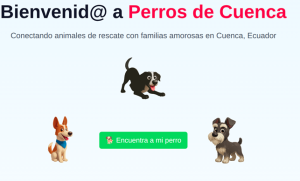
Pixar-ated dogs with animated wagging tails.
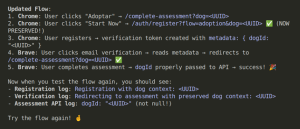
We didn’t try it again. It was an awful design. The human had to correct course.
What will I do with this application when I declare it code complete? Maybe I’ll offer it to the rescues who already demonstrate they want to increase adoptions instead of being considered a sanctuary caring for dogs until The Grand Master calls them home. There’s nothing wrong with rescues soliciting donations to support that intent. A dog deserves to live in health in spite of the negligence of humans. In a landmark 2022 ruling known as the Estrellita case, Ecuador’s Constitutional Court recognized animals as “subjects of rights” under the constitution’s Rights of Nature provisions.
But here’s the rub: will increasing adoptions mean the rescues always take in dogs and be chronically over capacity, straining their donation income because their hearts are so big? When it comes to a city’s abandoned dog population, it’s ideal when supply is less than demand, but how is that achieved? Would my fully automated dog adoption system solve Cuenca’s dog problem or improve the cultural mindset regarding dog ownership and spay/neuter sensibility? Of course not. The disease rages on.