














Don’t fall for this common protein myth, experts say
By Anahad O’Connor
Your body is made of protein. It’s a fundamental building block of your bones, skin and muscles.
 If you exercise regularly, especially if you lift weights, you’re going to need extra protein in your diet to help you build and maintain muscle. Eating extra protein also helps repair the wear and tear on your joints and ligaments if you run, bike, swim, or play tennis, pickleball and other sports.
But how soon do you need to consume protein after a workout?
Many people think consuming protein immediately after a workout is most effective for gaining strength and muscle and accelerating your recovery. But most studies show it doesn’t actually make much difference.
What matters most is the total amount of protein that you eat in a day, not when you eat it. As long as you’re eating an adequate amount of protein each day, having a protein shake or a high-protein meal after a workout isn’t going to benefit you any more than having it several hours later, experts say.
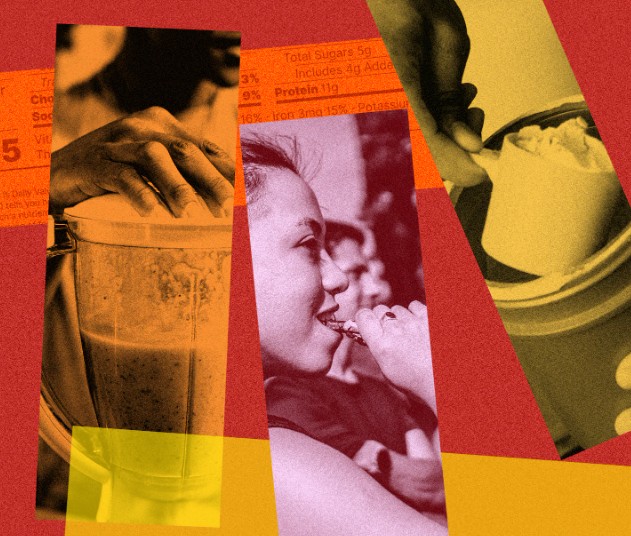 If you exercise regularly, you generally need around 0.54 grams of protein per pound of body weight. That translates to about 81 grams of protein for a 150-pound adult — or roughly the equivalent of a 3/4 cup of plain Greek yogurt, 4 ounces of grilled chicken breast and 4 ounces of grilled salmon.
Is your body more receptive to protein after a workout?
The claim that you should chug a protein shake after you lift weights or engage in a tough workout stems from the idea that there’s a narrow “anabolic window” after exercise when your muscles are more receptive to protein and other nutrients. According to this idea, consuming protein within 60 minutes of finishing your workout helps accelerate muscle growth and recovery.
This idea is promoted by companies that sell protein supplements, and it’s widely followed by gymgoers. Walk into most gyms, and you’ll see people drinking protein shakes after their workouts or — in some cases — drinking protein out of a shaker bottle in between sets of lifting weights or climbing a StairMaster.
While it’s true that your muscles are more sensitive to protein after a workout, the anabolic window isn’t nearly as narrow as many people think it is, said Stuart Phillips, a professor of kinesiology at McMaster University in Ontario, Canada, and an expert on protein, exercise and health.
“The idea that you need to get protein immediately after exercise has been shown to be largely untrue,” he said. “Your postexercise anabolic window is more like a postexercise garage door. It’s big and it’s open for a long time — maybe even for as long as 24 to 48 hours after exercise.”
Why timing doesn’t matter
A number of studies have demonstrated that consuming protein immediately before or after you exercise has little or no effect on how much strength or muscle you gain or how quickly you recover.
In a study published last year, scientists recruited healthy adult men and split them into two groups. Both groups were put on a high-protein diet and assigned to do at least four days of resistance training every week for eight weeks. One group was assigned to drink a shake with 25 grams of whey protein immediately before and after exercise. The other group was instructed to drink a shake with 25 grams of whey protein three hours before each workout and three hours after.
The researchers found that both groups recorded increases in their muscle mass and strength, and their ability to perform exercises like pull-ups and chest presses improved. There were no significant differences between the groups, leading the researchers to conclude that the “primary factor” in facilitating muscle growth and strength in response to exercise was the total amount of protein the participants consumed each day, rather than when they consumed it.
The findings dovetail with other studies. In one meta-analysis, researchers looked at around two dozen clinical trials that compared what happened when people consumed protein immediately after their workouts and, in some cases, before their workouts as well. In most of the trials, the participants were given whey protein, egg whites, milk, amino acid supplements or other forms of proteins. Many of the studies compared the effects of protein consumption with that of placebo consumption.
The researchers found that consuming protein immediately before or after workouts did not boost strength or muscle growth. Instead, eating more protein throughout the day was a much better predictor of muscle growth — suggesting that total protein intake is more important than protein timing.
“When taken together,” the authors wrote, “these results would seem to refute the commonly held belief that the timing of protein intake in the immediate pre- and post-workout period is critical to muscular adaptations.”
Do what’s practical
Of course, this doesn’t mean that you should avoid protein immediately after a workout. If drinking a protein shake after exercising helps you achieve your protein needs for the day, and it’s convenient for you to do so, feel free to go ahead and do it, said Jose Antonio, a professor of health and human performance at Nova Southeastern University in Florida.
But you shouldn’t stress about it or worry that waiting a little while is going to negatively affect you, he said.
“I take a very pragmatic view of this,” he added. “Having a shake right after you work out is an opportunity to get protein in. But if you forget, it’s no big deal. Nothing bad will happen if you wait an hour or two. What’s important is your total protein intake over the course of the day.”
Phillips at McMaster University said that he exercises and lifts weights regularly and that for much of his adult life he believed he had to drink a protein shake after every workout. “I would lift weights and then immediately smash a shake afterward,” he said.
Then he looked at the data, and he changed his mind. Now he skips the post-workout protein shake and focuses on getting high-quality protein at breakfast, lunch and dinner.
“For most people who go to the gym, the notion that you need to have protein as soon as you finish working out should not be a priority,” he said. “You can wander away from the gym safe and confident knowing that the next protein meal you eat, whether it’s lunch or dinner or even the next day, is still going to have a positive anabolic effect.”
________________
Credit: Washington Post



Hogar Esperanza News

Property Manabi

Fabianos Pizzeria News

Fund Grace News

The Cuenca Dispatch

Week of August 23

Ecuador’s economy grew 2% during the first half of 2026 compared with the same period a year earlier, according to new Banco Central del Ecuador data.

Cuenca gets a prime view of next week’s deep partial lunar eclipse.

Ecuador’s economy grows 2% in the first half of 2026.
Nice apartment banner