














Election ‘quiet period,’ dry law in effect; Giant pines in Parque Calderon to be replaced; No April blackouts, official says, as Mazar reservoir reaches full capacity
The campaigns for president and National Assembly concluded Thursday at midnight at the beginning of the two-day “quiet period” before Sunday’s election. At noon Friday, the prohibition of the sale, distribution or consumption of alcoholic beverage takes effect until noon Monday.
During the quiet period, all election campaigning by candidates is prohibited with violators fined $1,410. Those caught distributing campaign literature will be fined $235. Advertising on social media is not covered by the prohibition.
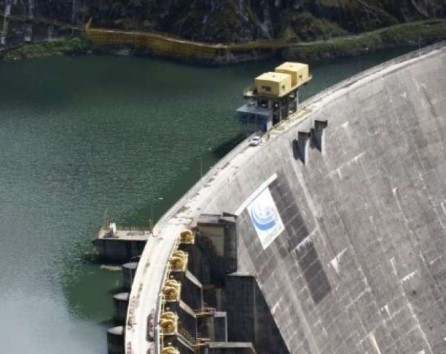
The Mazar reservoir, northeast of Cuenca, will begin discharging excess water next as it reaches full capacity.
The penalty for the sale or consumption of alcohol during the dry period is $235 and businesses that sell alcoholic beverages will be temporarily closed and the owners fined. In addition to the fines, those caught drinking in public areas during the ley seca period will be sent to jail for 24 hours.
Individuals who arrive at voting stations drunk will be prevented from voting, jailed and fined.
The campaigns of President Daniel Noboa and his top challenger, Luisa González, concluded last night in Guayaquil and the other 15 presidential candidates hosted last-minute rallies in other major cities.
Noboa took his fourth leave of absence to campaign, turning his official duties over to Cynthia Gellibert.
In their final campaign stops, several of Noboa’s challengers complained that the National Electoral Council and the Contentious Electoral Court were ignoring a Constitutional Court ruling that his decrees allowing Gellibert to assume presidential duties were unconstitutional. “It appears the justice system is loaded in favor of the president,” Leonidas Iza said in Quito Thursday night. “It appears he will get away with breaking the law.”
Giant pine trees in Parque Calderon to be replaced
The giant araucaria trees in the center of Parque Calderon will be removed and replaced, Cuenca Mayor Cristian Zamora said Thursday. “These Chilean pines have served us well for 150 years but today they are diseased and dying and it is time that they be replaced,” he said.
Zamora said the schedule for the trees’ removal has yet to be determined but said it would probably occur within the year. He said the replacement trees have been growing for several years in a city nursery.
Eight araucaria trees, native to Chile, Argentina and Paraguay, were transported from Chile and planted in the park in 1875 by President Luis Cordero, a Cuenca native.
At the time the trees were planted, Parque Calderon was called Plaza de Armas and was the city’s central marketplace. In 1920, the park assumed its current name in honor of Ecuador revolutionary war hero Abdón Calderón. The monument of Calderón, designed by Quito artist Carlos Alberto Mayer, was installed at the center of the park 1931.
Engineers say no April blackouts as Mazar reservoir reaches full capacity
Engineers at the Paute-Mazar hydroelectric complex say they expect to begin releasing excess water from the Mazar reservoir within a matter of days. According to managers of the complex, the reservoir is “centimeters away” from its full capacity of 2,152 meters above sea level.
Jorge Gomez, an engineer assigned to the reservoir, reported that the three downstream hydro plants have produced between 800 and 1,200 megawatts of electricity a day since mid-January. “We have the capacity to produce about 1,800 megawatts but this has not been necessary since other facilities in the country are also fully functional.”
Gomez disputed a claim made by an electrical engineering group two weeks ago that the country could return to blackouts in April. “The statement was based on a worst-case scenario, but this will not happen,” Gomez said. “If the rains ended today, the watersheds near Mazar and the Coca Coda Sinclair plant have received sufficient recharge to provide four to five months of water for generation.”
He added: “On the other hand, the rains are not stopping, and the forecast is for above average rainfall through February. Beyond that, March and April are historically the months with the greatest rainfall in Ecuador, so I expect our reservoir and the others to remain at optimal levels at least until June or July, when the dry season begins.”