
















Good weather in Cuenca is bad news for Ecuador; City asks for generator tolerance but warns of misuse; Cuenca prepares for the Ibero-American Summit
It’s hard to complain about beautiful weather, but that’s what energy and weather experts were doing Friday and Saturday. “Yes, it’s a pretty day out there today but that’s exactly what we don’t need,” said Frank Gomez, a forecaster with the National Meteorology Institute Saturday morning. “What we need is bad weather and many days of it, especially in Cuenca.”
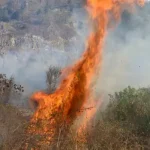
According to Gomez, last week’s cloudy, humid weather has been replaced with dry air moving east to west, from the Amazon. “We had a few showers over an eight-day period but that, unfortunately, it is over at least for several days, which means the drought and the electric blackouts will continue.”
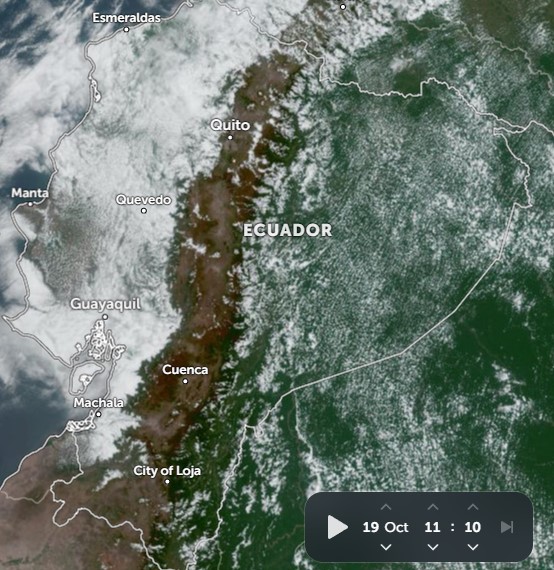
A satellite view of Ecuador Saturday morning showed clear skies over the inter-Andean valley and only broken clouds over the Amazon region.
He said the outlook improves later next week but said predictions are difficult in late October through December, due to generally dry conditions.
In Cuenca, the director of the ETAPA Hydro-meteorological Network Rigoberto Guerrero, said he was disappointed that last week’s rain didn’t produce better results. “There was some relief for Cuenca’s rivers but most of it has now been lost,” he said. “There was also a brief rise at the Paute-Mazar reservoir, since our rivers feed that project.”
Guerrero said the figure of 100 days of drought mentioned by government officials and some experts is not entirely accurate. “It is true that we have gone three months and more without significant rainfall but the drought actually began in early 2023 or late 2022,” he said. “Total rainfall totals were only 60% of average last year and they are less than 50% this year, based on a nationwide average. If you consider the entire scope of the drought, this is one of the worst in our history.”
Guerrero says he remains optimistic conditions will improve. “Although November and December are historically low rainfall months, they are also the time of increasing humidity in the Amazon and we have experienced heavy rainfall from this in the past.”
City asks for generator tolerance
Cuenca’s Environmental Management Commission is asking citizens for “tolerance and understanding” regarding the use of electric generators. “It is true they make a lot of noise and produce fuel fumes, but we understand these are exceptional circumstances and generators are necessary for the operation businesses and some homes,” said Carlos Orellana, director of CGA.
“In cases where generator owners are not operating the units properly, we and the fire department are responding to calls, making inspections. In a number of cases, we have asked owners to shut off the generators, he added.” He said the fire department responded to a generator fire on Parque Calderon on Wednesday night.
According to Orellana, generators must operate outside or in covered spaces open on two sides. In at least six cases, owners were asked to turn off generators that were operating in a garage with only one side open. “Generators produce toxic fumes and must be property ventilated,” he said. In two cases, generator owners living in multi-story housing units were asked not to operate generators on outside balconies, due to noise and fumes.
Cuenca prepares for Ibero-American Summit
Cuenca will host the 29th annual Ibero-American Summit, November 12 to 15, which brings together most of the heads of state from Latin American countries with those of Spain and Portugal.
According to organizers, the event offers a forum to discuss common interests and ways to improve cooperation. Among this year’s topics are the environment, employment, multilateralism and interconnectivity in the Internet age.
According to Cuenca Mayor Cristian Zamora, the summit is the most import international event the city has ever hosted. “Most of the presidents and prime ministers from the Americas, as well as from Portugal and Spain, will be in town and we are thrilled to host them.”
Cuenca was chosen, Zamora said, for its “legacy and reputation for innovation, inclusion and sustainability,” as well as for its attractive setting.



Hogar Esperanza News

Fabianos Pizzeria News

Fund Grace News

The Cuenca Dispatch

Week of September 20
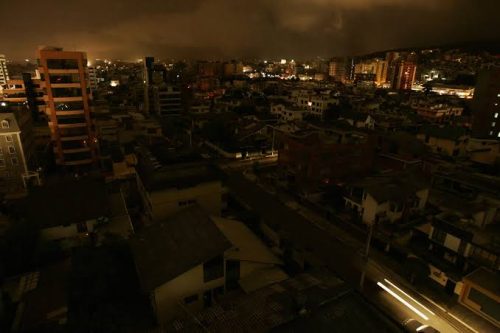
Ecuador turns to industrial power cuts to protect Mazar and keep homes from going dark.

Ecuador raises its 2026 growth forecast, but El Niño could spoil the outlook next year.

Cuenca retirees challenge medical and therapy changes at IESS senior center.