











IESS hospital manager calls situation ‘critical’ as members complain; Real estate association offers training courses, complains of informal sellers
Viernes, 19/7/2024
Hola, Todos –
Titular –
IESS: afiliados sin medicinas (IESS: members without medicines) – The “José Carrasco Arteaga” IESS Hospital is going through a crisis marked by accusations of corruption, a scarcity of medications, and a lack of supplies. In the middle of all this, rhe Asamblea Nacional has approved the opening of an investigation into Rosa Argudo, the national secretary of the Sindicato de Trabjadores del IESS. She is accused of nepotism and influence trafficking.

Social Security system members protest lack of medicine and poor lack of services at José Carrasco Arteaga Hospital in Cuenca. (El Mercurio)
Meanwhile, complaints from affiliates continue. One oncology patient has had to buy medicines outside of IESS at a cost of $150-200. And they are not available in all pharmacies. The situation has caused many patients to find alternatives outside of the system so their their treatments won’t be interrupted or to get urgently needed treatments. Affiliates feel defrauded since they pay in every month, but don’t get optimal attention. A patient described having to pay over $2,000 for exams and tests at private clinics due to delays and lack of supplies before surgery for a cyst in the head. Another patient who had a kidney transplant last year said he got good medical attention, but there were no medicines or supplies so he had to buy a catheter for $200. <And he appears to have got off cheap compared to other patients.>
Every day, at the pharmacies near the IESS hospital, patients’ families are looking for medications such as Losartán for high blood pressure, Omeprazol for stomach ailments or Metformina for diabetes. Another man said his father had to go to a private clinic for a colon ailment and paid $5,000 for an operation due to an urgent need for treatment. <Good thing there’s private insurance and private clinics and hospitals. The premium is the same as it would be for IESS if I paid the same percentage of my income that Ecuadorians do. The downside is insurance doesn’t cover 100%, but partial coverage of the claim is better than not getting the treatment at all and dying painfully as a result.
Fernando León, manager of the IESS Hospital admitted that the situation is critical. He said he held meetings with the workers who were afraid to express themselves. He also made an assessment of the situation and found that there is 70% of medicines are in stock, 75% for supplies and that 38% of the budget has been spent. Also there is a deficit of 290 professionals. There has not been massive hiring for more than 10 years and there has been a decrease due to people retiring and quitting. The prior policies of Governments has been to not replace these workers which has aggravated the situation. However, he indicated that $150,000 in medications have been acquired including 173 new types of pharmaceuticals.
Cuenca –
USD 295,3 millones han sido por SRI: Azuay ($ 295.3 million has been collected by SRI: Azuay) – The Zone 6 department of the IRS announced that it has collected $195.3 million in taxes in the first half of the year. This represents meeting 107.2% of its goal. $128.1 million was collected through IVA, $80.9 from income taxes, and 10.2% from the tax on Special Consumption (ICE). Additionally The Motor Vehicles tax collected $9.1 million and for imports, $48.6 was collected for IVA and $3.9 for the ICE. In zone 6, Azuay contributed $295.3 million, Cañar with $18.3 million, and Morona Santiago with $18.2 million. <That makes Azuay the financial center of Zone 6 by a long way.>
De El Mercurio de jueves, 18/7 (3 articles):
ACBIR abre primer carrera de Técnico en Bienes Raíces (ACBIR opens first Real Estate Technician program) – La Asociación de Corredores de Bienes Raíces del Azuay (ACBIR – The Azuay Real Estate Brokers Association) launched the first carrera (career/major) for Técnico Superior en Bienes Raíces en Ecuador (Real Estate Technician in Higher Education) in collaboration with the Instituto Superior “San Isidro” and approved by the Consejo de Educación Superior (Council of Higher Education).
This major seeks to fight the informality in the real estate sector and to improve the quality of service. David Flores, president of ACBIR said that although courses to get a real estate broker’s license have been traditionally offered, there are people who practice informally without either training or an adequate license. The course includes 12 subjects in 2 semesters, degree work, community outreach and internships. It will teach subjects such as Real Estate Rights, Urban Planning and Specialized Marketing. 2 programs will be offered, one the Técnico Superior starting from cero (zero – your word for the day although many of you are probably familiar with it through the Cero Latitud beer) for high school grads at a cost of $4,900. The classes start el 7/10. The second program, Validación por Ejercicio Profesional (Validation of Professional Practice), lasts 5 months and is for people with experience and a previous license at a cost of $1,400 plus $140 for registration. This program starts el 5/9. Most of the classes will be virtual with in person classes for specific subjects. <So now all of you who have complained about crooked “brokers” might have someplace to register your complaint. I don’t think training and a license is going to keep someone who’s ethically challenged from continuing to charge gringo prices or making outside-of-the-contract deals with greedy sellers.>
Más protección para adulto mayor (More protection for senior citizens) – The “Ordenanza de Protección de Derechos de las Personas Adultas Mayores” (Ordinance for the Protection of the Rights of Elderly Persons) was approved in the first debate in the Consejo Cantonal. The document is the result of outreach and workshops in which collectives addressing guaranteeing rights participated. It covers areas of entrepreneurship, access to health services, adequate transport, parking spaces for adultos mayores <hear, hear>, decreasing municipal paperwork, and more. José María Egas, coordinator of the Colectivos de Garantía de Derechos said that the elderly are the fastest growing demographic group and so it is necessary to have regulation in their favor. Although there is a national Ley del Adulto Mayor, which is being updated, there is a lack of definition about what can be done at a local level.
Some of the proposals include updated and adequate gerontological training at universities, implementation of productive and recreational activities <I think these translations would count and I didn’t need an ordinance to implement them. But if you´re relying on a law to enrich your life — I’m sorry, but I’m going to be blunt — you’ll probably die first.>, access to spaces, and other aspects. There will be more meetings and workshops to fine tune the ordinance before it goes to the 2nd debate and approval which might take place in a month. This will be the first ordinance of its type in the country.
Día del Jubilado, hoy (Retiree’s Day, today (jueves)) – The Centro de Atención al Adulto Mayor (CAAM – Senior Citizen Care Center), part of the IESS (Instituto Ecuatoriano de Seguridad Social) is offering various activities to mark Retiree’s Day. Cira Tapia from CAAM, said that it has the Programa de Envejecimiento Activo (Active Aging Program) for people over 55 who are affiliates or are retirees. CAAM has 4,667 people registered in the program. El jueves, the Jornadas Deportivas (Sports Days) started in the Colegio Benigno Malo and el viernes is the final of the Campeonato de 40. On el 23/7, there will be an exhibit of paintings and works from the photography and audiovisual workshops in the Plaza de Chaguarchimbana. On the 25/7 there will be a gala fiesta.
And that’s all for today so hasta ? –
Jeanne
________________
Editor’s note: Jeanne’s Periodico is a translated digest of news from the Cuenca daily newspaper El Mercurio. If details, such as event dates and times, do not appear in the translation, they did not appear in the newspaper (please don’t ask her for them). If information is incorrect, it is the responsibility of El Mercurio. The text between the carrots, or guillemets (< … >), is Jeanne’s personal opinion and not part of the news translation.



Hogar Esperanza News

The Cuenca Dispatch

Week of September 20
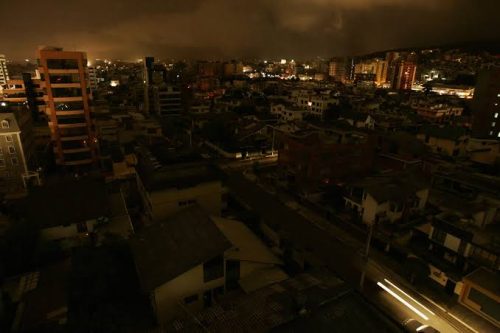
Ecuador turns to industrial power cuts to protect Mazar and keep homes from going dark.

Ecuador raises its 2026 growth forecast, but El Niño could spoil the outlook next year.
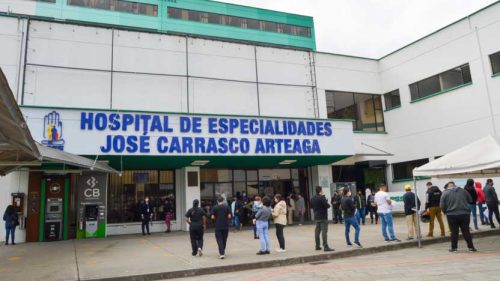
Cuenca retirees challenge medical and therapy changes at IESS senior center.
Fabianos Pizzeria News

Fund Grace News
