












Post election, Ecuador announces new plans to combat transnational drug traffickers
By Julieta Pelcastre
With recent presidential and National Assembly elections behind it, Ecuador has announced new initiatives to combat transnational drug organizations. Among them are plans to build two provisional military bases on the border with Peru, in the El Oro Province.
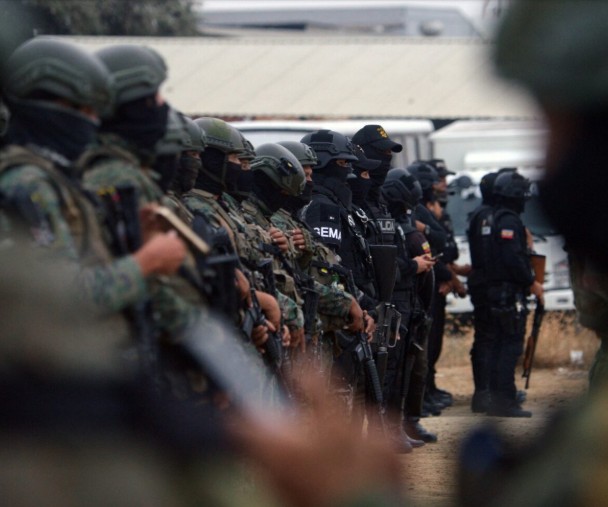
Ecuadorian service members and police officers get ready before an operation against drug traffickers in Duran, east of Guayaquil, Ecuador, July 23, 2024.
In addition to local criminal gangs, the government says it is fighting armed groups from Mexico, Venezuela, and Colombia, including the powerful Jalisco New Generation Cartel, the Sinaloa Cartel, and the Tren de Aragua.
The new bases will be located in Pasaje and Puerto Bolívar, strategic points where narco traffickers utilize port infrastructure to traffic large shipments of cocaine to Europe and the U.S., camouflaged among export products such as bananas and seafood.
“These bases were strategically selected as part of a military and police intelligence plan which, with the support of advanced technology, seeks to block the movements and routes used by these organizations,” Jorge Serrano, advisor to the Peruvian Congress Intelligence Commission, who is familiar with Ecuador’s plans.
Peru is concerned about the spread of shipments moving into its new Chinese-operated port in Chancay. “The objective is to stop their expansion and prevent them from establishing themselves permanently in the region,” Serrano said.
According to President Daniel Noboa, Ecuador is at war. “We are facing an offensive from multi-national criminal groups and now it is time to launch a counter-offensive,” he said on Radio Canela. Noboa, who recently won reelection, said that the security bloc is in the process of reorganization, mobilizing resources, and personnel to the areas most affected by the narco-terrorist organizations, which engage in turf wars for control.
“Ecuador is facing a crisis, especially in its coastal provinces. It is surrounded by Colombia and Peru, where the most powerful drug cartels are involved in the growing and manufacturing of cocaine,” Serrano said. “It also suffers from the criminal influence of Venezuela, where organized crime maintains alliances with international terrorist networks.”
According to Serrano, “a key factor in this crisis is the expansion of the Tren de Aragua, classified as a terrorist organization, backed by Venezuela and Cuba. Unlike other criminal groups, it not only seeks profit, but also operates as a tool for regional destabilization, through attacks with political aims.”
Puerto Bolívar
“The new bases are part of Ecuador’s effort to recover territory and strengthen security in the region,” said Serrano. “It does not want to duplicate Colombia’s situation where 15% of the country is controlled by narco gangs.”
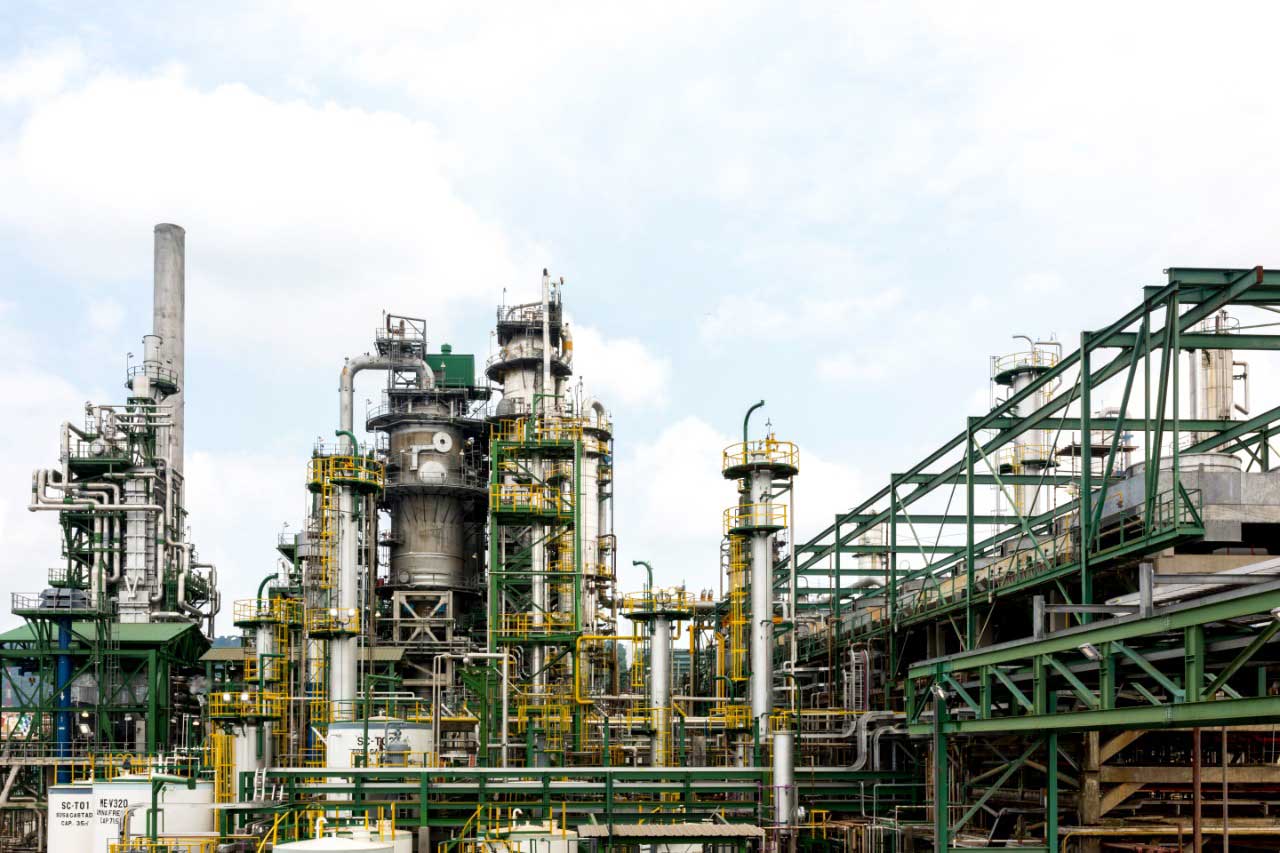
He adds: “A critical point is Puerto Bolívar, one of Ecuador’s main ports, which has practically been taken over by narco-terrorist gangs, through bribery and violence against the security forces.”
Puerto Bolívar, located in Machala, capital of the El Oro province, was once a gastronomic and tourist destination. Today, it faces an unprecedented security crisis. The violence stemming from the dispute between criminal groups operating in its fishing and banana port, has plunged the community into fear.
“Dozens of families in the area have abandoned their homes due to the increase in murders and bomb attacks on homes and businesses,” daily newspaper Primicias reports. “The government has added security forces and intensified land and sea patrols to contain the violence but much more needs to be done.”
Battlefield
Local gangs such as Los Choneros are embroiled in a dispute between Jalisco New Generation and the Sinaloa Cartel, which are seeking to control key routes for drug and arms trafficking in Latin America, as well as the corridors for the shipment of cocaine from the Ecuadorian coast to Central America, the United States, and Europe.
The U.S. Department of State has identified both Jalisco New Generation and the Sinaloa Cartel as leading the trafficking of fentanyl to the United States. While the Sinaloa Cartel uses extreme violence to maintain its control, Jalisco diversifies its activities with extortion, arms trafficking, and direct attacks on the security forces.
According to Serrano, “the new Ecuadorian bases will allow intelligence operations to be carried out in cooperation with the United States, to identify and capture the leaders and key operators of these transnational terrorist organizations. You will hear more about U.S. involvement in coming weeks.”
International support
The United States has supported Ecuador in the fight against narcoterrorism, implementing various programs that included trainings for Ecuadorian law enforcement officers, the Armed Forces, and the judicial system. Recent meetings between Noboa and U.S. President Donald Trump have laid the groundwork for increased cooperation, Ecuador’s Ministry of Foreign affairs says.
“The alliance with the United States has a positive impact on Ecuador, strengthening the training of its military and security forces to act,” the ministry says. “Today, the Ecuadorian forces are better equipped, better prepared, and have a more sophisticated intelligence system than a few years ago.”
For Serrano, the U.S. designation of Mexican cartels, Central American gangs, and the Tren de Aragua as foreign terrorist organizations marks a turning point in the fight against organized crime in the region. “With this measure, the opportunity arises to strengthen collaboration between national intelligence services, to develop a joint strategy to combat this threat more effectively.”