













Seven to seventy and still counting: Why Granada’s SevenUp series may be one of TV’s greatest achievements
In an age when much of television is disposable, forgettable, or so relentlessly superficial that even its creators probably struggle to recall it six months later, ITV’s Up series is a towering achievement.
It may well be one of the most important television documentaries ever made, which is a large claim, but one justified by both its ambition and its astonishing endurance.
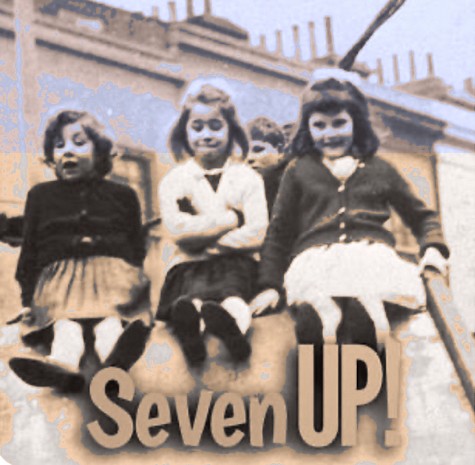
Beginning in 1964 with Seven Up!, the series was produced by Granada Television and took fourteen seven-year-old British children from sharply contrasting social backgrounds and asked them deceptively simple questions about their lives, schools, families, and dreams. Inspired by the Jesuit saying, “Give me the child until he is seven and I will show you the man,” the project returned every seven years to revisit them. The result was not merely a documentary. It became an unparalleled record of British society, social mobility, class, family, aging, and the unpredictable ways in which childhood both shapes and fails to fully determine adulthood.
 The series is of particular interest because the participants turned 70 this year, which makes them of very much the same generation as many Cuenca expats and retirees.
For someone like myself, born in 1951, the first broadcast aired when I was thirteen years old and I clearly remember seeing it at the time, so in a peculiar sense, I have known these people, or at least known of them, for most of my life. They are turning 79 this year, and their journeys unfolded in parallel with my own generation’s experience of Britain and the world after World War II: social change, technological change, educational reform, economic upheaval, and aging.
Watching 63 Up (made in 2019) today, from an apartment in Cuenca, Ecuador, is therefore rather like opening a living archive of Britain itself. The original black-and-white footage remains deeply compelling even now, and it also makes me wonder about the futures of some of the young Ecuadorian children I know today.
One sees children from an elite private school in Kensington, where one polished seven-year-old boy confidently states that he intends to go to Trinity Hall, Cambridge, as though this were simply the natural order of things. Meanwhile, an East End boy, Tony Walker, asks with perfect logic: “What is a university?” In that brief exchange, the class realities of 1960s Britain become clearer than many academic texts could ever make them.
Then there is Nick Hitchon, the Yorkshire Dales farm boy, walking four miles to a one-room rural schoolhouse, raised by an older father in circumstances far removed from London privilege. Asked at the age of six (he was for some reason a year younger than all the other children) whether he had a girlfriend, he replied with unforgettable firmness: “I don’t answer that kind of question.” That boy would later become a professor of nuclear physics in the United States, his life representing one of the series’ most striking examples of intellectual ascent across social barriers.
Which raises an interesting question about the series itself. The participants were chosen in an attempt to represent different social classes in Britain in the 1960s, and Apted has stated that he was asked to find children at the extremes. Yet the selection involved considerable chance. Choosing a shy farm boy from a remote corner of the Yorkshire Dales who would go on to teach nuclear physics at an American university as an adult seems, in retrospect, either inspired or remarkably serendipitous. One wonders whether his classmates in that one-room school were equally remarkable, or whether the cameras happened to land on an exceptional child whose trajectory would have been impossible to predict. After more than sixty years, the series never entirely resolves the question of how representative its fourteen participants actually were of anything beyond themselves.
Tony, who dreamed of becoming a jockey, came agonizingly close to that dream — he once finished fourth in a race where the photo finish separated him from third — but after his riding career ended, he built a rich and eventful life that included taxi driving, business ventures in Spain, family life, surviving a pulmonary embolism, and eventually a peaceful retirement in the English countryside with horses in a field behind his house.
John Brisby, once the epitome of upper-class confidence, matured into a top lawyer whose life became more defined by extensive charitable work in Bulgaria, revealing depths far beyond his privileged childhood persona.
Simon, the mixed-race child from a London Barnardo’s orphanage, abandoned by his mother and never knowing his father, perhaps offered one of the series’ most moving stories. He went on to marry, raise five children, and become grandfather to ten. Asked whether he had been a good father, he observed that he gave his children the one thing he himself never had: a father. That single statement may summarize more about resilience, family, and human dignity than entire shelves of sociological commentary.
And then there is Neil Hughes, whom Apted himself called the “roller coaster” of the entire series. At seven, Neil was a happy child, funny and full of life and hope. The seven-year-old confidently stated that he wanted to be an astronaut when he grew up.
But by his early twenties, he had dropped out of university after a nervous breakdown and was living in a squat in London, doing building work where he could find it. At 28, he was still homeless, now in Scotland; by 35, he was living in a council house in the Shetland Islands, writing and appearing in the local pantomime. A combination of mental illness and self-doubt was an important factor in his falling into homelessness.
What the cameras then captured across subsequent installments was one of the most extraordinary turnarounds in documentary history: by 42, Neil had completed a degree through the Open University and was serving as a Liberal Democrat councillor in the London Borough of Hackney. He went on to stand in multiple general elections, serve as a district councillor in Cumbria, and work as a lay preacher in the Church of England. He told the Guardian that he sees himself as a complete failure — a self-assessment that the evidence of his life comprehensively contradicts.
Other participants emigrated to Australia, entered religious life, suffered illness, endured divorce, found success, or adapted to life’s compromises.
What makes Up extraordinary is that it does not offer simplistic moral lessons. It does not claim class determines everything, nor does it pretend individual willpower conquers all. It presents life in its full complexity: shaped by class, certainly, but also by personality, health, opportunity, luck, resilience, and changing history. Which makes it incredibly interesting as the viewer can challenge themself to predict the futures of the participants.
By 63 Up, which came out in 2019, one of the clearest conclusions is that for nearly all participants, family ultimately became more important than youthful ambition. A successful lawyer wishes in retrospect that he had spent more time with his children. At seven, life revolved around dreams. At sixty-three, it revolved around children, marriages, grandchildren, illness, legacy, and personal endurance. This may be the deepest truth the series uncovers.
Modern viewers also benefit from 63 Up‘s extensive use of archival flashbacks, which allow us to see each participant at every age from childhood onward. The effect is often profoundly moving. One sees not separate versions of a person, but the persistence of identity across time. The seven-year-old child remains visible inside the mature retiree — which gives the series unusual emotional force and explains why footage filmed in grainy black-and-white in 1964 can still feel more gripping than much contemporary programming.
One further element deserves mention. Michael Apted was not simply a detached observer — he had been a young researcher on the original 1964 program and returned as director from 7 Plus Seven onward, maintaining that relationship with the participants for nearly fifty years. As the series progressed, the dynamic in the interviews grew much more intimate and emotional, with Apted describing his relationship with the subjects as becoming collegial and eventually something between equals. That continuity of the same human eye, watching these lives across half a century, is inseparable from what makes the series unique.
For those tempted to begin this remarkable journey from the start, the most sensible approach may be to first watch the relatively brief original Seven Up! from 1964, which introduces the children in their sharply defined social worlds. From there, one can move directly to 63 Up (2019), the far longer and more comprehensive installment that incorporates flashbacks from every previous stage, effectively condensing more than half a century into one extraordinary portrait.
As for the future of the series: it is considerably brighter than it appeared even a year ago. Award-winning filmmaker Asif Kapadia, known for Amy and Senna, has been entrusted with helming the concluding installment, and has described directing 70 Up as “the ultimate portrait of human life.” The release date for 70-Up has not yet been released, but is expected in 2026.
The concluding film will reunite surviving participants now aged 70 and honor those who have died, interweaving new interviews with archival footage of Lynn Johnson and Nick Hitchon — who passed away in 2013 and 2023 respectively. The film will also include the return of Charles Furneaux, who had a falling out with Apted before the filming of 28 Up and refused to participate for decades. The series will air on ITV1 and ITVX later in 2026.
All of the previous documentaries in the series are available on YouTube, though you may need to use a VPN set to UK to view them. Genuine human stories, honestly observed across decades, do not become irrelevant — they become history and memory. And in rare cases such as this, they become something close to art.