
















Why every gringo eventually learns to ask a local before buying anything with a plug
Let’s begin with a simple assumption: you just want a blender. Nothing fancy. You’re not looking to crush diamonds or blend frozen mangoes into silky perfection for your artisanal juice bar. You just want to make a banana smoothie without waking the neighbors or electrocuting yourself.
Welcome to Cuenca.
You walk into the store — say, Coral, Sukasa, Chordeleg, or that small place that somehow sells both microwaves and live parakeets — and you’re met with a wall of blenders. It’s a dazzling display, many with names you’ve never heard of and none of which are accompanied by helpful staff or clear pricing. Some have ten buttons, others have one. A few hum softly on demonstration mode, unattended.
 You approach a salesperson. She is kind and brisk and speaks Spanish that seems to operate at double speed. You catch words like vaso de vidrio, potencia máxima, and something that sounds like “soup function,” though you sincerely hope that’s a mistranslation. You ask if the blender can crush ice. She says yes. You ask if it can reliably crush ice. She says it has six speeds. You ask what happens if it breaks. She shrugs and says, “Tenemos más.” (We have more.)
Eventually, you pick a model that looks decent—sleek black base, plastic pitcher, mysterious brand name—and bring it home with a sense of achievement. You’ve won. You are victorious. You are a person who owns a blender.
The next morning, you proudly set it up on the kitchen counter. Your local empleada (cleaning lady), who has arrived just as you’re slicing bananas, glances at it and shakes her head.
“No compraste Oster?” she asks.
You stare blankly. She launches into an unsolicited but obviously well-practiced lecture.
Oster blenders, she explains, are the only ones worth buying. They come with vasos de vidrio—thick glass jars that can handle boiling-hot water for making café pasado without cracking. The blades are replaceable and sold at most supermarkets. The motors are strong, repairable, and familiar to every appliance repair guy in town.
Also, you bought a model whose pitcher is nearly impossible to clean beneath the blade. She demonstrates, disapprovingly.
Oh.
Suddenly, your shiny new blender feels like a cheap toy. You begin to understand that here in Cuenca, knowledge is hyper-local and earned the hard way. There are rules, traditions, and shortcuts—but no one tells you until it’s too late.
You smile, thank her, and make the smoothie anyway. It’s lumpy and slightly too warm, but still drinkable. You vow that the next time you need an appliance, you’ll ask someone before you buy it.
A week later, the blender is already leaking from the base. You give it away to someone who says “for parts” with a gleam in their eye. You go back to the store. The Oster blenders are now mysteriously 20% more expensive than last time.
You buy one anyway. Welcome to the club.



Hogar Esperanza News
Fabianos Pizzeria News
The Cuenca Dispatch

Week of September 20
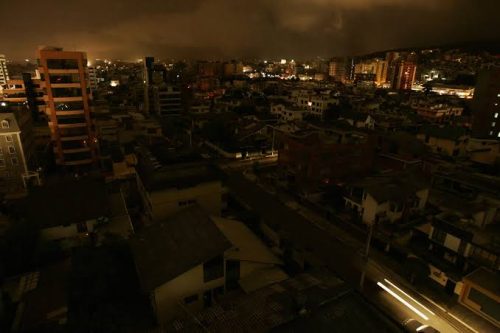
Ecuador turns to industrial power cuts to protect Mazar and keep homes from going dark.

Ecuador raises its 2026 growth forecast, but El Niño could spoil the outlook next year.
Cuenca retirees challenge medical and therapy changes at IESS senior center.
Fund Grace News