








Without the resources of other convents, military vets give Del Carmen de San José a helping hand
By Stephen Vargha
Convents have a rich history in Cuenca. They became a part of Cuenca shortly after the Spanish conquered what is now Ecuador.
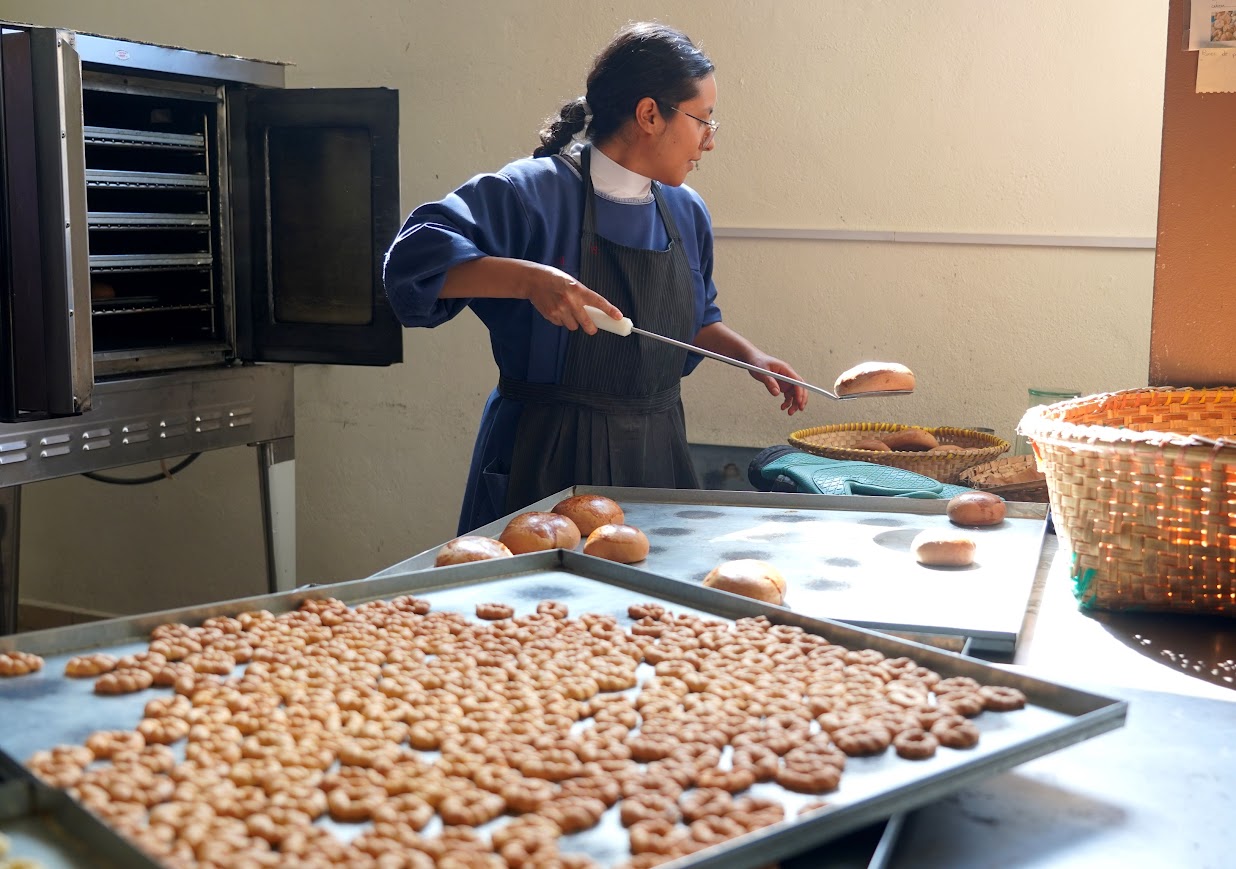
Bread is made by the nuns for their consumption as well as a way to raise money for the convent.
Spanish conquistador Rodrigo Núñez de Bonilla is attributed with the construction of the first Catholic church founded in Cuenca on April 12, 1557.
The first convent in the city, Monasterio de la Inmaculada Concepción, was founded 42 years later and still stands today. The approximate 10,000 square meters complex encompasses an entire city block, bordered by Hermano Miguel, Juan Jaramillo, Presidente Borrero, and Presidente Cordova.
Convents were founded in Europe in the 5th century. They offered women opportunities they would have been unable to obtain otherwise.
Often, religious life was the only pathway that offered a young woman a decent education. It gave women access to social welfare and the chance to break away from the close rigid strictures of their families, including staying home preparing meals, cleaning the house, and raising the children.
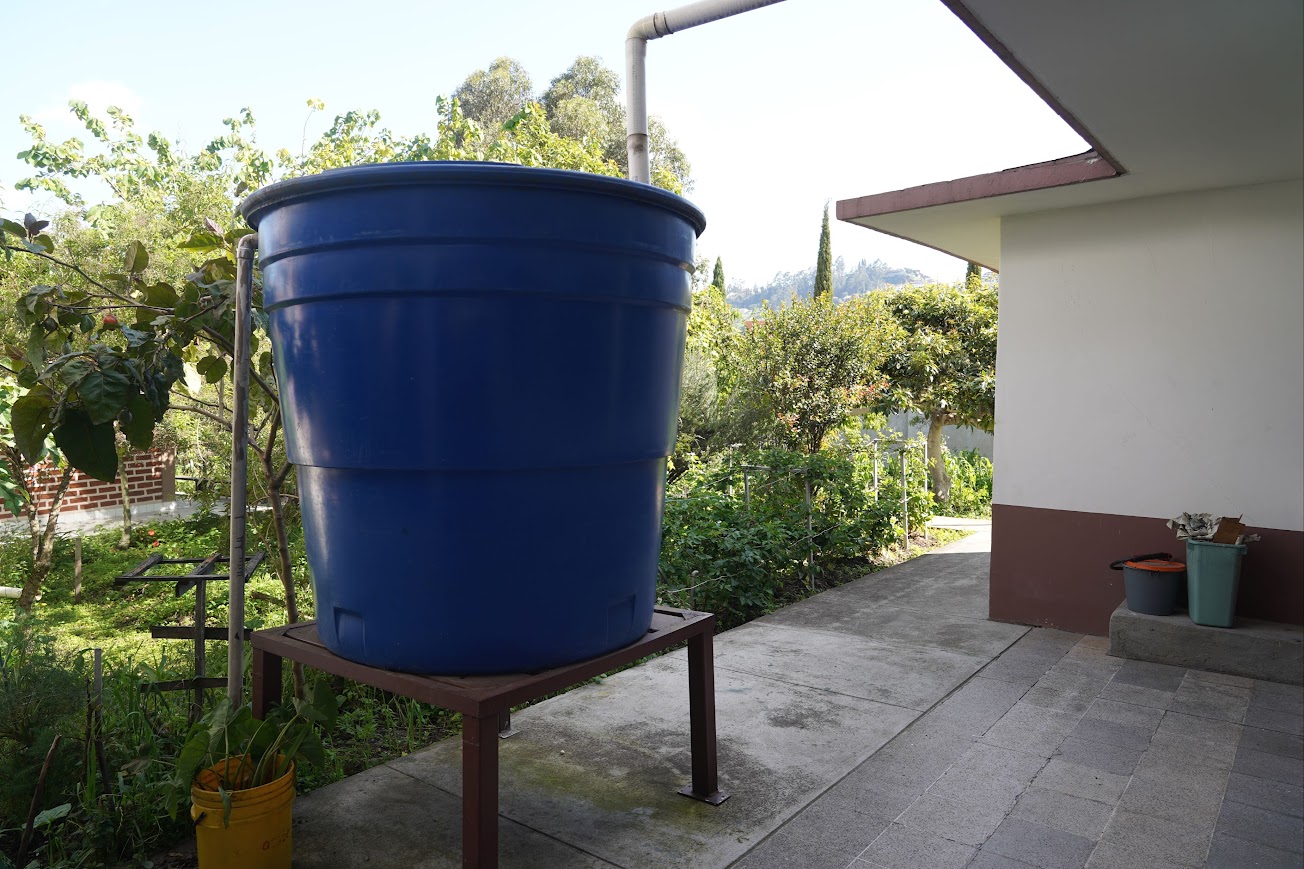
Numerous giant cisterns to collect rainwater are throughout the convent’s property so the nuns do not have to pay for water.
Led by Pope Gregory VII, the late eleventh century saw church reformers, move aggressively to subject the male clergy to celibacy. Because of this, nuns were split away from monks.
Nuns lost their equality with monks with the functions and organization of the Catholic Church.
Their exclusion from ordination forbade them to follow their male counterparts. And many clergymen saw the nuns’ need for priests to perform the sacraments as a burden.
Today, there are three convents in Cuenca:
– Monasterio de la Inmaculada Concepción (Madres Conceptas), Calle Hermano Miguel and Presidente Córdova
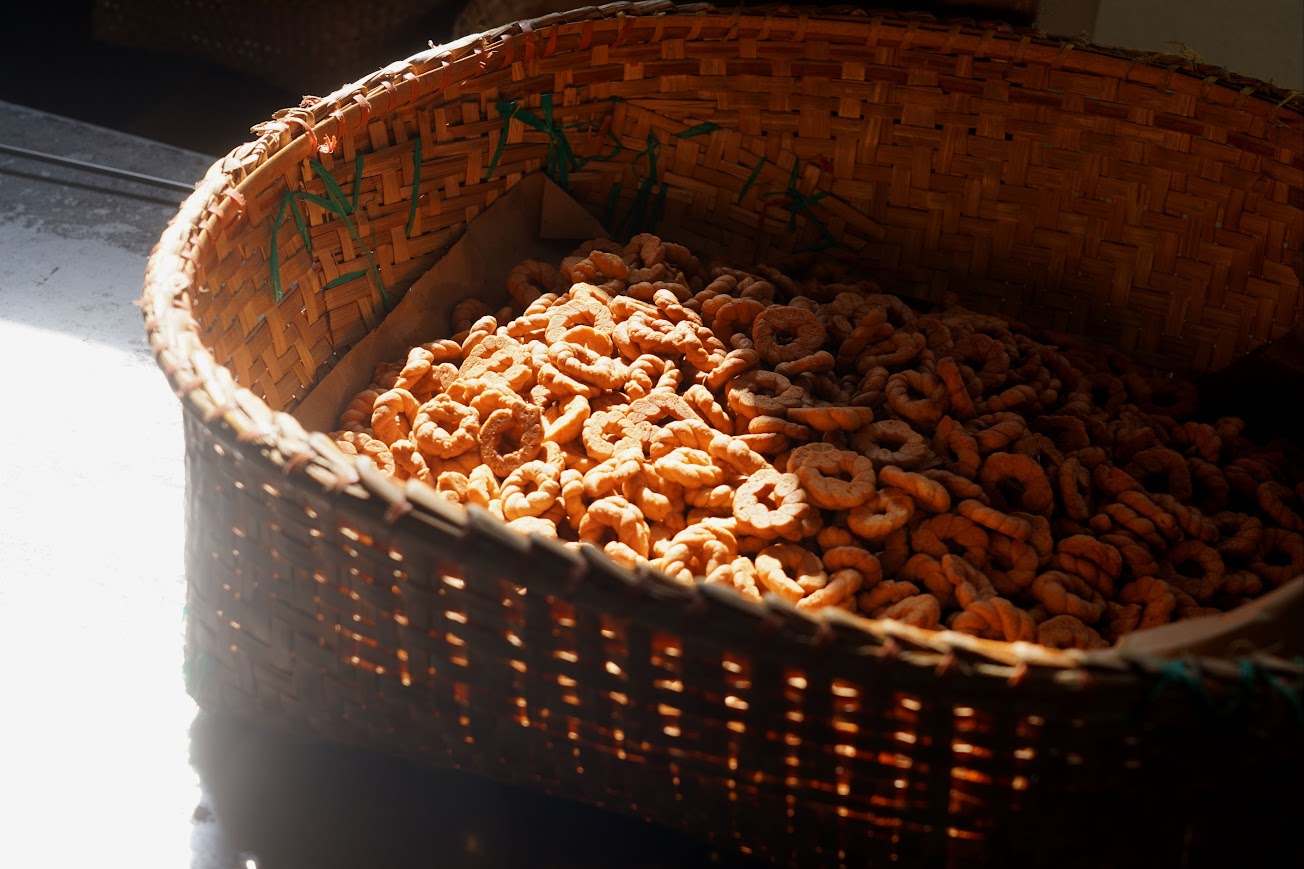
Delicious cookies are a way for the nuns at Monasterio del Carmen de San José to raise money.
– Monasterio del Carmen de la Asunción (Madres Carmelitas), Calle Sucre at Parque de las Flores.
– Monasterio del Carmen de San José (Madres Carmelitas), Avenida 10 de Agosto
In 1950, Monasterio Del Carmen de San José was founded on a hill, far from El Centro, next to Iglesia de la Virgen de Bronce. At that time, there were just a few one-story houses on the south side of the city.
It was founded by the Discalced Nuns of the Order of the Blessed Virgin Mary of Mt. Carmel.
Founded by Teresa of Ávila (Spain) in 1562, the religious order is commonly known as the Nuns of the Discalced Carmelite Order. Discalced Carmelites means “barefoot” or the practice of wearing sandals.

One of the entrances to Monasterio del Carmen de San José. Admittance to the convent is very strict.
Teresa was canonized in 1622 and was declared a Doctor of the Church in 1970, a title given to a saint who has written important works. It is given rarely, and only after canonization.
As of 2024, the Catholic Church had named 37 Doctors of the Church, and only four women have been given this honor.
Monasterio Del Carmen de San José started with only 12 nuns. It was a symbolic number as it represents the Twelve Apostles of Jesus. Today, there are 24 nuns, with two for each of the disciples of Jesus.
To become a nun at Monasterio Del Carmen de San José, 18-year-old girls spend six months at the convent after graduating from high school to immerse themselves. At that point, the young ladies are sent home to reflect upon their experiences and to discuss life as a nun with their family.
It is a poor convent. Sort of like St. Helen of the Blessed Shroud, in the 1980 “Blues Brothers” movie.
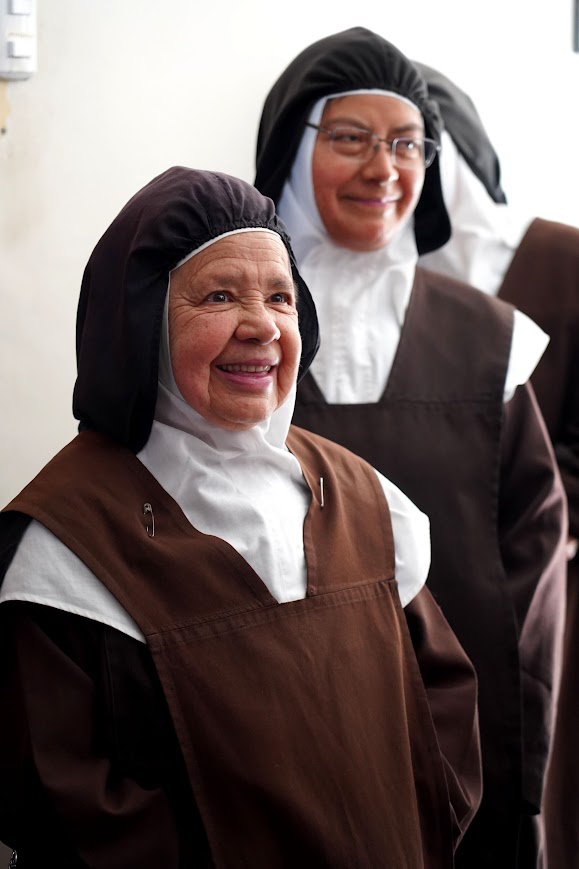
Mother Superior has been a nun at Monasterio del Carmen de San José for over 60 of the convent’s 75 years of existence.
But they don’t have famous musicians holding a fundraising concert for them.
Nor do they have a large, steady source of rental income like Monasterio del Carmen de la Asunción with its El Centro property.
“The Convent and its members maintain a precarious condition,” said Milton Armando Benítez Arauz. “It is maintained with the sale of what they produce that they make, mainly bread, donuts, quesadillas, wine, creams, and rose water for the skin.”
Benítez was the Commander of Ecuador’s Third Army Division in 1996 when he first met the nuns. The Prioress (Religious Mother Director) asked the bishop for permission for the military to help them as the needed work required strength that they could not do.
His help that year earned him an honorary title of being “family,” a member of the convent.
“My integration into the convent is due to the requirement for help, especially in the very deteriorated facilities, cultivation areas with large rocks that did not allow an adequate production,” said Benítez. “They did not have water for irrigation, and they did not have economic resources to carry out special work.”
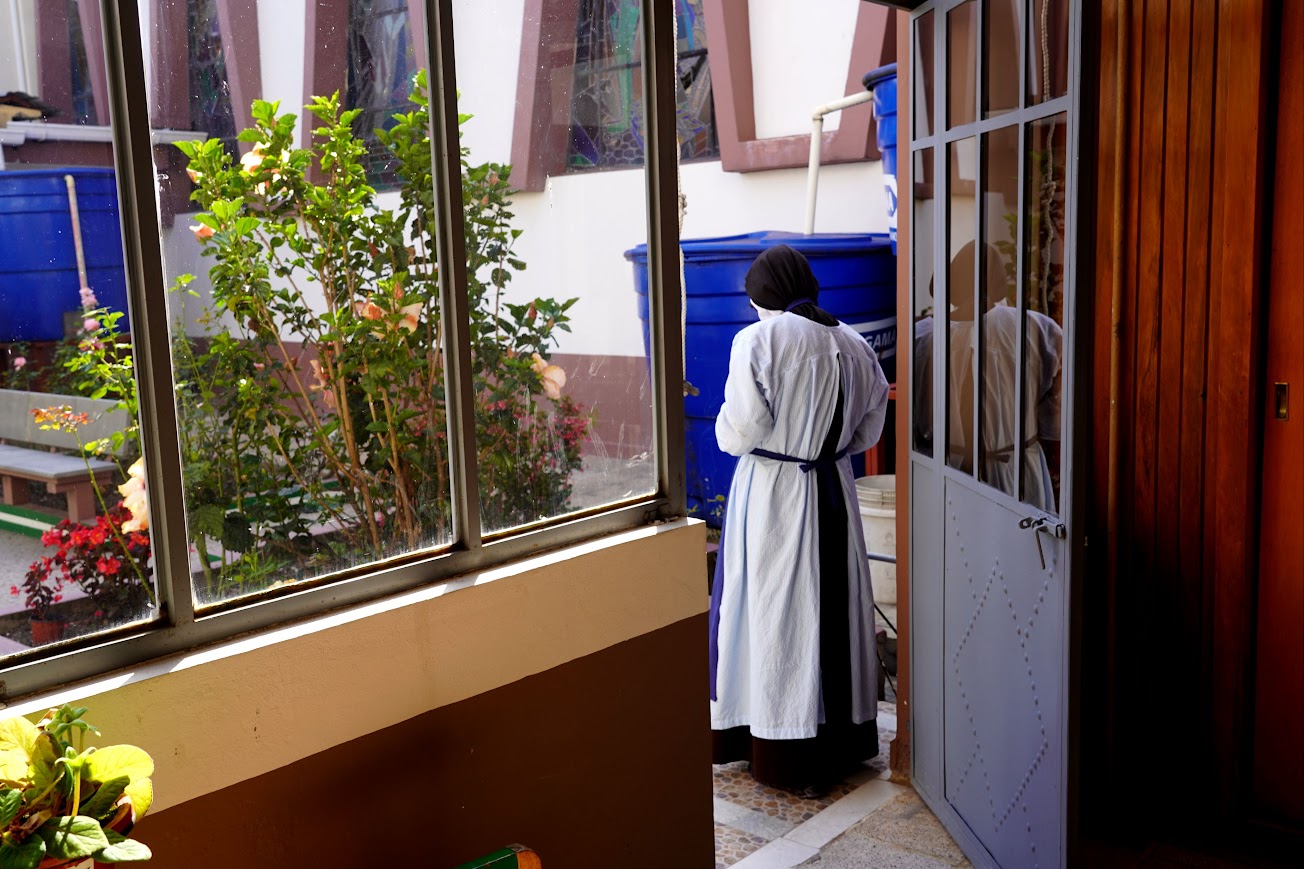
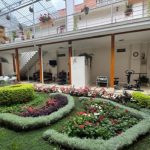
A nun in the courtyard at Monasterio del Carmen de San José.
His soldiers turned the stony terrain into fertile soil for the nuns to grow their own food. They constructed structures to raise chickens and pigs.
Numerous giant cisterns were placed throughout the grounds of the convent. The cisterns collect the rainwater off of the roofs, so the nuns do not have to depend on and pay for city water.
Their exterior walls were repaired and made taller to block the view of the relatively new tall buildings nearby, including the six-story Rosenthal.
Due to its location outside of El Centro, most people are unaware of the existence of the convent. And it is very difficult for anyone to go inside the convent.
“Nuns only go out when they require urgent medical attention,” said Benítez. “The convent within its rules does not allow the entry of any elderly person inside, nor their relatives who are received in the parlor.”

A nun pours some raisin wine that is used for services. She jokingly said that two glasses of it will make you religious.
Military Veterans of Cuenca (MVOC) recently learned about the convent through Milton and was able to have a limited tour of the buildings and grounds.
During the tour, the nuns informed the group their wooden barrels were ancient and leaking. Many of the barrels used for sacramental wine were temporarily repaired with a hodge podge of materials, including wax in the cracks.
Their wine is made from raisins. According to the Gospels of Mark, Matthew, and Luke, the Last Supper was a Passover meal. Historians believe that Jesus and his disciples probably drank passum, a sweet wine made from dried grapes.
Passum usually has an ABV between 14 and 15 percent.
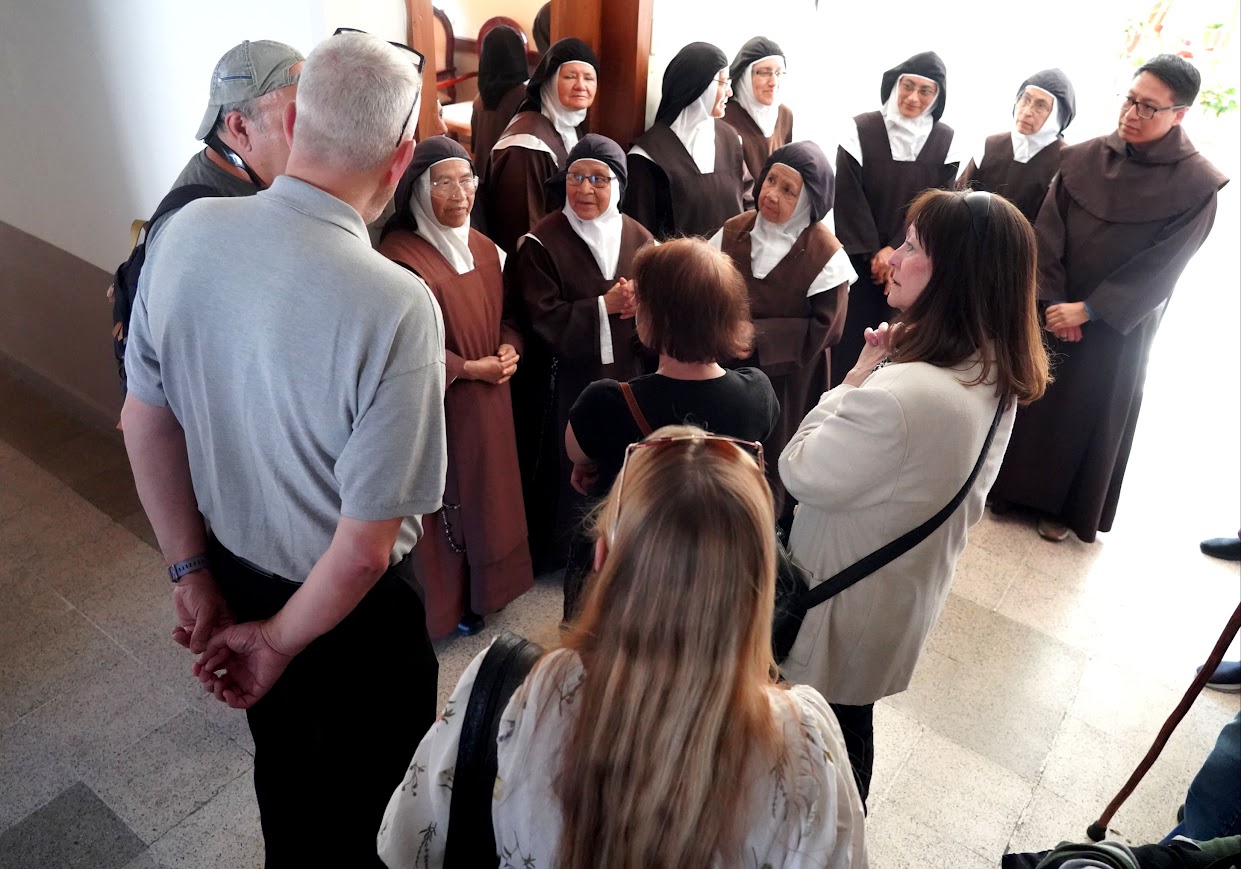
Military Veterans of Cuenca toured the convent and were told what is needed. Now, they are trying to raise money for some stainless tanks for sacramental wine.
“A couple glasses of our raisin wine and you will become very religious,” one of the nuns laughingly told the group from MVOC.
But the nuns seriously need several replacement stainless steel tanks for an important part of a Catholic service. And MVOC wants to help.
“Once we saw their needs, we let our group and our friends know about their sale of delicious cookies, bread, and wine in an attempt to purchase wine tanks,” said Clarke Brown, MVOC’s leader.
“There is a need, and we like to help our community in any way we can,” said Brown. “Also, out of respect to Milton, who has become a true friend of and advocate for MVOC. His connections have opened doors for us and will continue to do so.”
From recent past philanthropic experiences, Brown is expecting a good amount of money to come in to help the nuns of Monasterio Del Carmen de San José.
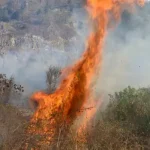
“A lot of what we accomplished with our firefighting fundraising efforts was because of Milton,” said Brown. “We have several irons in the fire as far as support as we are committed to helping Hogar Miguel León girl’s orphanage and many of our members are involved in other projects.”
Fundraising by MVOC is in its infancy, but they hope new stainless tanks for the potent sacramental wine can be purchased soon.
_________________
To Donate: Clarke Brown, MVOC, 093-939-8919, brownsincuenca@gmail.com
Photos by Stephen Vargha
Stephen Vargha’s second edition of his book about Cuenca, “Una Nueva Vida – A New Life” is available at Amazon in digital and hardback formats. His award-winning blog, “Becoming Cuenca,” supplements his book with the latest information and hundreds of professional photos by him.


Hogar Esperanza News
Fund Grace News

The Cuenca Dispatch

Week of September 20
Ecuador turns to industrial power cuts to protect Mazar and keep homes from going dark.
Ecuador raises its 2026 growth forecast, but El Niño could spoil the outlook next year.
Cuenca retirees challenge medical and therapy changes at IESS senior center.
Fabianos Pizzeria News