












As the need grows, health care and living options for older adults are increasing in Ecuador
How can older adults in Ecuador, lead healthy, active lives? How can they find competent medical care and other professional services they can trust? How do they tailor their living arrangements to the changing conditions of aging?
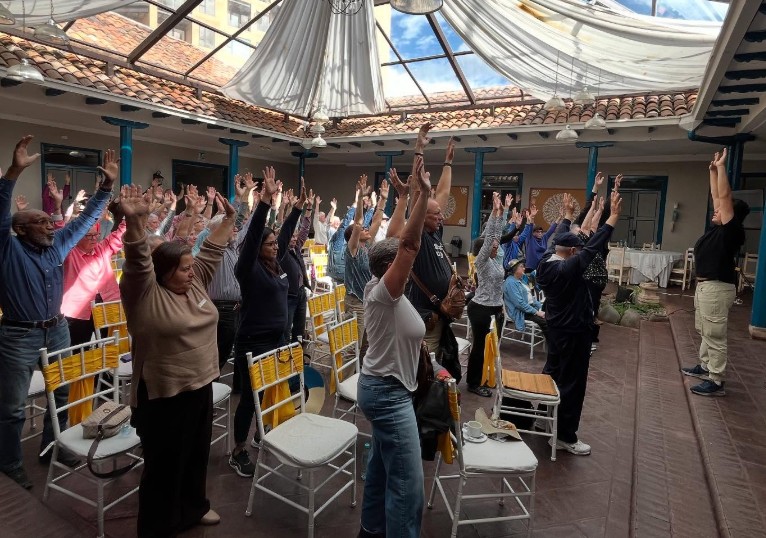
Participants in the June7 Living Well, Living Longer seminar were led through a series of excercises by physiotherapist Francisco Obando.
These were the questions addressed in a seminar, Saturday, June 7, at La Yunta Restaurant in Cuenca. Titled “Living Well, Living Longer,” the day-long event was divided into Spanish- and English-language sessions and featured bi-lingual experts in medical care, gerontology, psychology, insurance and physical therapy.
According to Edwin Urresta, founder and CEO of the Club Lomas residence for older adults in Cotacachi, which sponsored the event, the lack of reliable services and facilities in Ecuador is a major obstacle for seniors. “That’s why I believe events like this are important,” he says. “There are well-qualified professionals and good services available, and we want to connect people with them. On the other hand, we need so many more of them.”
For Urresta, an international land use attorney, the lack of services for the elderly is personal. “When my parents needed to move into an assisted living facility, I found there were few options and what was available was not suitable,” he said. “The facilities I looked at were depressing — places where people sat around all day with few activities and little stimulation.”
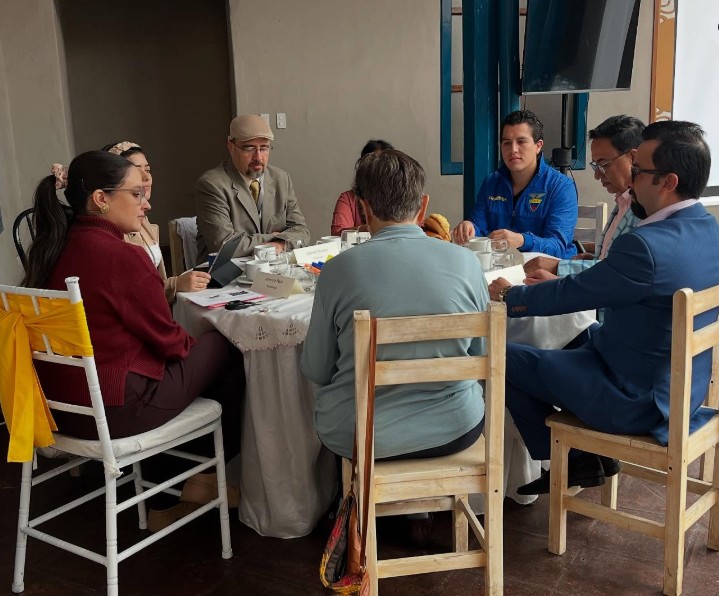
Before the information sessions, professionals discussed the problems that seniors face in Ecuador.
Ecuador is 50 or 60 years behind much of the rest of the world, particularly Europe and North America, in meeting the needs of the elderly, Urresta says. “Much of the reason is cultural, based on the generations-old idea that families should take care of their elders and that outside professionals are only consulted in emergencies. Lack of financial resources is also a problem.”
He adds: “It is still considered taboo to put older family members in a senior care facility.”
The situation is changing, but slowly, says Urresta. “Like other Latin American countries, Ecuador’s population is becoming more mobile. Young people are moving to other cities or overseas for better career opportunities. And the women who traditionally took care of parents and grandparents are joining the labor market and are not available to provide care. Today, we need more options for our elderly, both in terms of medical services and living arrangements.”
Concerns of Cuenca expats
Although both Ecuadorian and all other expat seniors face very similar challenges, some issues are unique to expats. “Language and cultural barriers are difficult for many foreigners to overcome,” says Cuenca expat Connie Scuderi, who helped organize the seminar. “Many expats expect healthcare services in Ecuador to be like those in their home country.” This is not the case, and the differences are sometimes shocking.” Access and adequate understanding of how the system works are critical to engaging fully and confidently with the range of service and support resources for the entire community.
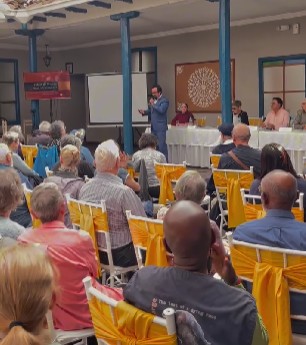
Information sessions were presented in both English and Spanish.
In a roundtable discussion before the seminar presentations, health professionals and community leaders identified major problems faced by older expats, both in their daily lives and in accessing care. In addition to language issues, isolation and loneliness, confusion about what services are available and how to use them, differentiating between public and private health services, and lack of senior activities were listed.
Another problem is finding competent and trustworthy medical providers, lawyers, facilitators, and others offering financial assistance to the aging community members including expats. “Lack of knowledge of how things work make the aging easy prey for unscrupulous providers,” says Scuderi. “This is why it is so important that aging community understand the system, the services that are available, and the costs.”
She added that the Living Well, Living Longer seminars are important in providing the community of Ecuadorians and expats with an overview of the system that currently exists, and letting them know where to find good professionals.
Presenters at the seminar included Urresta, Dr. Gabriel Tenorio, Geriatrician and Gerontologist; Johanna Pozo, Clinical Psychologist; Carlos Ramirez, Insurance specialist; and Francisco Obando, Physiotherapist. About 130 expats and Ecuadorians participated the two sessions, some coming from as far away as Loja, Limón, Vilcabamba and Cañar to attend.
Besides sharing his experience with Ecuador’s senior care options, Urresta described the Club Lomas project in Cotacachi.
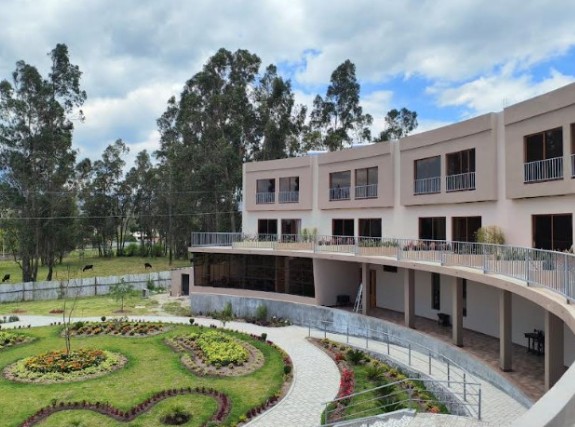
Club Lomas in Cotacachi.
“This is what I wanted for my own parents but couldn’t find,” he said. “We have developed a residential community based on a continuum of needs that is connected to the community,” he said. Currently, Club Lomas offers independent and assisted living options but there are plans in progress to expand care for those requiring a more intensive level of support.
In addition to live-in residents, Lomas offers club membership to the local community in Cotacachi. “The residents and day visitors get together every day, share experiences, and develop relationships,” Urresta says. “The idea is to keep residents and members active and stimulated.”
The residents and club members at Club Lomas enjoy restaurant-quality meals prepared by trained nutritionists. Among the facilities are an indoor pool, jacuzzi, hot tub, sauna Turkish bath and gym.
Urresta says Club Lomas was designed around elder care facilities he visited during his legal work in other countries. “What’s unique about it, is the setting in Cotacachi,” he says. “We are in a residential area, within walking distance of the town center, which allows residents to maintain a normal life based on their abilities.”
Urresta and his fellow investors are already considering replicating the Club Lomas concept in other areas of Ecuador including Cuenca “Facilities such as this are needed throughout the country as the population ages and as Ecuadorians come to accept more sophisticated ideas of caring for older adults.”
In the meantime, plans are already underway to present “Living Well, Living Longer” webinars, and live presentations in locations around Ecuador.