

















Colombian coca production reaches two-decade high as government abandons eradication efforts
By Luis Jaime Acosta
Colombian land dedicated to the cultivation of coca leaves, a raw ingredient for cocaine, jumped 10% last year to reach the largest area in over two decades, a report by the United Nations Office on Drugs and Crime (UNODC) found on Friday.
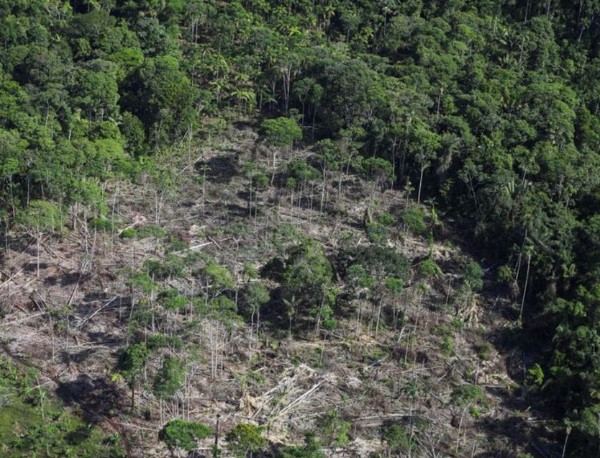
A deforested area which, according to authorities, is used for coca leaf plantations is seen during an overflight by the Colombian anti-narcotics police in Putumayo, Colombia in November.
Some 253,000 hectares were planted with coca leaf in 2023, the report said, up from 230,000 in 2022. That brought last year’s potential cocaine production up 53% to 2,644 metric tons, compared with 1,738 metric tons a year earlier.
The small-scale cultivation of coca leaf, which is traditionally chewed for energy or as an antidote for altitude sickness, is legal for some indigenous communities in Colombia.
UNODC said the expansion was mainly in the southwestern departments of Cauca and Narino, while remaining relatively stable across the rest of the country.
“The 10% increase in cultivation is in the country’s most productive areas and this has a very important impact on potential production” of cocaine, UNODC’s regional representative, Candice Welsch, told a press conference.
Welsch said the plantations were mostly between two and four years old, making them more productive than older farms.
The most concentrated areas of coca leaf production were in areas where leftist guerrilla groups and criminal gangs founded by former far-right paramilitaries are operating.
Colombian authorities have for decades fought to reduce drug trafficking, but the country remains one of the world’s leading cocaine producers. The United States has long pressured the country to reduce its coca leaf farming.
President Gustavo Petro, the South American nation’s first leftist president, has proposed a shift from what he describes as a failed anti-narcotics military strategy toward recognizing drug use as a public health problem.
________________
Credit: U.S. News and World Report



Hogar Esperanza News

The Cuenca Dispatch

Week of September 20

Ecuador turns to industrial power cuts to protect Mazar and keep homes from going dark.

Ecuador raises its 2026 growth forecast, but El Niño could spoil the outlook next year.

Cuenca retirees challenge medical and therapy changes at IESS senior center.
Fund Grace News

Fabianos Pizzeria News
