










Ecuador performs a balancing act to protect the Galapagos and accommodate tourism
By Saleem H. Ali
On August 1, Ecuador will double the entry fee for tourists visiting the islands in an effort to mitigate pressures on this unique assemblage of ecosystems. The allure of the Galapagos Islands as the cradle of Darwin’s insights on natural selection remains a major draw for scientists to the volcanic archipelago.

A tourist takes of photo of mating Galapagos tortoises.
Located less than a thousand miles west of the South American mainland, this exotic evolutionary outpost is at a “goldilocks distance” from the mainland: close enough for occasional wildlife like turtles and iguanas to float across intact, while distant enough for populations to evolve independently.
New species continue to be discovered, including the highly endangered pink iguana which was only identified in 1986, inhabiting a remote high altitude active volcanic ecosystem on the island of Isabella. In February 2022, a publication in Nature’s journal Heredity identified a new lineage of Galapagos giant tortoises from museum samples and carcasses found in a cave on one of the islands.
There were no indigenous human settlements on the islands, and Ecuador claimed them as overseas territory in 1832. Despite Darwin’s momentous visit in 1835 and the subsequent popularization of the islands for their unique ecology, their conservation value was hard to monetize. Due to their lack of extractable resources, Ecuador tried to sell them to various countries during the early twentieth century.
Some of the islands became penal colonies while others were ravaged by feral goats and invasive botanicals. The devastation caused by these practices led to a domestic environmental movement in Ecuador, leading to the designation of the islands as a National Park in 1959.
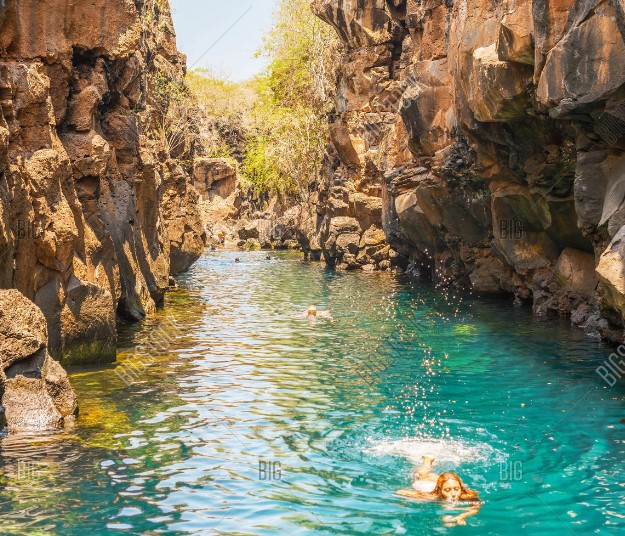
Swimmers paddle between the cliffs of the Grietas on Santa Cruz Island.
The global environmental movement gathered momentum after the Stockholm Conference in 1972 and the islands were designated a UNESCO World Heritage Site in 1978 (the first in the world to be declared for natural heritage). This put further pressure on the government of Ecuador to institute conservation policies and limit development on the islands. The small settler population on the islands came into considerable conflict with the park service, including a hostage situation in the 1990s where settlers demanded higher sea cucumber harvesting quotas from the park service.
With global interest in tourism of the islands, the park service has since delicately managed economic activity for the settlers on the island who own property prior to national park designation. The islands themselves are being heralded as a microcosm of sustainability initiatives, ranging from the world’s first entirely “green powered” airport, to ambitious decarbonization targets for the entire archipelago.
There are ongoing concerns of invasive species and pests which are being studied across the islands. The government has instituted a strict quarantine system on arrival where customs checking is done painstakingly to ensure no food is brought in. The biggest challenge of feral goats has largely been eliminated thanks to an innovative and persistent culling campaign which started in 1997 on Isabella Island. First, herding techniques were used to get the goats to congregate with helicopters and then gunned down with machine gun fire to mitigate suffering.
Another successful project to eliminate invasive species, was the removal of feral cats.
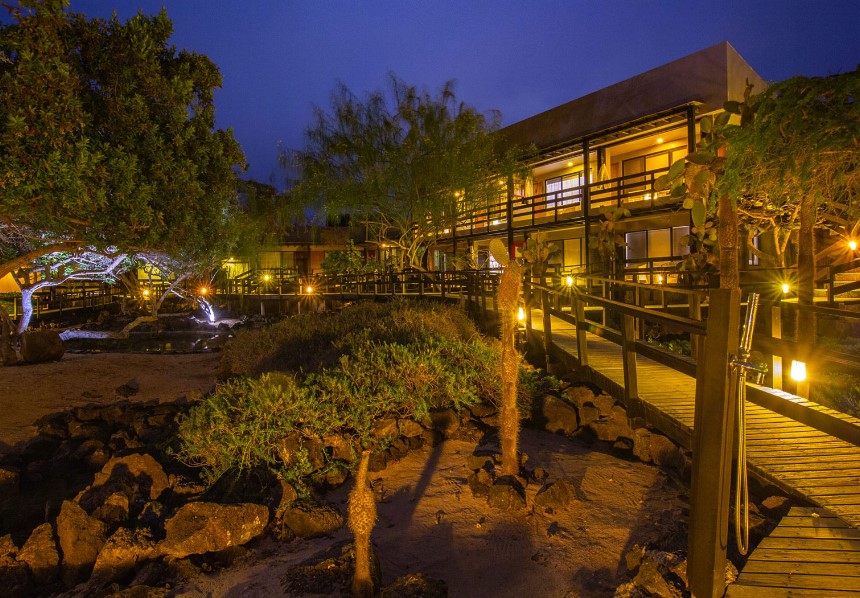
The Finch Bay Hotel in Puerto Ayora.
However, this only got about 90% of the goats, since they learned to link the sound of propellers with impending death. Sterilized female goats (known as Judas Goats) were then fitted with radio locators and scented with long-lasting hormones that made it seem like they were permanently in heat. This false promise of procreation lured previously hard-to-catch goats as well. Some 250,000 goats were culled during seven-year project, with pretty much only the Judas Goats now left to roam.
Although close management of waste streams has kept marine macroplastic pollution under control on the islands, microplastic pollution in seawater is widely observed and is being closely monitored for its impact on organisms. Recently, it was learned that more than half the plastic waste washing on to the island’s shores came from Chinese fishing ships.
Overall, the Ecuadorian government has done a remarkable job in the past decade in maintaining their conservation commitments to the Galapagos. Despite pollution threats, tireless efforts by the park service and organizations such as the Charles Darwin Foundation have led to a rebound of nearly extinct species such as the endemic tortoise species on Espaniola island. However, for a country which still faces major human development challenges, conservation efforts inevitably require monetization and a consideration of tradeoffs with other industrial choices.

A sea lion takes a nap on a Galapagos pier.
During a field expedition to the Galapagos in March 2022, I had an opportunity to meet one of Ecuador’s most prominent environmentalists, Roque Sevilla Larrea. Having served in many prominent public service roles as the Director of the country’s Forest Service as well as the Mayor of Quito, Sevilla has strong interest in preserving natural environments but is also a prominent businessman. Among his businesses is the popular Finch Bay Hotel on Santa Cruz Island.
Among Sevilla’s businesses is the country’s largest tourism company Metropolitan which operates expeditions to the Galapagos as well as the only full-service resort in the archipelago. Given his broad experience in the public and private sector, former president Guillermo Lasso asked for Sevilla’s advice in finding a way to conserve treasured ecosystems like the Galapagos, while also helping to develop the country at a time when it is struggling with massive debt.
No doubt the oil revenues at a time of high prices could help to buffer Ecuador’s economy and allow for greater political space to champion conservation. However, Mr. Sevilla’s recommendations to the government are focused on three key areas for investment related to connecting the food-energy-water nexus:
- a) Developing voluntary carbon markets that capitalize on the three key ecosystems in the country with high

Tourists observe an iguana on a Galapagos beach.
sequestration potential: i) tropical humid forests ii) Andes paramo and iii) the coastal mangrove forests.
- b) Upscaling geothermal energy investment in a country with massive volcanic activity, with an initial target of a 50MW plant coming online in 2026.There are four major geothermal basins in the country which have yet to be harnessed for this purpose.
- c) Green hydrogen development using photovoltaics (since country has second largest solar potential on continent after Atacama region), and hydropower with technical and financial assistance from the Inter-American Development Bank’s clean energy investment mechanism. So far Ecuador has only developed 40% of its run-of-the river hydrological potential (not requiring large dams).
The success of these efforts will largely depend on how well they can be pitched as a means of balancing conservation with development. The preservationist impulse is still strong among many indigenous communities in Ecuador who also won a major lawsuit against metal mining development near the Colombian border.
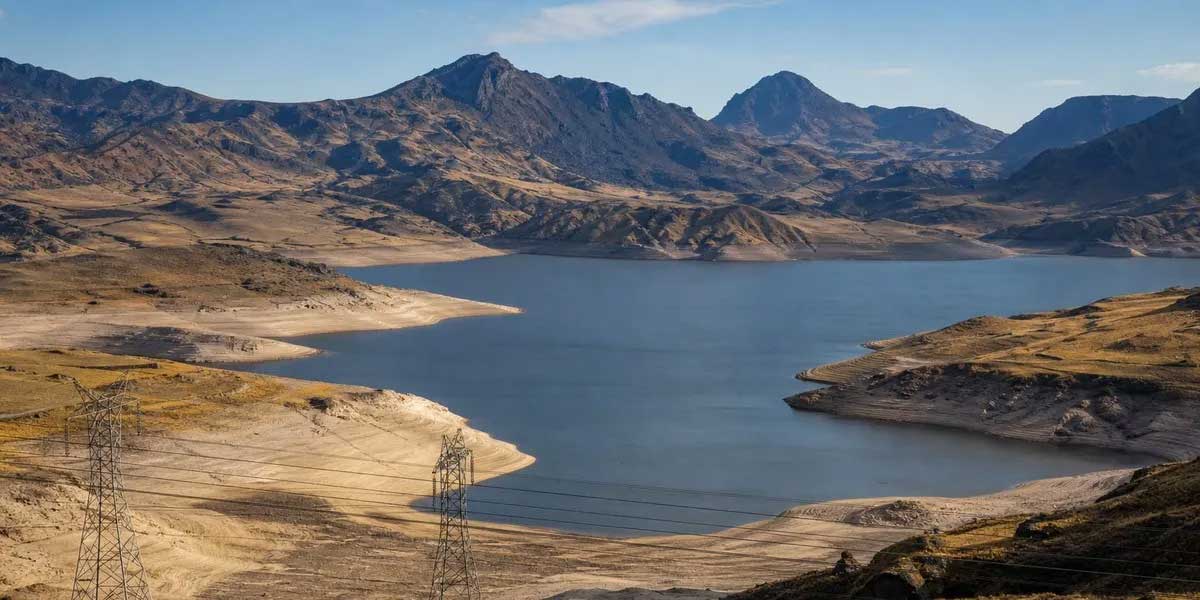
As Ecuador tackles a wave of narcoviolence with austere measures and also faces a crippling drought, the Galapagos are an offshore sanctuary for its tourist economy. While some commentators have suggested that a green recovery is a “distant dream” for Ecuador, my field observations suggest more cautious optimism. The country’s lessons of prioritizing conservation in the Galapagos, while considering a range of green growth strategies with more conciliatory politics than many of its neighbors, bodes well for its development path.
__________________
Credit: Forbes