
















Europe plans to ditch U.S. and Chinese payment systems like Visa, Mastercard, PayPal and AliPay
By A. Arezki
The European Union is planning a major shift in its financial infrastructure. The EU wants to free itself from the grip of global financial giants like Visa, Mastercard, PayPal, and AliPay. Christine Lagarde, President of the European Central Bank (ECB), has made it clear that Europe must develop its own independent payment platform to secure its financial sovereignty.
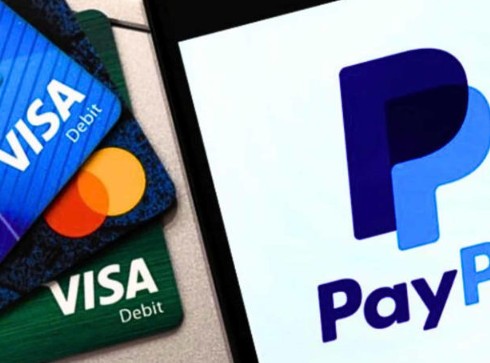 According to Business Today, Currently, the majority of Europe’s digital payment infrastructure is dominated by foreign players, with Visa, Mastercard, PayPal, and AliPay holding significant control.
Christine Lagarde has pointed out that these platforms are “controlled by American or Chinese companies,” which presents a clear vulnerability for Europe. As she noted on The Pat Kenny Show, “We should make sure there is a European offer.”
The EU is grappling with the implications of relying heavily on foreign companies to manage crucial financial transactions. With this dependence, Europe is not only subject to the policies of foreign governments but also lacks the ability to make decisions that fully prioritize its own economic interests.
Lagarde emphasizes that the time has come for Europe to take control and create a payment infrastructure that ensures financial autonomy.
Lagarde’s Vision for a European Alternative
Christine Lagarde is advocating for a revolutionary change: the creation of a European payment system to replace the global giants. She described this shift as a “march towards independence.”
The goal is for Europe to develop its own digital payment platform, freeing the region from reliance on foreign infrastructure. Lagarde believes that such a platform would be crucial in maintaining economic sovereignty and ensuring that Europe‘s economic activities are not dictated by external powers.
To support this vision, Lagarde ties the proposal to broader initiatives, like the Capital Markets Union (CMU). This initiative aims to unify Europe’s capital markets, improving the flow of investments and savings across member states.
According to Lagarde, deeper economic integration could pave the way for a fiscal union in the future, potentially adding €3 trillion to the EU’s annual GDP. This could offer businesses better access to funding and provide European citizens with more efficient financial products.
Challenges in Building a European Payment Platform
While the idea of a European payment platform sounds appealing, the road ahead is fraught with challenges. Lagarde and other EU leaders have acknowledged that creating an alternative to Visa and Mastercard is no easy task.
Among the main obstacles, the issue of profitability is a key concern. Interchange fees in Europe are lower than in other regions, making it harder to generate the revenue needed to build a sustainable system that could compete with existing giants.
In addition to profitability concerns, there are other hurdles to overcome. The EU would need significant investment to develop the infrastructure necessary to compete with Visa and Mastercard. On top of that, adoption barriers could present a major challenge, as both consumers and merchants would need to shift their habits and support a new system.
Getting European banks on board with the platform will also be crucial, as their support would be needed to ensure that the new system integrates with existing financial networks across the region.
From a technical perspective, the complexities of building a secure and scalable platform cannot be underestimated. Issues such as fraud protection, security, and cross-border compatibility will need to be addressed before any new platform can be rolled out.
_______________
Credit: Bloomberg



Hogar Esperanza News

Fund Grace News

Fabianos Pizzeria News
The Cuenca Dispatch

Week of September 20

Ecuador turns to industrial power cuts to protect Mazar and keep homes from going dark.
Ecuador raises its 2026 growth forecast, but El Niño could spoil the outlook next year.
Cuenca retirees challenge medical and therapy changes at IESS senior center.